
 e-mail
 English
 français
 Deutsch
 русский
 italiano
 español
 português
 العربية
 日本語
日本語 한국의
한국의 中文
中文


In daily injection molding production, whether the screw and barrel are truly clean directly affects the optical appearance of the final product, overall mechanical strength, and the efficiency of color or material changeovers. In many cases, when the defect rate remains high, the root cause is often residual carbonized black specks, mixed-color fibers, or degraded material deposits formed under prolonged high-temperature processing.
Professional cleaning is far more than simply running purge material through the machine. It involves a comprehensive process combining rheology, thermodynamics, and mechanical principles to effectively remove contamination and restore stable processing conditions.
1. Physical and Chemical Nature of Screw Contamination
To improve cleaning efficiency, the first step is understanding how contaminants form and adhere to the screw and barrel surfaces.
1.1 Formation of Carbonized Deposits
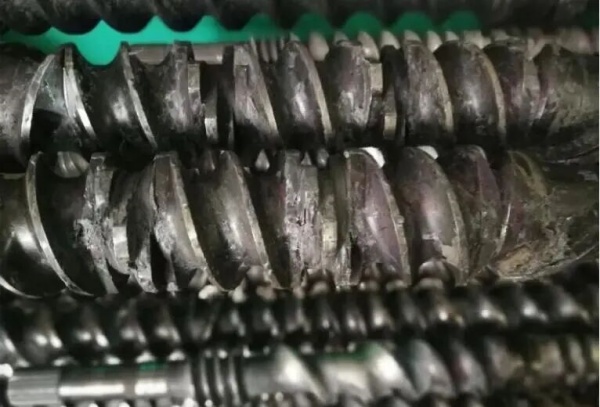
Material tends to accumulate in dead zones such as thread roots, non-return valve areas, and narrow gaps. Under prolonged high-temperature exposure, trapped polymers gradually oxidize and decompose, eventually forming a hard carbonized layer.
These carbon deposits exhibit extremely strong adhesion, making them difficult to remove using the limited shear force generated by ordinary purging alone.
1.2 Color Residue and Polar Adhesion
Many pigments such as carbon black and organic red pigments have high polarity and tend to strongly adhere to microscopic surface imperfections on metal components. In addition, polar materials such as PA and EVOH exhibit strong affinity toward metal surfaces, leading to persistent color streaking and incomplete purging during changeovers.
2. Mainstream Cleaning Methods and Technical Principles
Industry cleaning methods are generally divided into four categories, each based on different physical or chemical mechanisms.
2.1 Physical Displacement Method
This method relies on the viscosity difference between purging material and residual resin to achieve displacement.
A key principle is high-viscosity extrusion. Materials with lower melt index (MI) and higher melt viscosity than production resin—such as high-molecular-weight PE or dedicated purging compounds—are typically used.
Higher-viscosity melts generate stronger shear forces against the barrel wall, gradually removing residual contaminants.
A pulse cleaning strategy is recommended, alternating screw speed to create pressure fluctuations that help dislodge material trapped in dead zones.
2.2 Chemical Decomposition Method
This method relies on active components in chemical purging agents that react under high-temperature conditions.
Expanding agents and surfactants penetrate gaps and dead corners. With temperature increase, they expand and break down carbonized molecular structures, softening residues for discharge.
A soaking time of several minutes is recommended to ensure full reaction effectiveness.
2.3 Physical Abrasion Method
Fine hard particles such as glass fiber, calcium carbonate, or ceramic particles are added into carrier resin.
During screw rotation, these particles act like flowing sandpaper, gradually removing stubborn deposits from metal surfaces.
However, particle hardness must remain below the hardness of the nitrided screw surface (generally HV1000) to avoid damaging precision components.
2.4 Complete Disassembly Cleaning
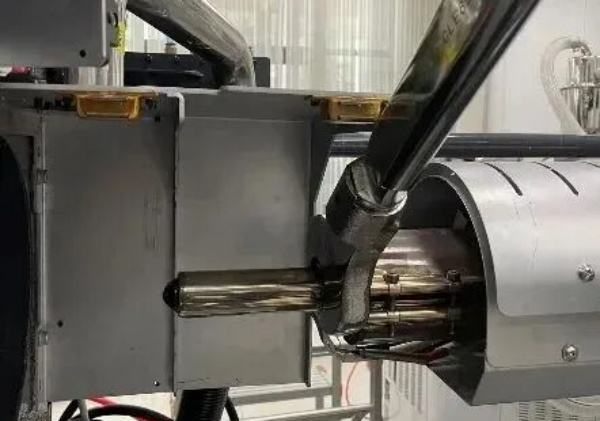
This method is used only in cases of severe contamination, barrel blockage, or scheduled deep maintenance.
Steel wire brushes must never be used. Copper brushes or copper scrapers are recommended. Ultrasonic cleaning provides the least equipment damage when available.
3. Specialized Cleaning Strategies for Different Materials
3.1 Heat-Sensitive Materials (PVC, POM)
PVC decomposes at high temperatures and releases hydrogen chloride gas, which can severely corrode equipment.
Cleaning must be performed at normal processing temperatures using dedicated PVC purging compounds. Afterward, stable materials such as PE or PP should be used at low speed to seal the barrel and prevent degradation during shutdown.
3.2 Color Changeover: Dark to Light
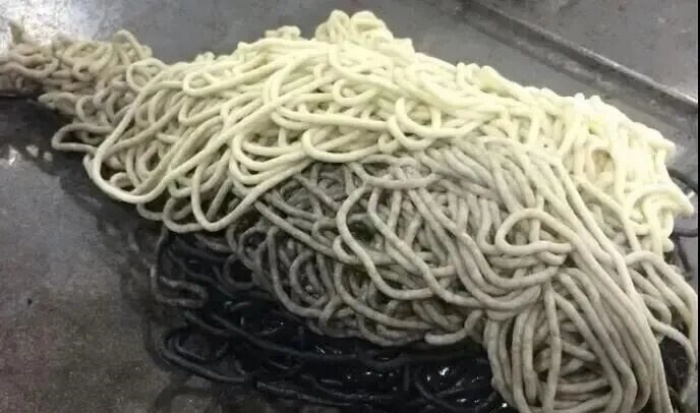
A step-by-step flushing strategy is recommended. First, use a natural base resin of the same material system, by chemical purging compounds for deeper cleaning.
A temperature gradient method can also be applied by increasing the middle and rear barrel temperatures by 20–30°C to reduce viscosity and improve flow, combined with higher back pressure for faster cleaning.
3.3 High-Temperature Materials (PEEK, PPS)
Conventional purging materials may carbonize at high temperatures, worsening contamination instead of removing it.
The correct method is staged cooling: first use high-temperature purging compounds (above 400°C resistance), then gradually reduce barrel temperature while transitioning through medium- and low-temperature carrier resins.
4. Five Key Engineering Parameters for Cleaning Efficiency
4.1 Back Pressure
Back pressure should be increased during cleaning, typically 1.5–2 times the normal production setting.
Higher back pressure improves melt compaction, removes trapped air, and enhances contact with difficult-to-reach areas.
4.2 Screw Speed
Alternating high and low speeds is more effective than constant operation.
High speed improves shear removal, while low speed increases reaction time. This combination improves internal turbulence and cleaning coverage.
4.3 Nozzle Contact Condition
When safe, maintain a closed nozzle condition during cleaning to build internal pressure.
This stored pressure helps push out deep-seated residues and improves overall purging efficiency.