new blog
Many people wonder why some automotive brake pedal brackets use PP-LGF instead of the more familiar PA-LGF (long glass fiber reinforced nylon).
A common misconception among junior designers and purchasing professionals is that, since both materials contain glass fibers and can provide sufficient strength, choosing the cheaper option should be enough.
This guide compares the two materials in terms of their fundamental properties, key performance differences, typical applications, and practical selection criteria.
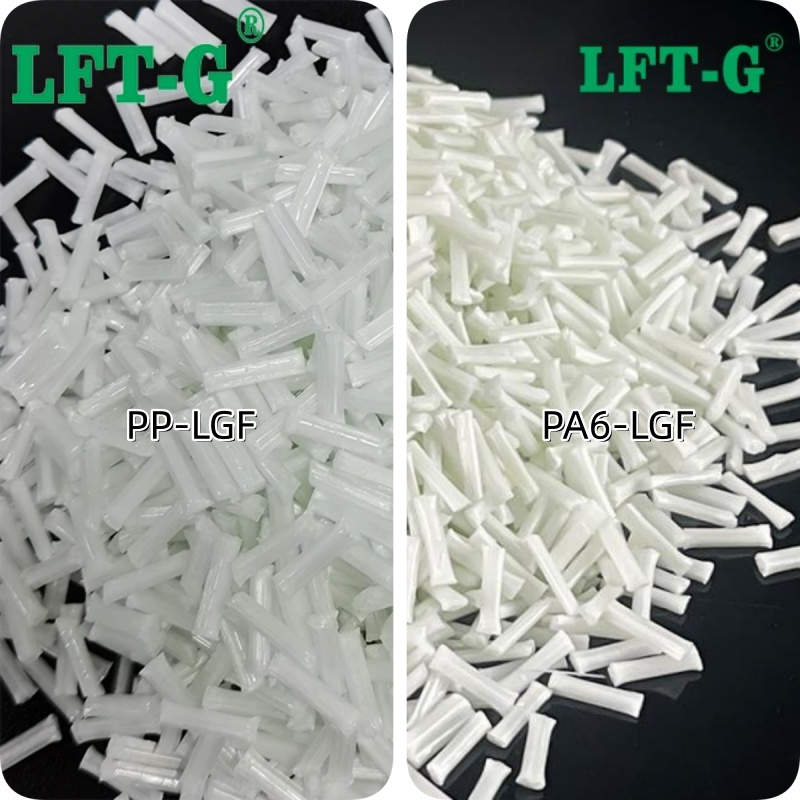
Whether the glass fiber content is 20%, 40%, or 60%, the inherent properties of the base resin remain a key factor in material performance. These properties help explain the differences between PP-LGF (long glass fiber reinforced polypropylene) and PA-LGF (long glass fiber reinforced polyamide, commonly known as nylon) in mechanical performance, heat resistance, water absorption, and dimensional stability.
PA is a relatively polar polymer. When paired with appropriately treated glass fibers, it can achieve strong interfacial adhesion. With suitable formulation and processing control, PA-LGF can deliver high stiffness, strength, and load-bearing performance.
PA6-LGF and PA66-LGF are commonly used in automotive and industrial structural components where load-bearing capacity, heat resistance, and structural reliability are important.
Consider: Moisture absorption, temperature, and the specific material grade can all affect performance.
PP is a nonpolar polymer, so its interfacial adhesion with glass fibers generally requires careful formulation. Compatibilizers, fiber surface treatments, and formulation optimization can help improve reinforcement efficiency.
PP-LGF offers low water absorption, low density, good chemical resistance, and cost-optimization potential. It can meet the stiffness, strength, and impact resistance requirements of many structural applications.
Consider: Actual performance depends on the resin grade, fiber content and retained length, interface quality, processing, and service environment.
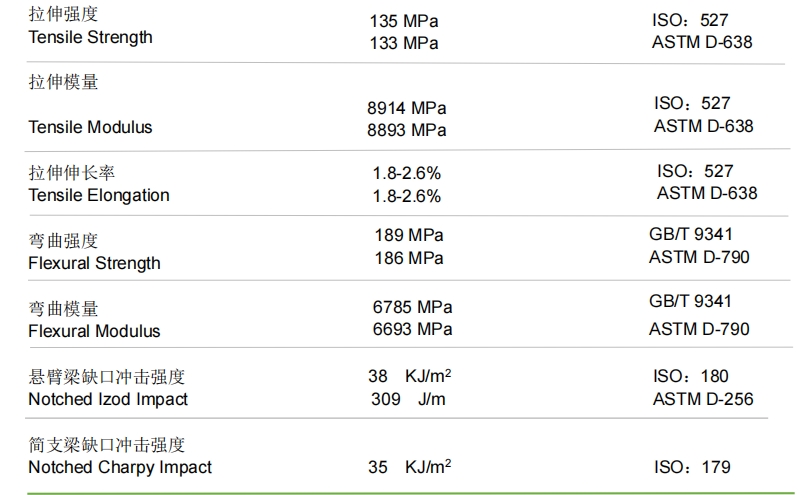
Water absorption and dimensional stability are critical for structural components, especially those requiring precise assembly tolerances.
The PA matrix is hygroscopic. Even with long glass fiber reinforcement, moisture absorption cannot be completely eliminated. In humid environments, PA-LGF may absorb moisture and undergo dimensional changes, potentially affecting assembly clearances, fit tolerances, and connection reliability.
For precision-fit structures, frequently engaged snap-fits, and high-precision mounting points, designers should account for dimensional changes under different humidity conditions and establish appropriate tolerances.
PP has an extremely low water absorption rate and is generally less sensitive to ambient humidity. This can be advantageous in humid outdoor environments or applications exposed to rain. However, dimensional changes are still influenced by fiber content, orientation, molding shrinkage, and component design.
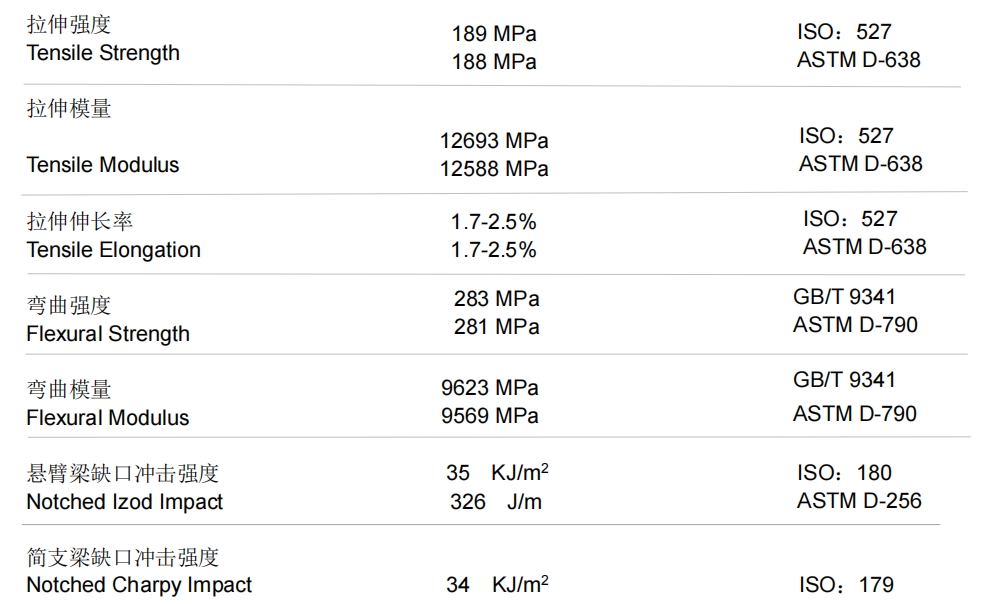
At the same or comparable glass fiber content, PA-LGF generally offers higher strength and stiffness. It can be suitable for components exposed to substantial loads, sustained stress, or repeated mechanical forces.
Its creep and fatigue performance still depend on temperature, humidity, stress levels, and the specific material grade.
Long glass fiber reinforcement significantly improves the stiffness, strength, and impact resistance of PP-LGF, making it suitable for many automotive structural components, brackets, supports, and functional parts.
For sustained heavy loads or frequent cyclic loading, creep, fatigue, and long-term load-bearing performance should be evaluated under actual operating conditions. Initial tensile strength alone is not enough to determine suitability.
PA6-LGF and PA66-LGF typically exhibit relatively high heat deflection temperatures, making them candidates for applications requiring stiffness retention at elevated temperatures, such as selected automotive under-the-hood components and industrial structures.
Evaluate the specific grade's heat deflection temperature (HDT), long-term service temperature, and mechanical property retention under the intended test load and moisture conditions.
PP-LGF generally has lower heat resistance than PA-LGF. Under sustained high temperatures and long-term loading, its stiffness and dimensional stability may deteriorate. However, PP-LGF remains a useful option for applications with moderate temperature requirements where lightweight design and cost efficiency matter.
PP has low moisture absorption and generally does not require the same strict drying procedures as PA. With suitable mold design and processing parameters, PP-LGF can support stable production.
Control melt temperature, injection speed, holding pressure, gate design, and fiber orientation to reduce warpage, sink marks, and fiber length reduction. Actual production yield still depends on formulation, mold design, and process control.
PA is hygroscopic and generally requires thorough drying according to the material supplier's recommendations. Excessive moisture can cause silver streaks, bubbles, surface defects, and reduced mechanical performance.
Directional shrinkage, fiber orientation, weld line locations, and localized stress concentrations can affect part quality. Appropriate radii, wall thicknesses, gate locations, and mold flow analysis help optimize the molding process.
For both materials: Screw design, back pressure, and shear forces should be controlled to avoid excessive long-fiber breakage.
PA-LGF has relatively high stiffness, and long glass fibers can influence molded surface finish. If two components move, collide, or rub together, unsuitable clearances, surface roughness, or contact design may cause noticeable noise.
For products with demanding NVH (Noise, Vibration, and Harshness) requirements, consider material damping, structural stiffness, contact conditions, and assembly design together.
The PP matrix provides a degree of toughness that may help reduce noise in some contact and impact scenarios. However, long glass fiber reinforcement also changes stiffness and vibration response, so PP-LGF is not necessarily quieter in every application.
Material selection should be combined with tolerance optimization, contact surface design, and practical testing.
PP resin generally has a lower raw material cost and density. When performance requirements are met, PP-LGF can help reduce component weight and material cost. Actual manufacturing costs also depend on formulation, mold design, cycle time, production yield, and assembly requirements.
PA-LGF generally has a higher raw material cost than PP-LGF. Drying, process control, and quality management may also increase manufacturing costs. However, for components requiring high stiffness, better heat resistance, or demanding load-bearing performance, PA-LGF may be the more suitable option.
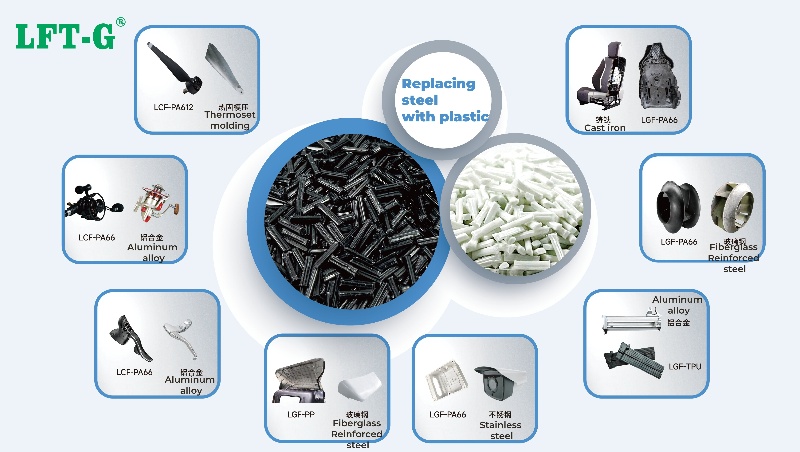
Both PP-LGF and PA-LGF are suitable for structural and semi-structural components, but their application priorities differ. PP-LGF is often considered for lightweight design, structural efficiency, and cost optimization, while PA-LGF is often considered for applications requiring high stiffness, load-bearing capacity, and heat resistance.
The following are potential application areas. Final material selection should be based on actual loading conditions, operating temperatures, service life, and the specific material grade.
PA-LGF is worth considering for structural components requiring high stiffness, reliable load-bearing performance, and good heat resistance.
PP-LGF is particularly suitable for medium-to-large structural components that balance mechanical strength, lightweight design, impact resistance, and cost efficiency.
Choosing between PP-LGF and PA-LGF requires more than comparing tensile strength or raw material prices. Engineers should evaluate load-bearing requirements, operating temperature, environmental exposure, dimensional tolerances, and expected service life.
Before finalizing a material, engineers should verify the following:
Not sure whether PP-LGF or PA-LGF is the better fit for your component? Share your application, target properties, operating temperature, and processing requirements with our team. We can help you evaluate suitable long glass fiber reinforced material options.
Contact Our Team Explore LFT-G Materialsfollow us :


-- get updates with latest topics

 e-mail
 English
 français
 Deutsch
 русский
 italiano
 español
 português
 العربية
 日本語
 한국의
 中文