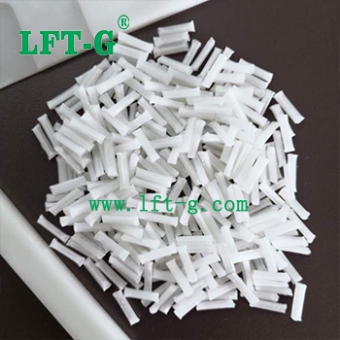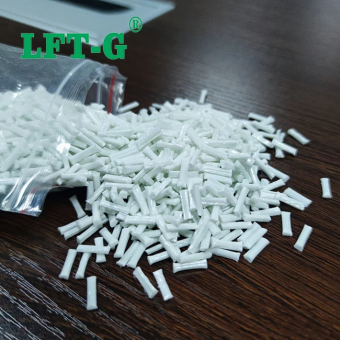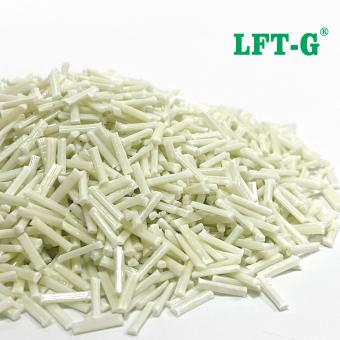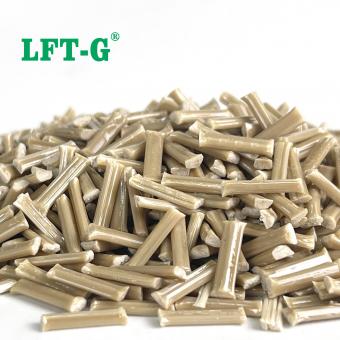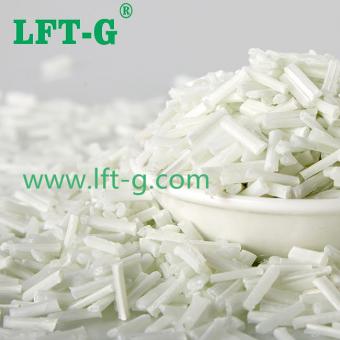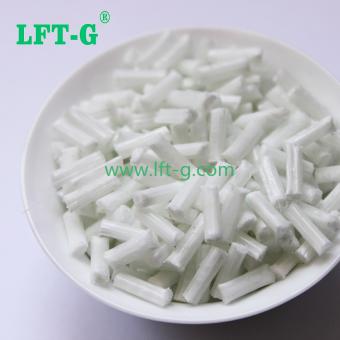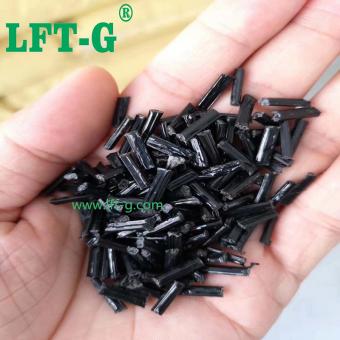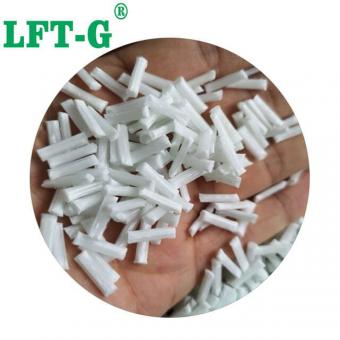
item no.:
PP-NA-LGFPayment:
T/T or L/C (other payment ways also can be diproduct origin:
Xiamen, ChinaColor:
Original color (also can be customized)shipping port:
Xiamen, ChinaLead Time:
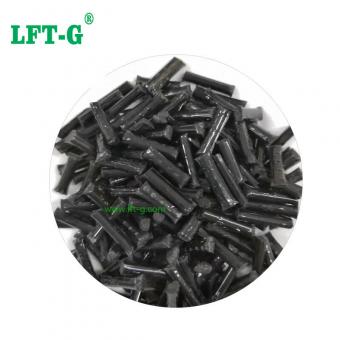
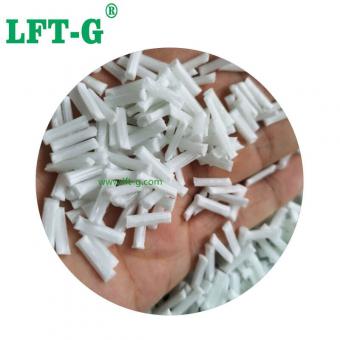
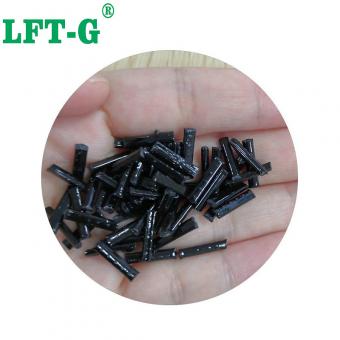
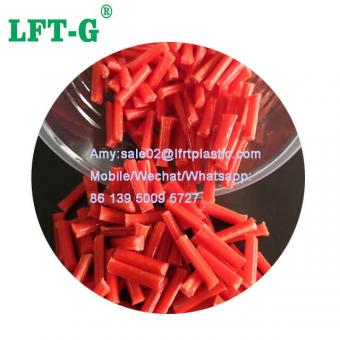
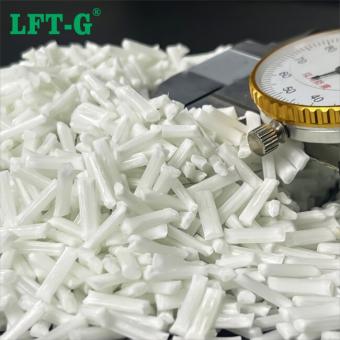
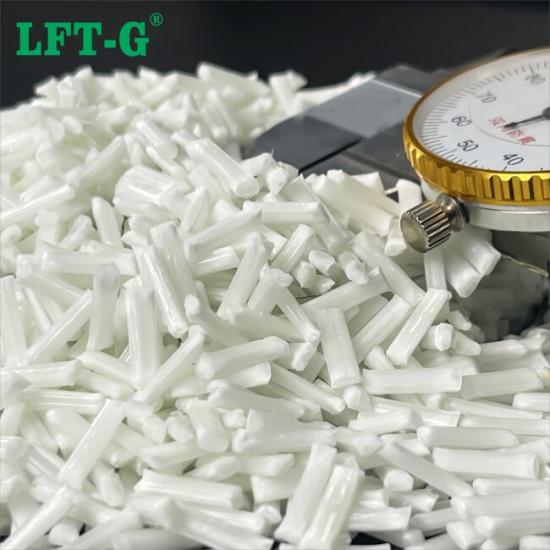
2-10 working daysLong glass fiber reinforced thermoplastics (LGF) are composite materials made by combining a thermoplastic resin matrix with long glass fiber reinforcement. This combination enhances the mechanical performance of conventional plastics while retaining many of their processing advantages.
Unlike unreinforced plastics or conventional short glass fiber compounds, long glass fiber reinforced materials feature longer fiber lengths within the finished pellets. This helps create a reinforcing structure throughout molded components, providing improved strength, stiffness, impact resistance, and dimensional stability.
At LFT-G, we manufacture long glass fiber reinforced compounds using different thermoplastic matrices, including PP, PA6, PA66, PBT, PPS, and other engineering plastics. Fiber content and pellet specifications can be customized according to application requirements.
Adding long glass fiber is an effective way to improve the performance of thermoplastic materials, particularly in applications requiring higher mechanical strength, structural integrity, and long-term durability.
Long glass fiber reinforcement significantly improves tensile strength, flexural strength, and stiffness, allowing plastic components to withstand greater mechanical loads.
The longer fiber structure helps absorb and distribute impact energy, improving the toughness and impact performance of molded components.
Long glass fiber reinforcement helps reduce molding shrinkage and warpage, supporting dimensional accuracy and consistency in finished parts.
Compared with conventional unreinforced plastics, LGF compounds can offer better resistance to long-term loading and repeated mechanical stress.
Glass fiber reinforcement can improve heat distortion resistance and help components maintain their structural rigidity under elevated temperatures.
LGF materials provide an attractive balance of strength and weight, helping manufacturers replace selected metal or heavier engineering plastic components.
Actual performance depends on the resin matrix, fiber content, fiber length retention, component design, and processing conditions. Flame retardancy and chemical resistance require separate formulation and evaluation.
Both long glass fiber (LGF) and short glass fiber (SGF) reinforced thermoplastics are widely used in engineering applications. However, their different fiber lengths can result in different mechanical performance and application suitability.
| Performance | Long Glass Fiber (LGF) | Short Glass Fiber (SGF) |
|---|---|---|
| Fiber Length | Longer fibers retained in molded components | Shorter fibers distributed throughout the matrix |
| Impact Resistance | Generally higher impact resistance | Generally lower impact resistance |
| Mechanical Strength | Excellent structural reinforcement | Good reinforcement for general applications |
| Creep Resistance | Generally better under long-term loading | Generally more limited |
| Fatigue Resistance | Suitable for demanding cyclic loading applications | Performance depends on grade and application |
| Dimensional Stability | Good dimensional stability in properly designed parts | Good dimensional stability, depending on formulation |
For applications requiring high impact resistance, structural strength, and long-term durability, long glass fiber reinforced thermoplastics can offer significant advantages. Short glass fiber compounds remain a practical choice for applications where cost efficiency, flowability, and general mechanical reinforcement are the main priorities.
PP-LGF is a polypropylene-based long glass fiber reinforced compound. It combines the lightweight characteristics and chemical resistance of polypropylene with the enhanced mechanical properties provided by long glass fiber reinforcement.
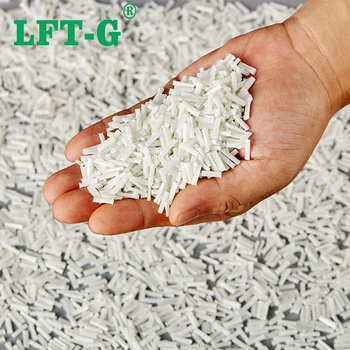
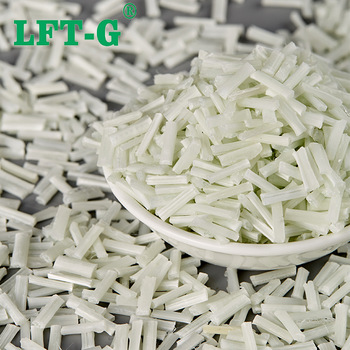
PP-LGF is widely considered for lightweight structural components across automotive, household appliance, electrical, and industrial applications. Its combination of mechanical strength, impact performance, and dimensional stability makes it a practical alternative to selected conventional plastics and metal components.
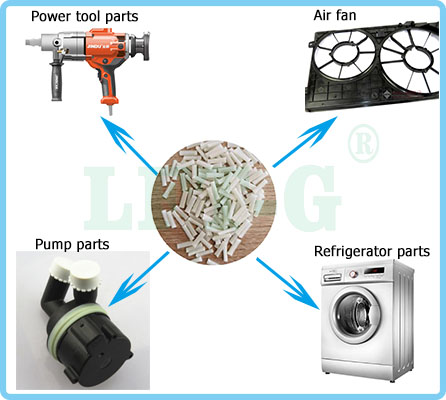
Front-end modules, door modules, shift mechanisms, electronic accelerator pedals, dashboard supports, cooling fan frames, battery carriers, bumper brackets, underbody protection components, and sunroof frames.
Washing machine structural components, drum support parts, air-conditioning fan components, appliance housings, and other structural parts requiring stiffness and impact resistance.
Electrical housings, connector supports, relay bases, coil frames, scanner components, and other functional parts requiring mechanical strength and dimensional stability.
Power tool housings, pump components, water meter housings, impellers, bicycle structural parts, sports equipment, protective equipment, and other lightweight engineering components.
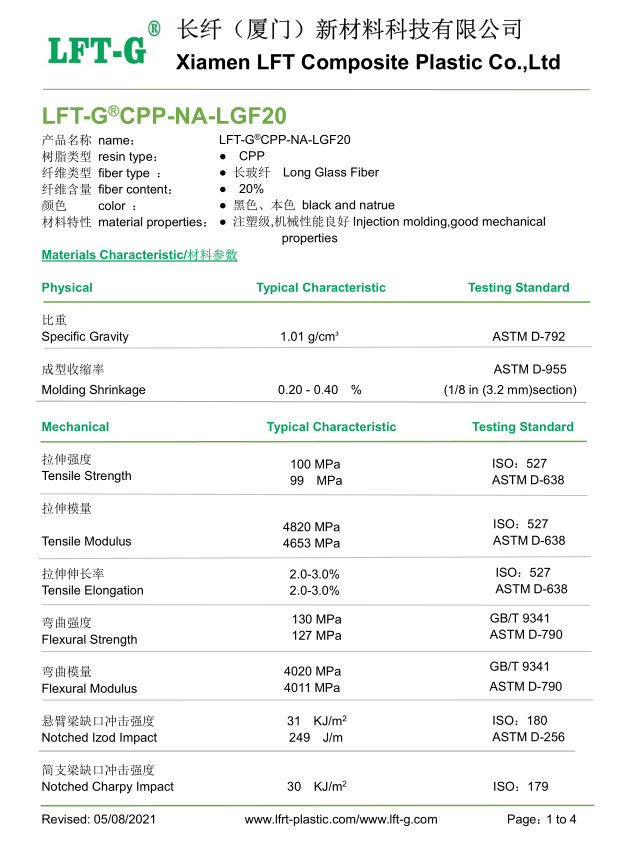
The following technical data is provided as a reference for PP-LGF material selection. Actual properties may vary depending on glass fiber content, material formulation, specimen preparation, and testing conditions. Please contact us for the TDS of a specific grade.
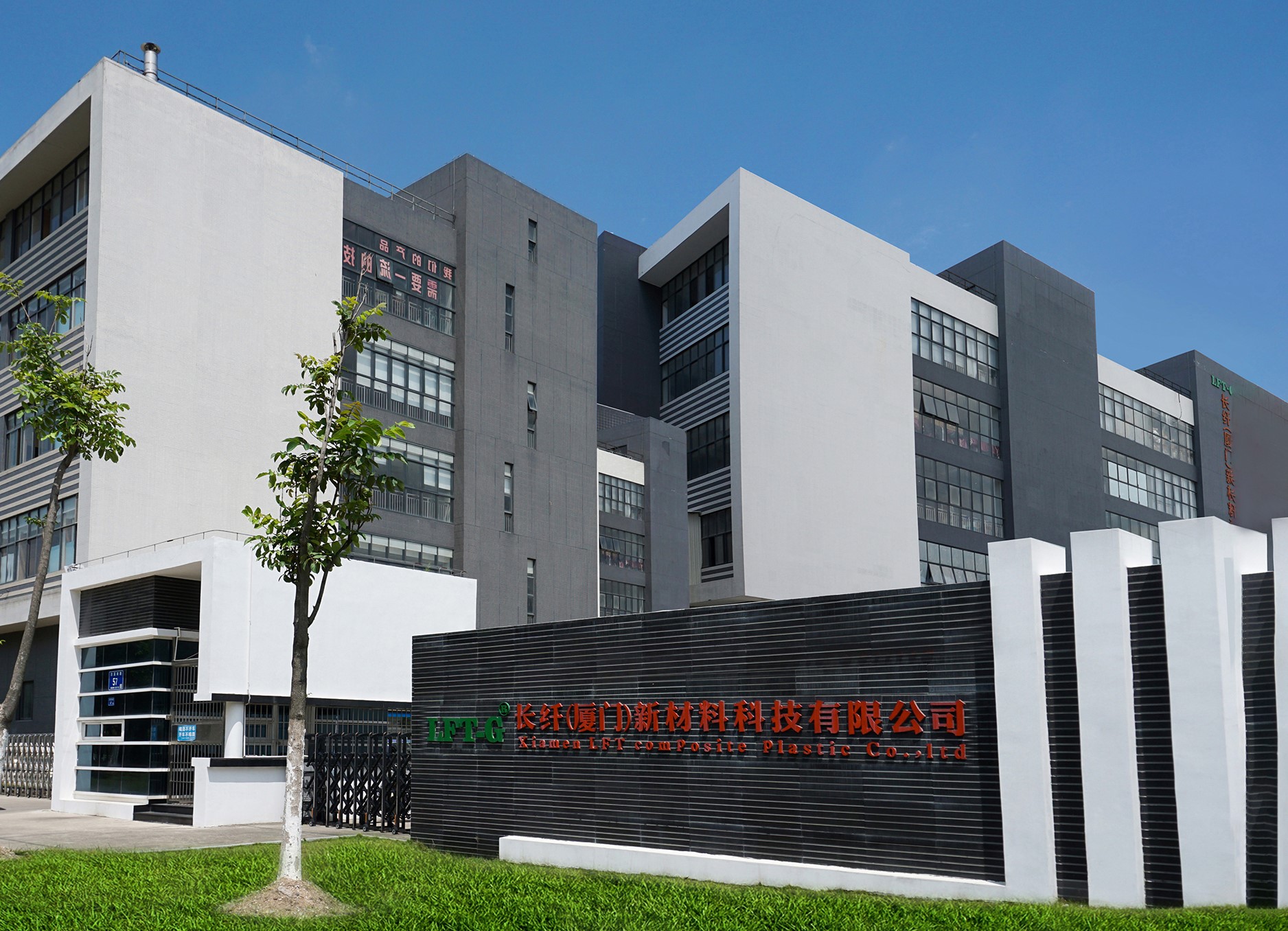
Xiamen LFT Composite Plastics Co., Ltd. specializes in the research, development, manufacturing, and sales of long fiber reinforced thermoplastics (LFT). Our product portfolio includes Long Glass Fiber (LGF) and Long Carbon Fiber (LCF) reinforced compounds based on various thermoplastic resin systems.
Our materials are developed for demanding injection molding applications across automotive, electrical, industrial, and consumer product industries. We offer customized solutions with different resin matrices, fiber contents, colors, additives, and pellet lengths ranging from 5 to 23 mm according to project requirements.
With established quality management systems, including IATF 16949:2016 and ISO 14001:2015, as well as in-house testing capabilities, LFT-G is committed to providing consistent material quality and reliable technical support to customers worldwide.
Beyond supplying long fiber reinforced compounds, we support customers throughout the material selection and application development process.
The main difference is the fiber length retained in the reinforced material. Long glass fiber compounds generally provide better impact resistance, creep resistance, and structural reinforcement, while short glass fiber compounds are often selected for general reinforcement and applications requiring good flowability.
LFT-G offers long fiber reinforced thermoplastic compounds with glass fiber or carbon fiber contents generally ranging from 20% to 60%, depending on the resin system and application requirements.
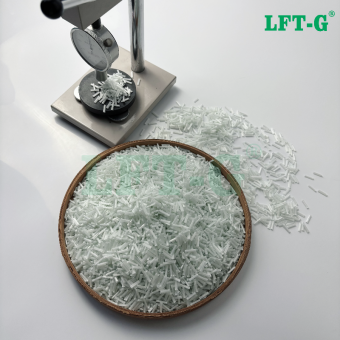
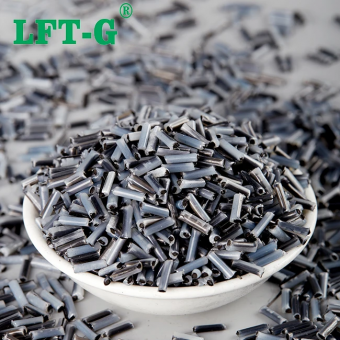
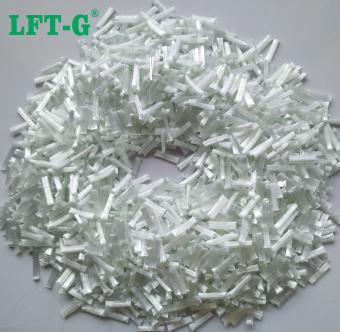
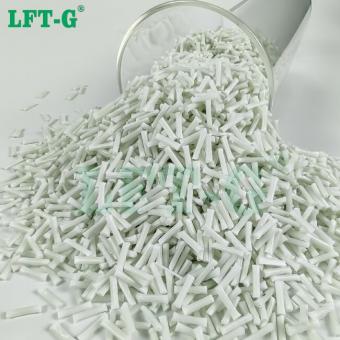
Our standard long fiber reinforced pellets are approximately 12–13 mm in length. Customized pellet lengths ranging from 5 to 23 mm can be discussed according to specific project requirements.
In selected applications, PP-LGF can replace certain metal components by reducing weight while maintaining the required mechanical performance. The feasibility depends on structural design, loading conditions, operating temperature, and safety requirements.
Injection molding is one of the most common processing methods for LFT pellets. Certain formulations may also be suitable for other processing methods, depending on the material grade and product design. Processing conditions should be evaluated for each application.
Whether you need PP-LGF, PA-LGF, PBT-LGF, or another engineering thermoplastic, our team can help you identify the right material for your application.
Share your technical requirements with us and get professional material recommendations.
Email: sales02@lfrtplastic.com
WhatsApp: +86 139 5009 5727
follow us :


-- get updates with latest topics

 e-mail
 English
 français
 Deutsch
 русский
 italiano
 español
 português
 العربية
 日本語
 한국의
 中文