What Is Thermoplastic Polyurethane (TPU)?
Thermoplastic polyurethane (TPU) is a versatile thermoplastic elastomer made through the reaction of diisocyanates, polyols and chain extenders. Its molecular structure consists of alternating hard and soft segments, giving it a unique combination of rubber-like elasticity and thermoplastic processability.
TPU is widely used in automotive, industrial, electronics, footwear and consumer product applications. Depending on its formulation and grade, it offers excellent abrasion resistance, elasticity, tear strength, impact resistance and resistance to oils and aging.
By adjusting its chemical composition, TPU can be produced in different hardness levels to meet specific performance and processing requirements.
Excellent Toughness
Good elasticity and impact resistance for demanding applications.
Abrasion Resistance
Good wear and abrasion resistance for components exposed to friction.
Flexible Processing
Thermoplastic properties allow processing through suitable molding techniques.
Why Choose Long Glass Fiber Reinforced TPU?
Long glass fiber reinforcement enhances the mechanical properties of TPU, particularly its strength, stiffness and dimensional stability. Compared with unreinforced TPU, TPU-LGF is suitable for applications where higher structural performance is required.
The retained fiber length in long fiber reinforced compounds helps improve load transfer and mechanical performance in molded components. The final properties depend on fiber content, fiber distribution, material formulation and molding conditions.
Higher Strength
Long glass fibers improve tensile and flexural strength for structural applications.
Enhanced Stiffness
Reinforcement increases rigidity compared with unfilled TPU grades.
Impact Performance
Designed to provide a balance of toughness and mechanical strength.
Dimensional Stability
Glass fiber reinforcement helps reduce shrinkage and deformation.
Customizable Grades
Different glass fiber contents can be developed for specific applications.
Injection Molding
Suitable for manufacturing complex components using compatible injection molding processes.
Applications of TPU-LGF
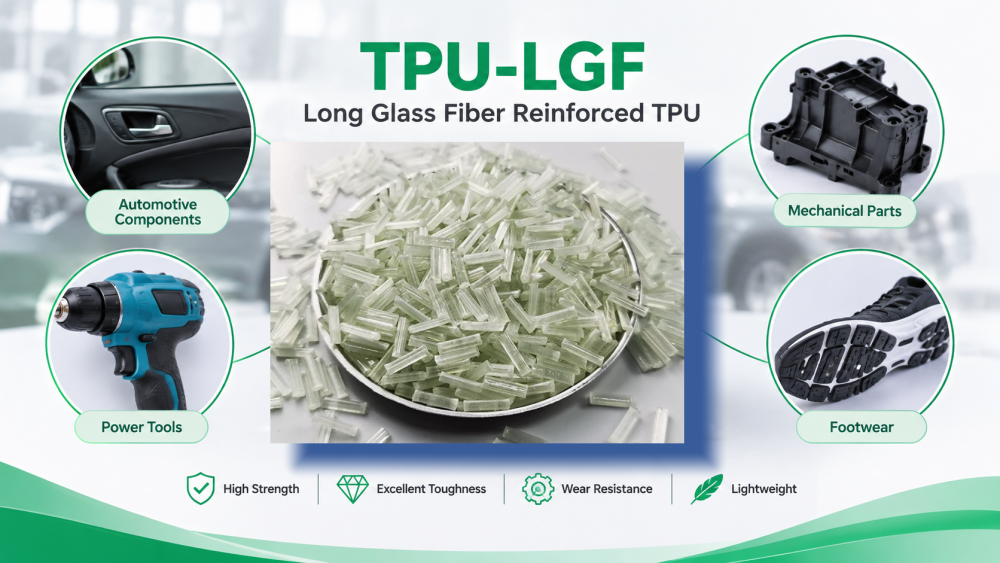
TPU-LGF can be considered for industrial and engineering components requiring a combination of toughness, wear resistance and enhanced structural strength.
Automotive Components
Selected interior and exterior components, structural supports, guides and functional parts.
Industrial Equipment
Mechanical components, protective housings, equipment supports and wear-resistant parts.
Power Tools
Selected power tool housings, structural components and mechanical accessories.
Mechanical Parts
Guides, brackets, functional components and other parts requiring enhanced mechanical performance.
Application Note: The suitability of TPU-LGF depends on the required hardness, glass fiber content, operating conditions and component design. Our technical team can help evaluate the appropriate grade for your application.
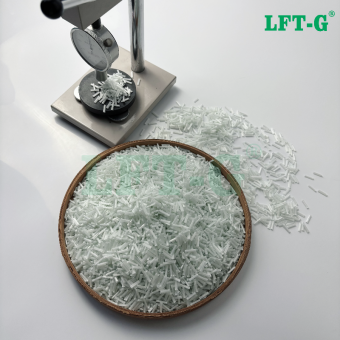
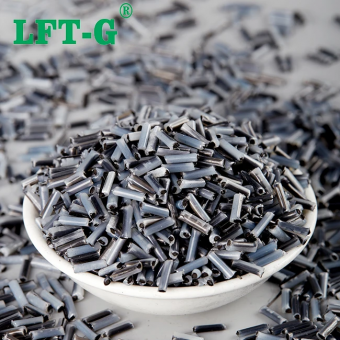
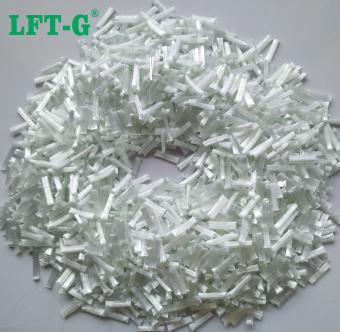
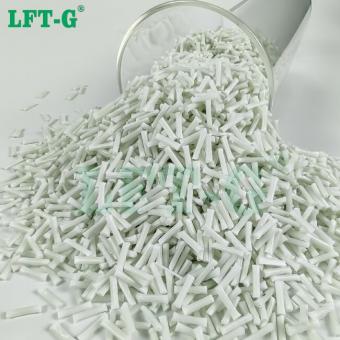
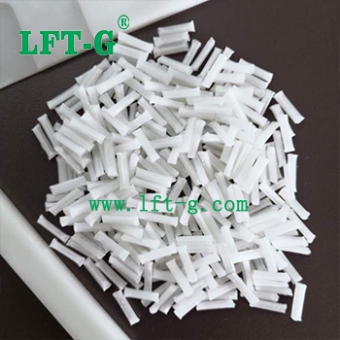
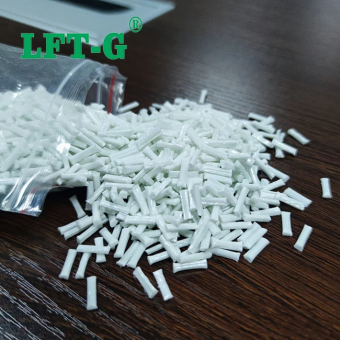
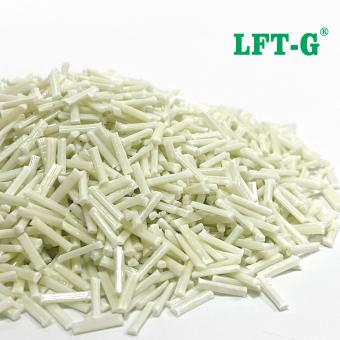
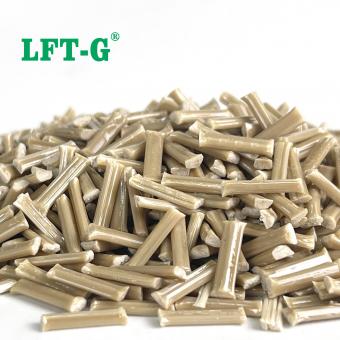
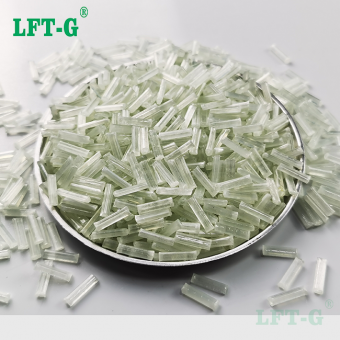
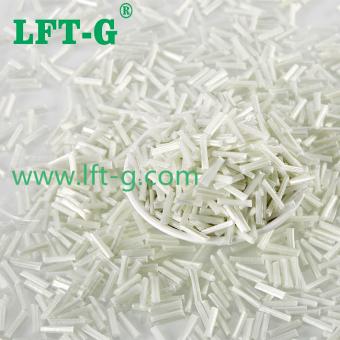
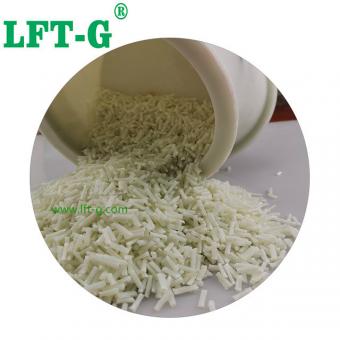
TPU-LGF Pellet Appearance
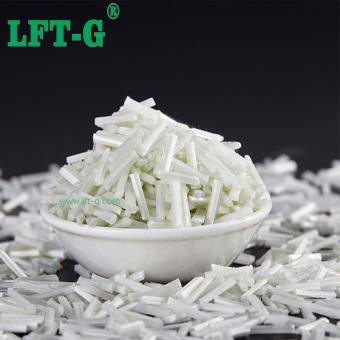
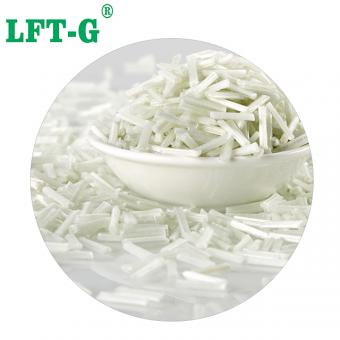
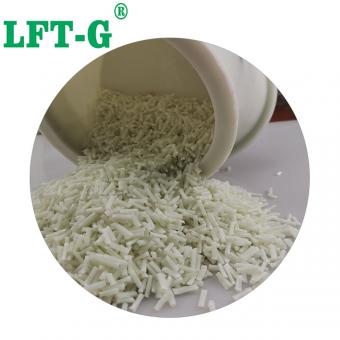
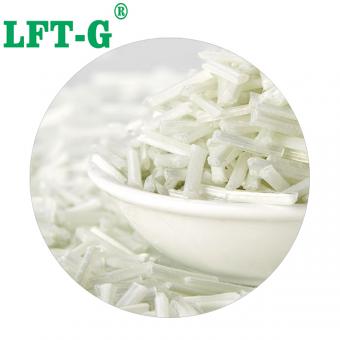
TPU-LGF is supplied in pellet form for injection molding. Standard pellets are available in natural or white color, with customized colors and pellet lengths available upon request.
Product Specifications
LFT-G offers customized long glass fiber reinforced TPU compounds with different fiber loading levels to meet various application requirements.
|
Specification
|
Details
|
|
Product Name
|
Long Glass Fiber Reinforced TPU
|
|
Material
|
Thermoplastic Polyurethane (TPU)
|
|
Glass Fiber Content
|
20%–60%
|
|
Color
|
Natural / White / Customized
|
|
Product Form
|
Pellets / Granules
|
|
Processing Method
|
Injection Molding
|
|
MOQ
|
25 kg
|
|
Packaging
|
25 kg/bag
|
|
Lead Time
|
To be confirmed according to order quantity and grade
|
Note: Specifications and material properties may vary depending on the selected grade and formulation. Please contact us for the corresponding technical data sheet.
Frequently Asked Questions
Q1. Does long glass fiber reinforced TPU require special injection molding equipment?
Long fiber reinforced materials require appropriate consideration of the injection molding machine, screw design, nozzle, mold runner system and gate design. Processing conditions should be optimized to minimize fiber breakage and maintain the desired fiber length in the molded parts.
Q2. What are the advantages of long glass fiber reinforced materials over short glass fiber compounds?
Long glass fiber reinforced compounds generally retain longer fibers in molded components than short glass fiber materials. This can improve load transfer, stiffness, strength and impact performance, depending on the material system and processing conditions.
Q3. What glass fiber contents are available for TPU-LGF?
We offer TPU-LGF grades with glass fiber contents ranging from 20% to 60%. Customized formulations can be discussed according to the required mechanical properties and application conditions.
Q4. Can TPU-LGF replace other engineering plastics?
In certain applications, TPU-LGF may serve as an alternative to conventional reinforced thermoplastics when its mechanical properties, flexibility, wear resistance and operating temperature meet the design requirements. Material selection should be based on testing and application-specific evaluation.
Looking for a TPU-LGF Material Solution?
Tell us your application, required glass fiber content and performance requirements. Our team can help you find a suitable long glass fiber reinforced TPU grade.
Contact LFT-G for technical support, samples and a competitive quotation.

 e-mail
 English
 français
 Deutsch
 русский
 italiano
 español
 português
 العربية
 日本語
 한국의
 中文