• share :

  • facebook
  • y
  • t
  • instagram
  • in
Injection Molding Defects and Solutions
Home / Injection Molding Defects and Solutions
Key Factors That Determine Cooling Time in Injection Molding 2026-01-30

Cooling Time in Injection Molding

In injection molding production, the cooling time of plastic injection-molded parts accounts for approximately 80% of the entire molding cycle. Insufficient cooling often leads to warpage, deformation, or surface defects, which directly affect product dimensional stability.

Properly balancing injection time, packing/holding time, and cooling time is essential for improving both product quality and production efficiency.


Definition of Cooling Time

Cooling time refers to the period from when molten plastic completely fills the mold cavity to the moment the mold can be opened and the part can be safely ejected. The part must be sufficiently solidified and have adequate strength and rigidity to avoid deformation or cracking during ejection.


Factors Affecting Cooling Time

Even with the same plastic material, cooling time varies depending on:

  • Wall thickness
  • Melt temperature
  • Part ejection temperature
  • Mold temperature

No formula can calculate cooling time with 100% accuracy under all conditions. Existing formulas rely on theoretical assumptions and different definitions of cooling time.
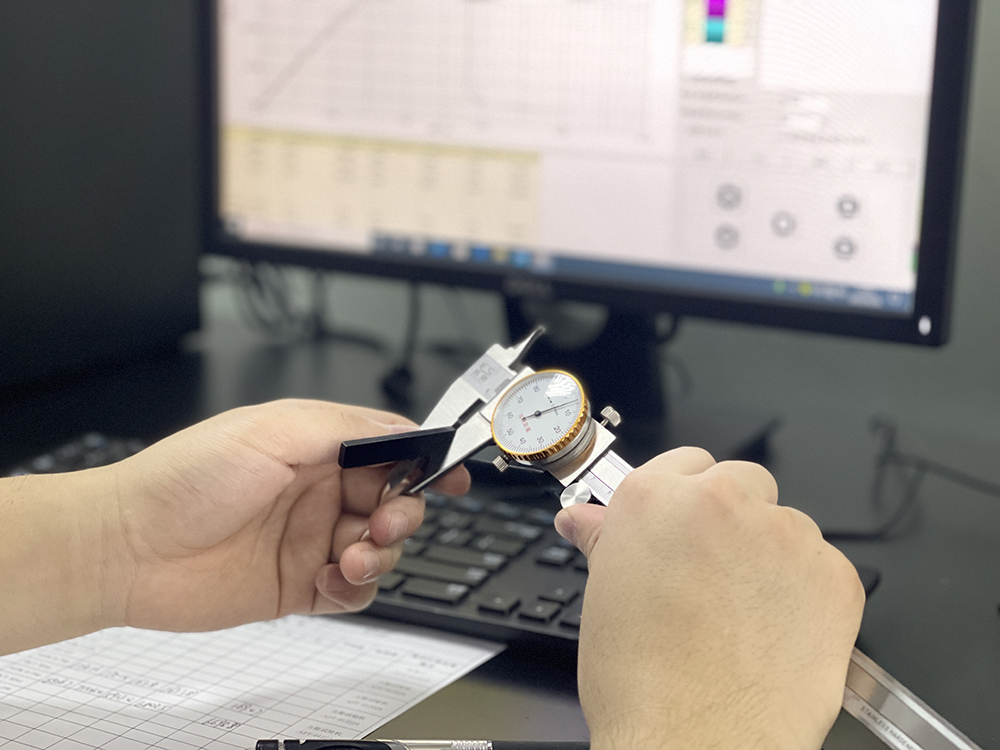

Injection molding cooling diagram

Common Cooling Time Criteria

  1. Time required for the center of the thickest wall section to cool below the material’s Heat Deflection Temperature (HDT).
  2. Time required for the average temperature across the cross-section to reach the specified ejection temperature.
  3. For crystalline plastics, the time required for the center temperature of the thickest wall section to fall below the melting point or reach a specified crystallinity level.

Assumptions in Cooling Time Calculations

  • The plastic cools by transferring heat to the mold.
  • The melt remains in full contact with the mold wall without separation due to shrinkage.
  • The mold cavity surface temperature remains uniform during cooling.
  • The mold surface thermal conductivity is constant.
  • Molecular orientation and thermal stress effects are neglected.
  • Part dimensions do not influence the solidification temperature.
newsletter

-- get updates with latest topics

Copyright © 2015-2026 Xiamen LFT composite plastic Co.,ltd..All Rights Reserved.

Home

Products

News

contact