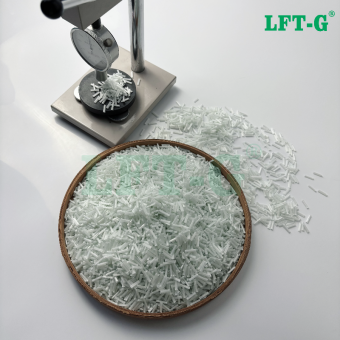
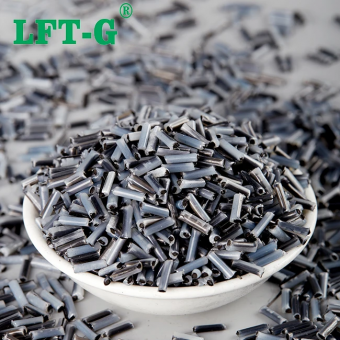
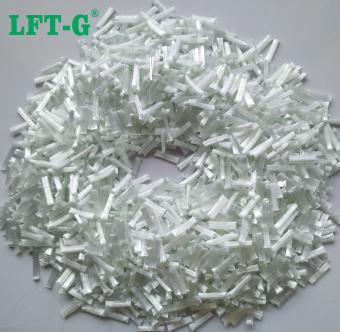
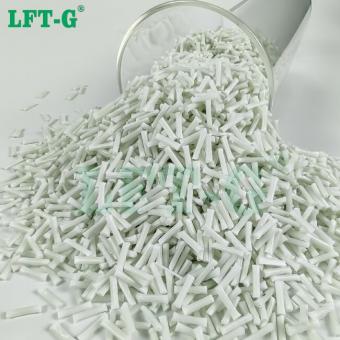
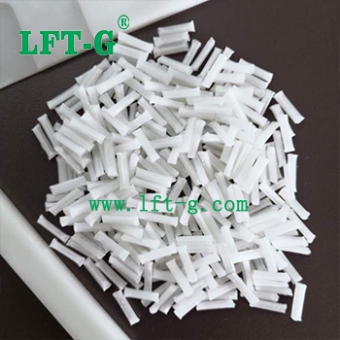
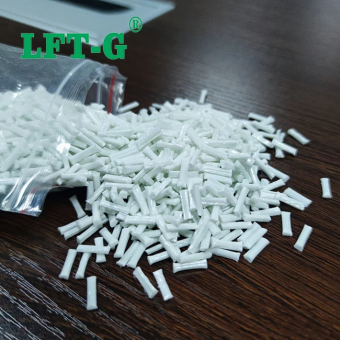
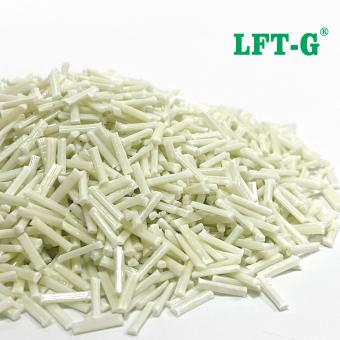
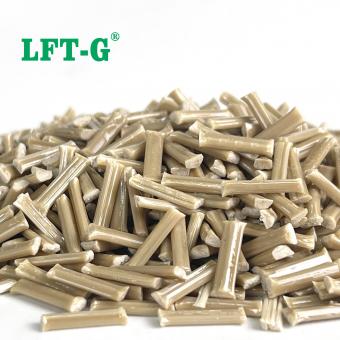
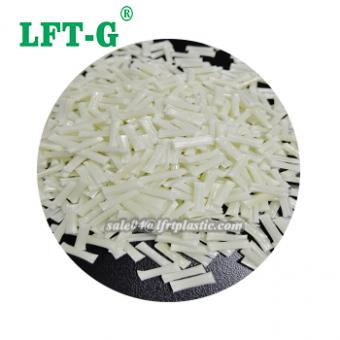
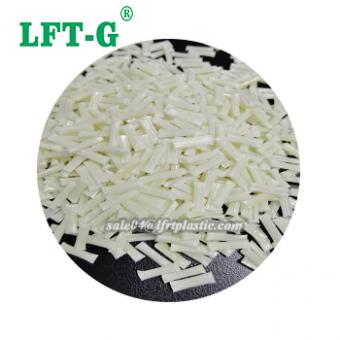
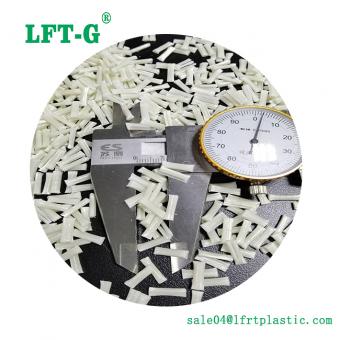
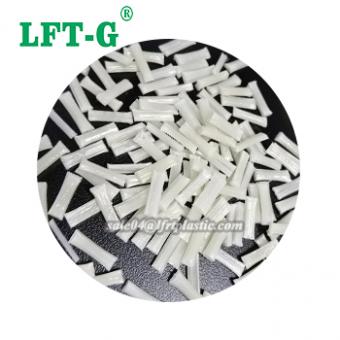
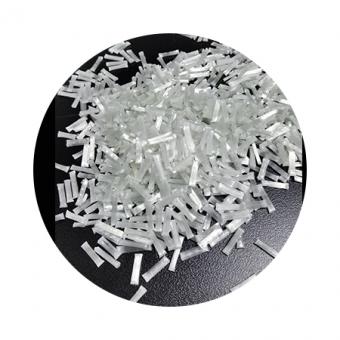
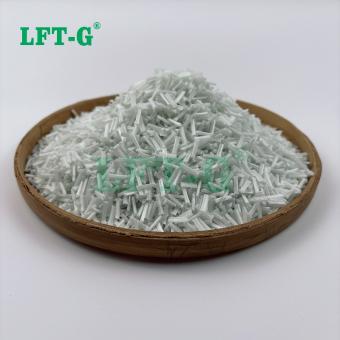
Glass Fiber Reinforced ABS combines the toughness and processability of ABS with the enhanced strength and stiffness of glass fiber reinforcement. It is suitable for engineering applications requiring improved mechanical performance, dimensional stability and heat resistance.
Technical Data
The following table shows the typical properties of a glass fiber reinforced ABS grade. Actual performance may vary depending on glass fiber content, formulation and processing conditions.
|
Characteristic
|
Unit
|
Test Method
|
Property Value
|
|
Specific Gravity
|
g/cm³
|
ASTM D792
|
1.20
|
|
Molding Shrinkage
|
%
|
ASTM D955
|
0.1–0.3
|
|
Tensile Strength
|
MPa
|
ASTM D638
|
84
|
|
Tensile Modulus
|
MPa
|
ASTM D638
|
38,492
|
|
Tensile Elongation
|
%
|
ASTM D638
|
3.4
|
|
Flexural Strength
|
MPa
|
ASTM D790
|
111.7
|
|
Flexural Modulus
|
MPa
|
ASTM D790
|
7,108
|
|
Notched Izod Impact
|
kJ/m²
|
ASTM D256
|
109
|
|
Notched Charpy Impact
|
kJ/m²
|
ASTM D4812
|
—
|
|
Deflection Temperature
|
°C
|
ASTM D648
|
—
|
The above data is for reference only and should not be used as product specifications.
Overview of Glass Fiber Reinforced ABS
Glass fiber reinforced ABS is an engineering thermoplastic composite that combines the impact resistance and processability of acrylonitrile butadiene styrene (ABS) with the reinforcement of glass fibers. The addition of glass fibers improves the mechanical performance of ABS, making it suitable for components that require greater strength, stiffness and dimensional stability.
Enhanced Strength and Stiffness
Glass fiber reinforcement improves tensile and flexural performance, helping components withstand higher mechanical loads and maintain structural integrity.
Improved Heat Resistance
Compared with unreinforced ABS, glass fiber reinforced grades can offer better resistance to heat-related deformation, depending on the formulation.
Dimensional Stability
Glass fibers can reduce molding shrinkage and improve dimensional consistency, supporting the production of precision plastic components.
Impact Performance
The ABS matrix provides toughness, while the reinforced formulation can be tailored to balance impact resistance and rigidity.
Electrical Insulation
ABS-based materials generally offer electrical insulating properties, making suitable grades useful for selected electrical and electronic components.
Appearance and Processing
Proper formulation and processing can help control surface fiber exposure and achieve a consistent appearance in molded parts.
Glass Fiber Reinforced ABS vs. Standard ABS
Both materials are based on ABS resin, but glass fiber reinforcement changes their mechanical and dimensional properties. The right choice depends on the performance requirements and design priorities of the application.
|
Property
|
Standard ABS
|
Glass Fiber Reinforced ABS
|
|
Strength and Stiffness
|
Moderate
|
Enhanced
|
|
Impact Resistance
|
Generally good
|
Depends on fiber content and formulation
|
|
Heat Resistance
|
Standard
|
Can be improved
|
|
Dimensional Stability
|
Good
|
Generally improved
|
|
Weight
|
Lower
|
Higher due to glass fiber addition
|
|
Surface Finish
|
Generally smoother
|
May require appearance optimization
|
Typical Applications
Glass fiber reinforced ABS is used in applications where standard ABS may not provide sufficient stiffness, strength or dimensional stability.
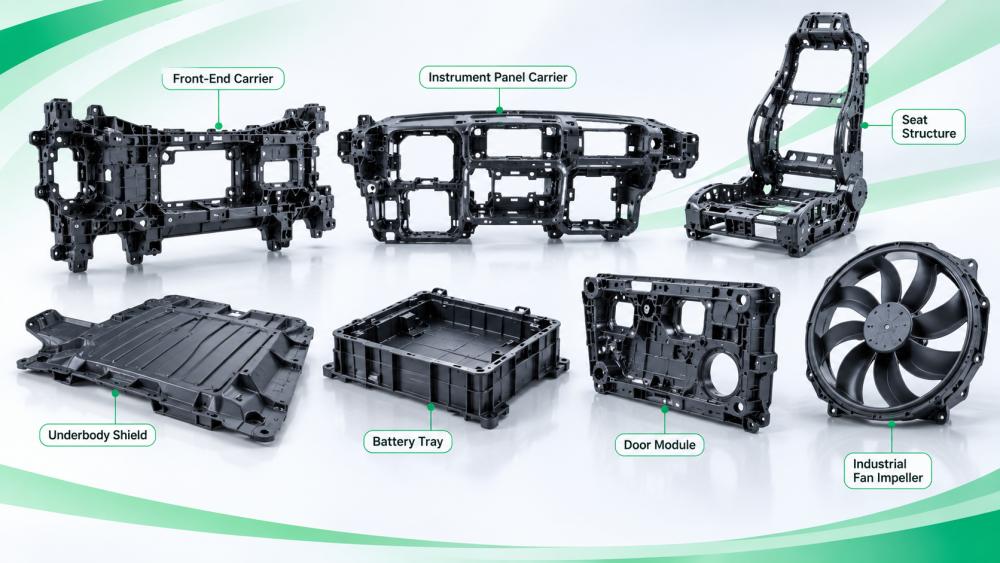
Illustrative examples of structural components used in long fiber reinforced thermoplastic applications. Actual material selection depends on component design and performance requirements.
Automotive Components Interior structural parts, front-end carriers, instrument panel supports and selected components requiring improved rigidity.
Electrical and Electronics Equipment housings, structural supports and selected electrical components.
Home Appliances Structural parts, functional components and durable equipment housings.
Industrial Equipment Mechanical housings, support components and parts requiring enhanced dimensional stability.
Why Choose LFT-G?
Xiamen LFT Composite Plastics Co., Ltd. provides engineering plastic material solutions tailored to different application requirements. From material selection and performance evaluation to composite pellet production, our team supports customers throughout the product development process.
Our support includes:
Material selection and technical consultation, formulation development, composite pellet production, performance analysis, and injection molding guidance.

 e-mail
 English
 français
 Deutsch
 русский
 italiano
 español
 português
 العربية
 日本語
 한국의
 中文