e-mail
 English
 français
 Deutsch
 русский
 italiano
 español
 português
 العربية
 日本語
日本語 한국의
한국의 中文
中文


-
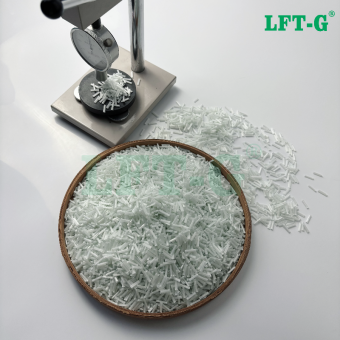
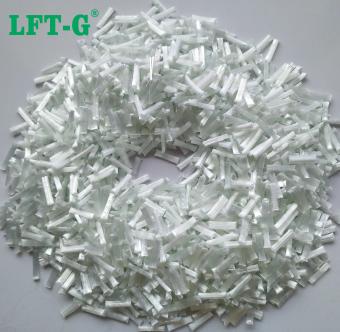
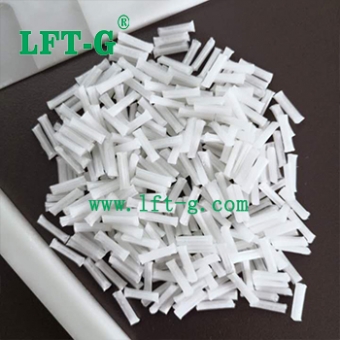
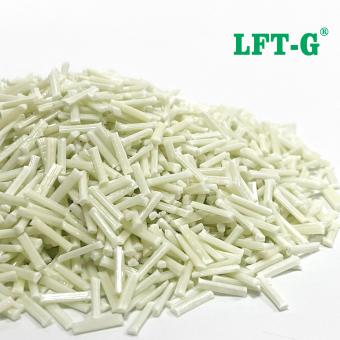
LFT Polylactic acid compounds filled long glass fiber thermoplastic resinPLA (Polylactic Acid) PLA, also known as polylactic acid, is a biodegradable and environmentally friendly polymer. Its production process is pollution-free, and the material can naturally degrade, making it one of the most representative green plastics. The structure of PLA has a significant impact on its heat resistance, toughness, mechanical strength, degradability, and biocompatibility. Among these, heat resistance is a key limitation. PLA molecular chains contain only one methylene group, forming a spiral structure with low chain mobility. As a result, PLA exhibits slow crystallization during injection molding, leading to low crystallinity and poor heat resistance. Additionally, during thermal processing, ester bonds may break, generating terminal carboxyl groups that accelerate thermal degradation through autocatalysis. LGF Reinforced PLA Long fiber reinforcement significantly enhances the performance of PLA. Fibers act as a structural skeleton within the polymer matrix, restricting molecular chain movement under heat and thereby improving thermal resistance. Various fibers can be used for PLA reinforcement, including: Natural plant fibers (sisal, flax, bamboo, coconut fiber, wood fiber) Animal fibers (silk) Mineral fibers (basalt fiber) Synthetic fibers (carbon fiber, glass fiber) Among these, carbon fiber and glass fiber are widely applied due to their high strength and modulus, while natural fibers are gaining attention for their sustainability and biodegradability. Studies show that reinforced PLA composites can achieve a Vicat softening temperature exceeding 140°C, significantly improving thermal performance compared to pure PLA. Comparison with Short Fiber (SGF) Compared to short fiber reinforced materials, long glass fiber (LGF) composites offer superior mechanical performance: 1–3 times higher toughness 50–100% increase in tensile strength and stiffness Better suitability for large structural parts Injection Molding Laboratory Warehouse Certifications Xiamen LFT Composite Plastic Co., Ltd. Xiamen LFT Composite Plastic Co., Ltd. specializes in long fiber reinforced thermoplastics (LFT & LFRT), including Long Glass Fiber (LGF) and Long Carbon Fiber (LCF) materials. Our materials are suitable for injection molding, extrusion (LFT-G), and direct molding (LFT-D). Fiber lengths can be customized from 5–25 mm according to customer requirements. Our products are manufactured using advanced continuous fiber impregnation technology and are certified under ISO9001 and IATF16949 systems, with multiple patents and registered trademarks.
- PLA composite plastic instead metal and steel
- polyactic acid materials High quality and strength
- modified pla compounds
- pla long glass fiber lgf made in China
- long glass fiber filling pla long fiber glass
- lft-g pla lgf thermoplastic resin virgin
Tags :
-
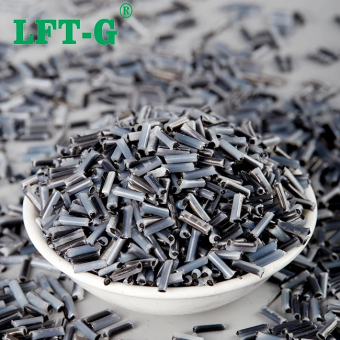
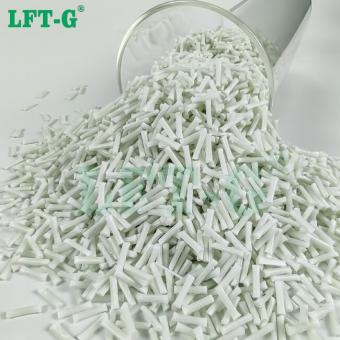
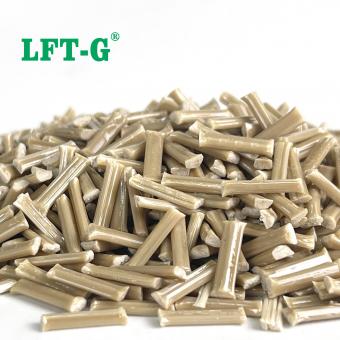
LFT POLYAMIDE 6 Nylon Reinforced long glass fiber orginal color for automotive partsWhat is PA6 (Nylon 6)? PA6 (Polyamide 6), commonly known as Nylon 6, is a semi-crystalline thermoplastic engineering plastic containing amide groups (-CONH-) in its molecular backbone. It is one of the most widely used engineering polymers in the world. PA6 is produced from caprolactam and is available in various grades including PA6, PA66, PA610, etc., depending on the monomer structure. Among them, PA6 and PA66 are the most commonly used in industrial applications. PA6 offers excellent mechanical strength, wear resistance, and processability, making it widely used in fibers, engineering plastics, and films. Properties of PA6 PA6 provides a balanced combination of mechanical and chemical performance, including: High tensile and compressive strength Excellent toughness and fatigue resistance Good wear and abrasion resistance Strong resistance to oils, fuels, and most organic solvents Good electrical insulation properties Easy processing and good moldability However, PA6 also has some limitations such as high moisture absorption, dimensional instability, and reduced impact performance at low temperatures. Limitations of PA6 High water absorption affects dimensional stability Poor UV resistance and long-term thermal oxidation behavior Property variation under humid environments Processing sensitivity to moisture content Why Reinforce PA6 with Long Glass Fiber? To overcome the limitations of neat PA6, reinforcement with long glass fibers (LGF) is widely used. This is a common physical modification method to significantly enhance material performance. By incorporating long glass fibers into the PA6 matrix, the following properties are greatly improved: Mechanical strength and stiffness Dimensional stability Heat resistance Fatigue performance Load-bearing capability Applications of PA6-LGF 30% long glass fiber reinforced PA6 is widely used in high-performance structural components, including: Power tools: housings and structural parts Automotive industry: engine components, structural brackets, interior and exterior parts Industrial equipment: mechanical parts and housings Its fatigue strength can reach up to 2.5× higher than unreinforced PA6, making it ideal for demanding applications. Processing Guidelines (PA6-LGF 30%) The addition of 30% long glass fiber significantly reduces shrinkage to approximately 0.3%, compared to 1.0–1.5% for neat PA6. Higher fiber content generally leads to lower shrinkage, but may also increase surface fiber exposure and processing challenges. Recommended processing notes: Recycled material usage should be controlled within 25% Material must be properly dried before processing Excessive reprocessing may affect mechanical performance and color stability Mold design should consider fiber orientation and flow balance Post-cooling in warm water helps reduce warpage and internal stress Customers & Production Certifications
- Polyamide 6 composite materials
- lgf thermoplastic resin granules
- High impact pa series engineer plastic
- injection molding plastic
- pa6 filling long glass fiber
- made in China high performance plastic
Tags :
-
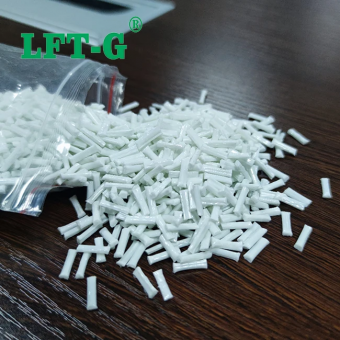
Nylon6 filling long glass fiber40 orginal color for automotive partsWhat is PA6 Plastic? Polyamide (PA), commonly known as Nylon, is a thermoplastic engineering plastic containing amide groups (-NHCO-) in its molecular chain. It can be divided into aliphatic and aromatic polyamides and is one of the earliest and most widely used engineering plastics. Polyamide materials are widely used in fibers, engineering plastics, and films. According to the number of carbon atoms in the molecular structure, many types of polyamides can be produced, among which PA6, PA66, and PA610 are the most commonly used. Introduction to PA6 (Polyamide 6) PA6 is an aliphatic polyamide known for its lightweight properties, high mechanical strength, wear resistance, and excellent processing performance. It is widely used in engineering plastics, fibers, automotive components, and industrial applications. However, PA6 molecules contain highly polar amide groups that easily form hydrogen bonds with water molecules. As a result, PA6 has relatively high water absorption, which may affect dimensional stability and impact performance under dry or low-temperature conditions. Advantages of Nylon 6 (PA6) High mechanical strength and excellent toughness Outstanding fatigue resistance under repeated bending High heat resistance and softening point Low friction coefficient and excellent wear resistance Excellent resistance to oils, alkalis, and general solvents Good anti-aging and weather resistance Self-extinguishing, non-toxic, and odorless Excellent electrical insulation performance Lightweight and easy to process and mold Disadvantages of Nylon 6 (PA6) High water absorption rate Poor dimensional stability in humid environments Limited resistance to strong acids and oxidants Surface discoloration and oxidation under long-term high temperatures Strict injection molding moisture requirements Possible deformation and warpage during molding Why Fill PA6 with Long Glass Fiber? Although PA6 has excellent mechanical properties and processing performance, its high water absorption and dimensional instability limit its use in high-performance engineering applications. To improve the overall performance of PA6, reinforcement modification is commonly used. Adding long glass fiber (LGF) or carbon fiber significantly enhances: Mechanical strength Impact resistance Dimensional stability Heat resistance Fatigue resistance Structural rigidity Long glass fiber reinforced PA6 is widely used in automotive, industrial, and structural engineering applications. Applications of PA6-LGF PA6 reinforced with 30% long glass fiber (LGF30) is an ideal engineering material for: Power tool housings and components Automotive structural parts Engineering machinery components Industrial load-bearing structures Mechanical and electrical equipment parts Compared with unreinforced PA6, the fatigue resistance strength can be increased by up to 2.5 times. Processing & Forming Guidelines for PA6 + 30% LGF Adding 30% long glass fiber can reduce PA6 shrinkage from approximately 1–1.5% down to around 0.3%. Excessive recycled material should be avoided, as it may reduce mechanical properties and cause discoloration. Recycled material should generally not exceed 25% and must be fully dried before processing. Fiber orientation during injection molding may cause warpage; proper gate design and mold temperature control are recommended. Slow cooling in hot water treatment can help reduce internal stress and deformation. Customers & Staff Certificates
- Polyamide 6 composite properties
- lgf thermoplastic resin good price
- High impact PA6 instead metal plastic
- injection molding plastic gf30 filter
- pa6 filling long glass fiber customized
- Reinforced plastic lightweight compounds
Tags :