e-mail
 English
 français
 Deutsch
 русский
 italiano
 español
 português
 العربية
 日本語
日本語 한국의
한국의 中文
中文


-
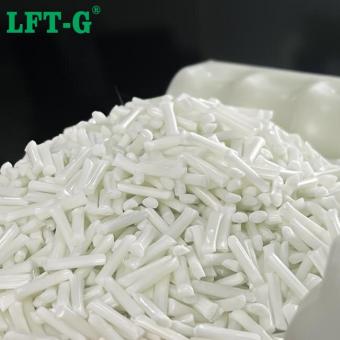
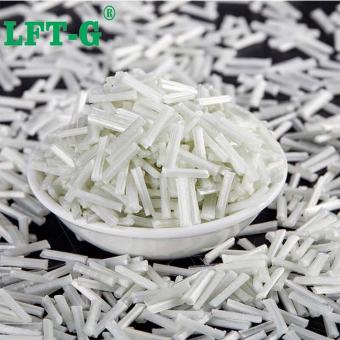
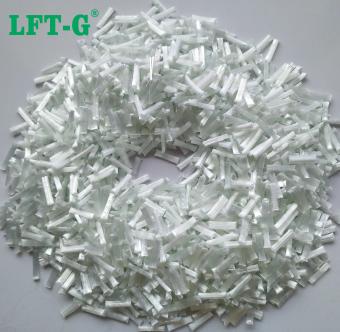
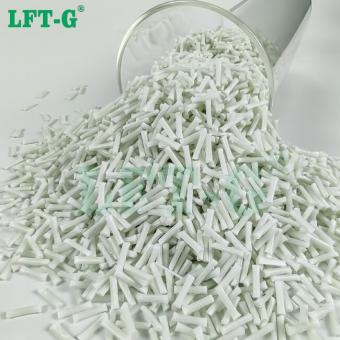
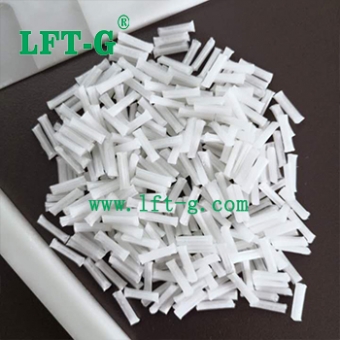
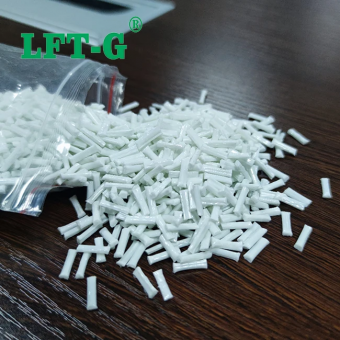
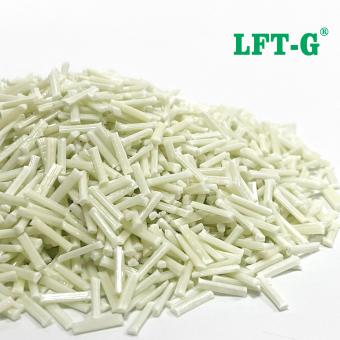
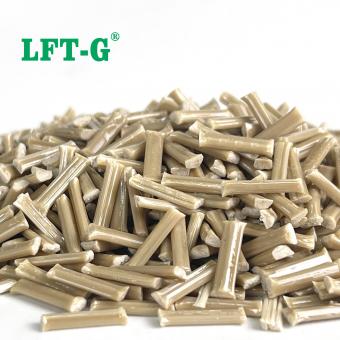
LFT Polyamide6 long glass fiber reinforced plasticPA66 Long Glass Fiber Reinforced (PA66-LGF) Nylon (PA) offers a combination of excellent properties, including high mechanical strength, chemical resistance, oil resistance, wear resistance, self-lubrication, and good processability. As a result, nylon has become one of the most widely used engineering thermoplastics in many industrial applications. However, the performance requirements of nylon vary depending on the application, operating conditions, and service environment. For example, components such as electric drill housings, motor housings, pump impellers, bearings, diesel engine components, and air-conditioning fan blades may require high strength, rigidity, and dimensional stability. Since unmodified nylon can exhibit reduced toughness at low temperatures, impact modification may be required for certain applications. For long-term outdoor use, weather-resistant modification may also be necessary. The most commonly used reinforcing materials for nylon include glass fiber, carbon fiber, and various other fibrous materials. Among them, glass fiber reinforcement is one of the most widely adopted solutions. Adding glass fiber can significantly improve the stiffness, strength, hardness, dimensional stability, and heat resistance of nylon. Depending on the required mechanical performance and application, glass fiber content can typically range from approximately 20% to 50%. Grades with around 30% glass fiber are commonly used for a balance of strength, stiffness, processability, and cost, while higher fiber contents can be selected when greater mechanical performance is required. Production Technology of Glass Fiber Reinforced Nylon Long glass fiber reinforced nylon can be manufactured using a specialized compounding process designed to maintain a relatively long fiber length within the polymer matrix. During the production process, nylon resin and other formulation components are prepared and fed into the compounding system, while continuous glass fiber is introduced through a dedicated fiber feeding system. The glass fiber is impregnated and combined with the molten nylon resin under controlled processing conditions. Proper control of screw configuration, temperature, feeding rate, and shear is important for achieving good fiber distribution while minimizing unnecessary fiber breakage. Factors Affecting the Properties of Glass Fiber Reinforced Nylon 1. Glass Fiber and Nylon Interfacial Bonding The interfacial bonding between glass fiber and nylon resin is one of the most important factors affecting the performance of glass fiber reinforced nylon. If the adhesion between the fiber and polymer matrix is insufficient, the reinforcing efficiency can be significantly reduced. Therefore, appropriate glass fiber surface treatment and sizing technology are important. Glass fiber manufacturers can provide different surface treatments and sizing systems designed for specific polymer matrices, allowing compounders to select a suitable fiber type for the target nylon formulation. 2. Glass Fiber Length The length of glass fiber retained in the nylon matrix is another important factor affecting mechanical performance. In general, long glass fiber reinforced nylon can provide advantages over conventional short glass fiber materials in terms of tensile strength, flexural strength, stiffness, dimensional stability, and impact performance. 3. Glass Fiber Dispersion Uniform glass fiber dispersion is also critical to achieving consistent material performance. It is influenced by the screw configuration, screw speed, residence time, processing temperature, and formulation. Excessive shear can cause unnecessary fiber breakage, reducing the effective fiber length and potentially affecting the mechanical properties of the final product. Therefore, processing conditions should be optimized according to the glass fiber content and formulation requirements. 4. Other Processing Factors In addition to fiber length and dispersion, factors such as processing temperature, glass fiber diameter, fiber type, resin grade, additives, and moisture control can also influence the final performance of glass fiber reinforced nylon. Glass Fiber Reinforced Nylon and Melt Flowability Compared with unfilled nylon, glass fiber reinforced nylon generally exhibits higher melt viscosity and can therefore present greater processing challenges during injection molding. Potential issues include higher injection pressure requirements, incomplete filling, increased mold temperature requirements, and reduced surface quality. For demanding injection molding applications, processing performance can be improved through formulation optimization, including the appropriate selection of processing aids, lubricants, stabilizers, and other additives. Injection molding parameters should also be adjusted according to the specific material grade and part design. High-Temperature Heat and Oxidative Aging Resistance In applications such as bearings, engine components, and...
- pa66 nylon plastic
- Polyamide66 long glass fiber
- pa66 fill gf
- raw material plastic pa66
- composite materials pa66
- thermoplastic resin
Tags :
-
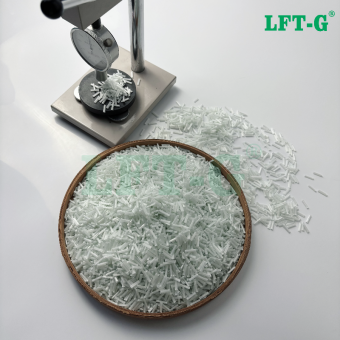
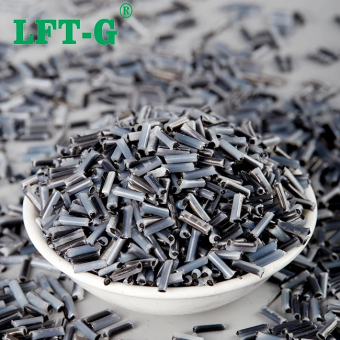
Xiamen LFT-G Polyamide 66 nylon materials reinforced plastic high mechanical properties customized color and lengthPolyamide 66 Nylon 66 (PA66) has excellent mechanical properties, processing performance and corrosion resistance, after flame retardant modification of PA66 can be widely used in automotive, electronics, machinery and other fields. With the wide application of nylon in different fields, the requirements for its performance have been taken to the next level. However, PA66 has high crystallinity and fast crystallization speed, and is prone to warpage defects during injection molding process. Especially for glass fiber reinforced nylon 66, due to the anisotropic arrangement of glass fibers inside the material, it is easy to cause different shrinkage rates in all directions, which further aggravates the warping deformation. Long glass fiber reinforced composites Glass fiber is an excellent performance of inorganic non-metallic materials, mostly used for reinforcing plastics. Mainly silica as raw material, add specific metal oxides mineral raw materials melted at high temperature, molten glass liquid flow through the leakage nozzle out of the role of high-speed pulling gravitational force is drawn and rapid cooling and curing into a very fine continuous fibers, the diameter of a few microns to more than twenty microns. Glass fiber is divided into short glass fiber, long glass fiber according to the shape. Short glass fiber: length less than 6mm, cross-section is round, in the material distribution disorder, anisotropy. Long glass fiber: length between 6-25mm, orderly distribution in the material, isotropic. Short Glass Fiber Nylon: Processability, rigidity and strength are improved, and floatation is less likely to occur during injection molding compared to long glass fiber nylon. Long glass fiber reinforced nylon: less anisotropic shrinkage compared to short glass fiber, reducing the effect of warpage. The rigidity, abrasion resistance, aging resistance, and heat resistance are stronger than those of short glass fiber reinforced nylon. Datasheet Application About us Xiamen LFT Composite Plastic Co.,LTD was established in 2009, is a brand-name global suppliers of long fiber reinforced thermoplastic materials integrating product research & development(R&D), production and sale marketing. Our LFT products have passed the ISO9001&16949 system certification and have obtained lots of national trademarks and patents, covering the fields of automotive, military parts and firearms, aerospace, new energy, medical equipment, power wind energy, sports equipment, etc.
- Polyamide 66 composite
- Polyamide 66 lgf filling lgf
- pa66 nylon plastic raw materials
- PA66 composite fiber car parts
- New high performance thermoplastic resin
- general grade pa66 compounds
Tags :