e-mail
 English
 français
 Deutsch
 русский
 italiano
 español
 português
 العربية
 日本語
日本語 한국의
한국의 中文
中文


-
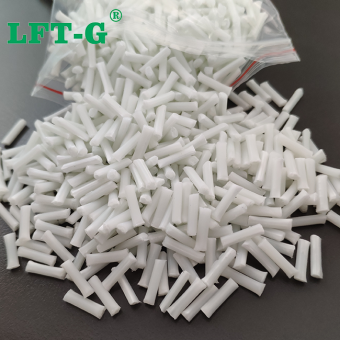
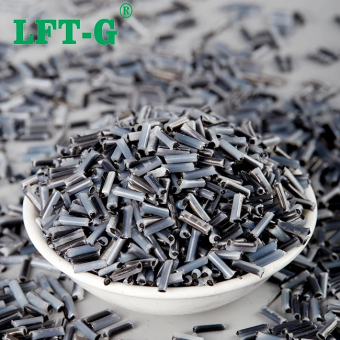
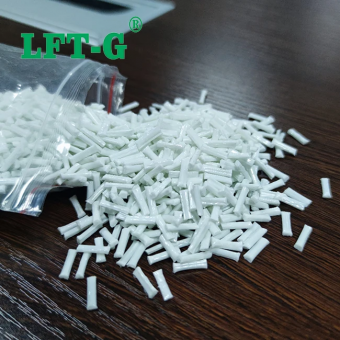
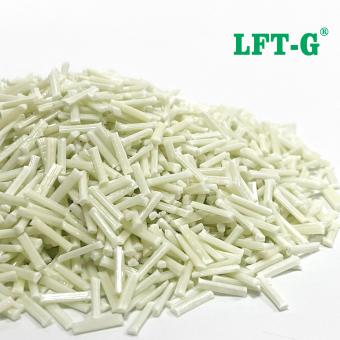
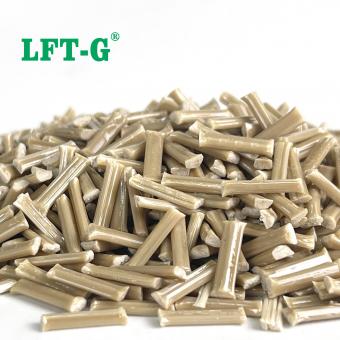
LFT-G modified ABS compounds Long Glass Fiber for automotive partsABS material Acrylonitrile-butadiene styrene (ABS) resin is an opaque amorphous thermoplastic engineering plastic with complex two-phase structure. It is composed of styrene, acrylonitrile and butadiene in different proportions. In the 1970s, it began to be recognized by the public and began to be used. In the 1990s, the market demand grew rapidly. At present, it should be used in domestic and foreign markets, especially in construction, home appliances, automobiles and other industries. ABS-LGF Long glass fiber is widely used in engineering plastics. Reinforced ABS composites are made by adding a certain percentage of glass fiber, with the addition of 30% to 50% glass fiber being the most common. So as to improve the mechanical properties of ABS. Such as tensile properties, bending properties, and the corresponding molding shrinkage rate is not reduced, so that the material will not stress cracking. Advantages: 1. Long glass fiber reinforced, glass fiber is a high temperature resistant material, therefore, the heat resistant temperature of reinforced plastic is much higher than before without glass fiber, especially nylon plastics 2. After long glass fiber reinforcement, due to the addition of long glass fiber, the mutual movement between polymer chains of plastic is limited, therefore, the shrinkage rate of reinforced plastics decreases a lot, and the rigidity is greatly improved. 3. After long glass fiber reinforcement, reinforced plastics will not stress crack, at the same time, the anti-impact performance of plastics is improved a lot. 4. After long glass fiber reinforcement, glass fiber is a high strength material, which also greatly improves the strength of plastic, such as: tensile strength, compression strength, bending strength, improve a lot. 5. Long glass fiber reinforced after, due to the addition of glass fiber and other additives, the combustion performance of reinforced plastics decreased a lot, most of the material can not ignite, is a kind of flame retardant material. Datasheet for reference only Processing flow Cases About Xiamen LFT-G Xiamen LFT composite plastic Co., Ltd. is a brand-name company that focuses on LFT&LFRT. Long Glass Fiber Series(LGF) & Long Carbon Fiber Series(LCF). The company's thermoplastic LFT can be used for LFT-G injection molding and extrusion, and can also be used for LFT-D molding. It can be produced according to customer requirements: 5~25mm length. The company's long-fiber continuous infiltration reinforced thermoplastics have passed ISO9001 & 16949 system certification, and the products have obtained lots of national trademarks and patents.
- Modified material lft injection molding
- ABS compounds long glass fiber
- lgf injection mold abs for engineering
- reinforced material abs filling lgf
- ABS-LGF30 thermoplastic resin
- Thermoplastic resin ABS
Tags :
-
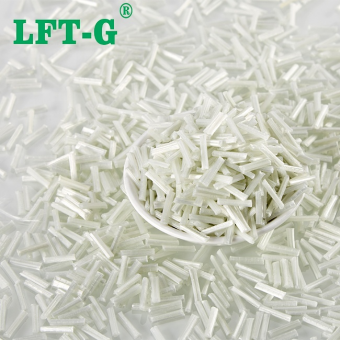
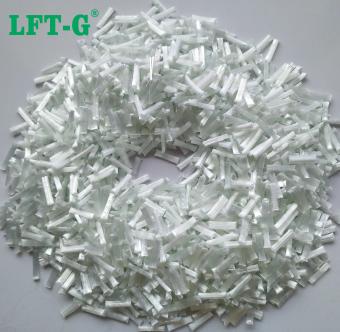
LFT-G TPU Thermoplastic Urethane filling long glass fiber materials compounds plasticWhat is TPU? TPU(Thermoplastic polyurethanes) name is elastomer rubber. It is mainly divided into polyester type and polyether type, its hardness range is wide (60HA-85HD), wear resistance, oil resistance, transparent, good elasticity, in daily necessities, sports goods, toys, decorative materials and other fields are widely used, halogen-free flame retardant TPU can also replace soft PVC to meet more and more fields of environmental protection requirements. The so-called elastic body refers to the glass transition temperature is lower than the room temperature, elongation at break >50%, the external force removed after the good recovery polymer material. Polyurethane elastomer is a special category of elastomer, polyurethane elastomer hardness range is very wide, performance range is very wide, so polyurethane elastomer is a kind of polymer material between rubber and plastic. It can be heated plasticized and has little or no crosslinking in chemical structure. Its molecules are basically linear, but there is some physical crosslinking. This type of polyurethane is called a TPU. Why filling long glass fiber? Long glass fiber reinforced composites can solve your problems when other methods of reinforced plastics do not provide the performance you need or if you want to replace metal with plastic. Long glass fiber reinforced composites can cost-effectively reduce the cost of goods and effectively improve the mechanical properties of engineering polymers, and increase the durability by forming long fibers to form a long-fiber-reinforced internal skeleton network. Performance is preserved in a wide range of environments. Compared with Short glass fiber Application Car doors and windows, Safty toe, Mechanical parts, Pneumatic nail gun boxes, Professional power tools, Nut and bolts, Etc. About us Xiamen LFT composite plastic Co., Ltd. is a brand-name company that focuses on LFT&LFRT. Long Glass Fiber Series (LGF) and Long Carbon Fiber Series (LCF). The company's thermoplastic LFT can be used for LFT-G injection molding and extrusion, and also be used for LFT-D molding. It can be produced according to customer requirements: 5~25mm in legnth. The company's long-fiber continuous infiltration reinofrced thermoplastics have passed ISO9001&16949 system certification, and the products have obtained lots of national trademarks and patents. Quality Management System ISO9001&16949 Certification National Laboratory Accreditation Certificate Modified Plastics Innovation Enterprise Honorary Certificate Heavy metal REACH & ROHS testing
- tpu lft injection molded made in China
- long fibre reinforced thermoplastics
- glass fiber reinforced plastics granules
- long glass fiber TPU low warping shoe sole
- long fiber composite TPU granules
- long glass fiber reinforced TPU lft
Tags :
-
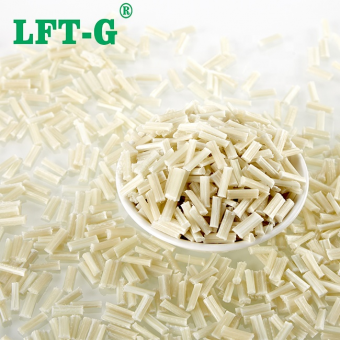
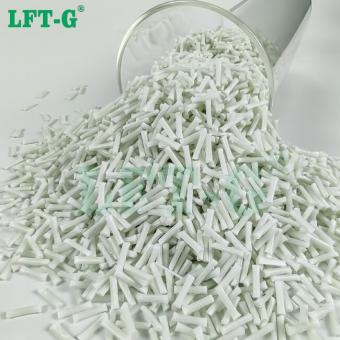
LFT-G modified Polyamide 66 filled long glass fiber compoundsPA66-LGF Information PA66 is one of the most produced and widely used polyester series products. It has high grain size, excellent tensile properties, bending properties, tensile strength and other material mechanical properties, and its excellent ultra-low temperature characteristics and organic chemical properties. It is a class of rubber products with wide range of application, stable characteristics, good mechanical properties, high quality insulation, low density, easy processing and molding, self-extinguishing, and good wear resistance. Therefore, it is widely used in vehicles, electronic and electrical, chemical materials, industrial equipment, instrument panels, construction projects and other industries. However, it has high water absorption, poor alkali resistance, dry ultra-low temperature impact, low compressive strength and easy to deform after absorbing moisture, which affects the reliability of goods specifications. People have improved PA66 in a variety of ways, adding PA66 chemical fiber is one of them. After adding glass fiber, its impact force, heat deformation, material mechanical properties, molding processability and acid resistance are significantly improved. Glass fiber is a class of functional raw materials with high quality characteristics. This utility model has the advantages of low cost, non-combustibility, high temperature resistance, acid resistance, high tensile strength, high impact compressive strength, low tensile strength, high quality insulation properties, high quality insulation properties, etc. It is usually used as a raw material to improve organic chemical polymers or functional materials and composites. The most important hazard of proportional limits to raw materials is mechanical properties. The material mechanical properties of modified PA66 are also related to the composition of glass fibers. The tensile strength, bending strength and impact compression strength of PA66 increase with the glass fiber composition after the addition of PA66 chemical fibers. The tensile and flexural strengths of the managed system increased linearly, but the glass fiber composition was 30%. The trend of increasing tensile and flexural strengths showed some improvement. The results show that PA66 can produce a reasonable page layer, which can reasonably transfer the ground stress between the matrix and page, and thus improve the compressive strength of the matrix. PA66-LGF TDS The datasheet was tested by Xiamen LFT, for your reference only. PA66-LGF Application Suitable for many fileds, other application you can ask for our technical advice. Details Number Color Length Sample MOQ Port of Loading Delivery time Payment terms PA66-NA-LGF30 Original color (can be customized) 12mm (can be customized) Available 25kg Xiamen Port 7-15 days after shipment Discussed Xiamen LFT composite plastic Co., Ltd Xiamen LFT composite plastic Co., Ltd. is a brand-name company that focuses on LFT&LFRT. Long Glass Fiber Series (LGF) & Long Carbon Fiber Series (LCF). The company's thermoplastic LFT can be used for LFT-G injection molding and extrusion, and can also be used for LFT-D molding. It can be produced according to customer requirements: 5~25mm in length. The company's long-fiber continuous infiltration reinforced thermoplastics have passed ISO9001 &16949 system certification, and the products have obtained lots of national trademarks and patents. We will offer you: 1. LFT&LFRT material technical parameters and leading edge design 2. Mold front design and recommendations 3. Provide technical support such as injection molding and extrusion molding.
- Low warpage electronic appliance
- self owing pa66 pellets thermoplastic resin
- high strength and high toughness reinforced pa66 pellets
- best long glass fiber pa66 lgf30 granules
- PA66 6 twin screw lgf pellets
- Long Fiber PA66 granules Application
Tags :
-
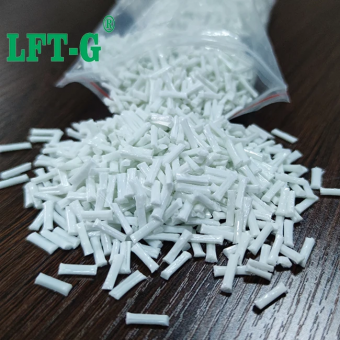
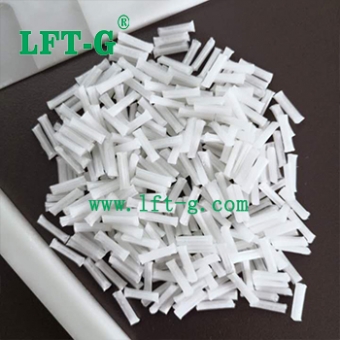
Xiamen LFT-G Polybutylene terephthalate Long Glass Fiber Reinforced CompoundsThey are frequently used to replace metal for applications in which light weighting, improved impact strength, elastic modulus, and material strength are required.
- PBT modified plastic gf long glass fiber
- PBT thermoplastic engineering polymer
- GFRP PBT high toughness and rigidity sample available
- LFT PBT glass fiber reinforcement polymer good price
- PBT higher performance light weight instead metal
- low warpage PA6 for car parts
Tags :
-
LFT Polyamide 66 high performance long carbon fiber reinforcedPolyamide 66 roving carbon fiber Nylon black color with heat resistance
- Long carbon fiber enhance pellets
- Roving carbon fiber PA66 instead metal and steel
- Nylon66 composite granules for injection
- High quality PA66 long fiber composite、
- Polyamide long fiber composite
- Virgin plastic PA6 LCF40 for car parts
Tags :
-
LFT-G Polylactic acid filled long carbon fiber PolymersWhat is long carbon fiber PLA? While biobased polylactic acid (PLA) thermoplastics are relatively eco-friendly and easy to recycle, composites such as carbon fibre are much stronger. Long carbon fiber reinforced PLA is an outstanding material that is strong, lightweight, has excellent layer bonding and low warpage. It has excellent layer adhesion and low warpage. Long carbon fiber PLA is stronger than other 3D-printed materials. Long carbon fiber filaments are not as strong as other 3D materials, but tougher. The increased rigidity of carbon fiber means increased structural support but reduced overall flexibility. It is slightly more brittle than regular PLA. When printed, the material is a dark glossy color that shimmers slightly under direct light. What is long carbon fiber? Long carbon fiber reinforced composites offer siginificant weight savings and provide optimum strength and stiffness properties in reinforced thermoplastics. The excellent mechanical properties of long carbon fiber reinforced composites make it an ideal replacement for metals. characteristic The fracture strain is moderate (8-10%), so the silk is not brittle, but strong toughness Very high melt strength and viscosity Good dimensional accuracy and stability Easy to handle on many platforms High attractive matte black surface Excellent impact resistance and lightness Application of long carbon fiber PLA materials Long carbon fiber PLA is an ideal material for frame, support, shell, propeller, chemical instrument and so on. Drone makers and RC enthusiasts especially like it, too. Ideal for applications requiring maximum stiffness and strength. Details Number PLA-NA-LCF30 Color Original black (can be customized) Length 12mm (can be customized) MOQ 20kg Package 20kg/bag Sample Available Delivery time 7-15 days after shipment Port of Loading Xiamen Port Exihibition We will offer you: 1. LFT & LFRT material technical parameters and leading edge design 2. Mold front design and recommendations 3. Provide technical support such as injection molding and extrusion molding
- PLA LCF injection molded green materials
- Polylactic acid filling long carbon fiber
- PLA resin lcf replacement of metal
- LFT cpmpounds pla cna be recycled
- lcf reinforced material pla
- Thermoplastic pla lcf CFRP30
Tags :
-
LFT-G Polyetheretherketone filling Long Carbon Fiber Polymers extra high strengthPEEK-Long carbon fiber Polyetheretherketone (PEEK), the complete English name for polyetheretherketone, is a specialty engineering plastic with excellent performance, and has more advantages than other specialty engineering plastics, such as wear resistance, high temperature resistance, high strength and high modulus, flame retardant and radiation resistant, and so on. In addition polyetheretherketone (PEEK) has good thermal stability and melt flow above the melting point, so polyetheretherketone (PEEK) also has the typical processing properties of thermoplastics. PEEK resin is nontoxic, lightweight, corrosion-resistant, and one of the closest materials to the human skeleton, which is well compatible with the musculature, so it is often used instead of metal to make human bones. Carbon fiber-reinforced PEEK composites make up for the weaknesses of toughness and deviations in impact strength. Carbon fiber-reinforced PEEK composites can exhibit high mechanical strength and hydrolytic stability under conditions such as hot water, steam, solvents, and chemical reagents, and can be used to prepare various medical devices that require high-temperature steam sterilization. Advantages of PEEK-LCF PEEK has high rigidity, good dimensional stability, low coefficient of linear expansion, and can withstand great stress without significant elongation over time, and its low density and good processing properties make it suitable for parts with high requirements for fineness. Among these elements, carbon fiber materials overlap highly with the characteristics of PEEK. Carbon fiber is not only one of the typical lightweight materials, it is also outstanding in terms of mechanical properties. As a result, carbon fiber reinforced PEEK composites can reduce weight by at least 70% compared to traditional metal materials. PEEK material itself is very wear-resistant, and good interface bonding with carbon fibers to further enhance its wear resistance, through the carbon fiber reinforced PEEK composite parts and cobalt alloy materials for wear comparison experiments, the results show that: at 23 ℃, using the M-200 wear machine at 400 rpm after 100 minutes of wear, found that the carbon fiber reinforced PEEK composite surface smooth The wear marks were small, and the carbon fiber bonded well with PEEK without fiber extraction. In contrast, the cobalt alloy surface wear marks are very obvious, even a large number of wear particles appear, the metal internal impurities image visible. PEEK exhibits high mechanical strength and hydrolytic stability in hot water, steam, solvents and chemical reagents, etc. Datasheet for reference PEEK-LCF application Q&A 1. What are the types of thermoplastic carbon fiber composites? Carbon fiber thermoplastic composites are composites with carbon fiber as the reinforcing material and thermoplastic resin as the matrix. From the reinforcement method of carbon fiber, it can be divided into long-cut carbon fiber (LCF) reinforced thermoplastic composites, short-cut carbon fiber (SCF) reinforced thermoplastic composites and continuous carbon fiber (CCF) reinforced thermoplastic composites. Long-cut carbon fiber and short-cut carbon fiber mainly refer to the application length of carbon fiber materials, there is no strict fixed distinction between the two, generally between a few millimeters to a few centimeters, the more common specifications are 6mm, 12mm, 20mm, 30mm, 50mm. Carbon fiber thermoplastic composites can also be classified according to the thermoplastic resin. There are many common thermoplastic resins, such as PE, PP, PVC, etc. However, thermoplastic resin composites with carbon fiber reinforcement are mostly used in aerospace, precision equipment and other demanding working environments, therefore, carbon fiber thermoplastic composites are more often made of polyether ether ketone (PEEK), PPS, polyimide ( PI), polyetherimide (PAI) and other mid- to high-end thermoplastic resins as the matrix to achieve the optimization of material performance. 2. How does thermoplastic carbon fiber composite material achieve low cost and environmental protection? Thermoplastic carbon fiber composites are used to make parts for high-end machinery. They have excellent machinability, vacuum forming, stamping mold plasticity, and bending processability. For example, Teijin has been able to add a recycling process to the process according to specific needs, and to shred and mold the corners of thermoplastic carbon fiber composite materials after stamping to make recycled materials for making small products or for molding nuts and studs on carbon fiber prototypes. This method can greatly reduce the loss of raw materials, improve the efficiency of the use of thermoplastic carbon fiber composite materials, reduce the overall cost, and thus achieve the purpose of environmental protection. In addition, thermoplastic carbon fiber composites can reduce the molding cycle time compared with thermoset carbon fiber composi...
- PEEK with long carbon fiber compounds
- Modified Plastic pellets peek engineering plastic
- factory in Xiamen thermoplastics
- peek cf30 injection molded 3D print
- PEEK pellets lcf 30 polymer resin carbon fibre
- self owing peek pellets reinforcement
Tags :
-
LFT-G Polyamide 12 long carbon fiber reinforced compounds nylon for car partsLong carbon fiber Carbon fiber has many excellent properties, high axial strength and modulus, low density, high specific performance, no creep, super high temperature resistance in non-oxidizing environment, good fatigue resistance, specific heat and electrical conductivity between non-metal and metal, small coefficient of thermal expansion and anisotropy, good corrosion resistance, good X-ray transmission. Good electrical and thermal conductivity, good electromagnetic shielding, etc. Compared with traditional glass fiber, carbon fiber has more than 3 times of Young's modulus; it is about 2 times of Young's modulus compared with Kevlar fiber, which is insoluble and swollen in organic solvents, acids and alkalis, and has outstanding corrosion resistance. But is there a way to reduce the price of carbon fiber? That is to mix it with relatively cheap nylon material to form a composite material with good performance and meet the requirements. In that case, there is no doubt that carbon fiber nylon will definitely have a place in the composite material. Nylon itself is an engineering plastic with excellent performance, but moisture absorption, poor dimensional stability of products. Strength and hardness are also far from metal. In order to overcome these shortcomings, as early as before the 70s. People have used carbon fiber or other varieties of fibers for reinforcement to improve its performance. Carbon fiber reinforced nylon materials have developed rapidly in recent years, because nylon and carbon fiber are excellent performance in the field of engineering plastics materials, its compound material synthesis reflects the superiority of the two, such as strength and rigidity than unreinforced nylon is much higher, high temperature creep is small, thermal stability has improved significantly, good dimensional accuracy, wear resistance. Excellent damping, compared with glass fiber reinforced has better performance. Therefore, carbon fiber reinforced nylon (CF / PA) composites have developed rapidly in recent years. And for 3D printing using SLS technology is the most suitable technical means to achieve carbon fiber reinforced nylon. TDS for reference Application Our company Xiamen LFT composite plastic Co., Ltd is a brand-name company that focuses on LFT&LFRT. Long Glass Fiber Series (LGF) & Long Carbon Fiber Series (LCF). The company's thermoplastic LFT can be used for LFT-G injection molding and extrusion, and can also be used for LFT-D molding. It can be produced according to customer requirements: 5~25mm in length. The company's continuous infiltration reinforced thermoplastics have passed ISO9001&16949 system certification, and the products have obtained lots of national trademarks and patents.
- carbon fiber reinforced plastics granules
- long carbon fiber reinforced pa12
- long fiber composite pa6 granules
- pa6 lcf polymers carbon fiber CFRP good price polymer
Tags :
-
LFT Nylon Polyamide 6 Filled Long Carbon Fiber Reinforced PelletsProduct Name: LFT Creep Resistant Nylon 6 Fill Long Carbon Fiber Reinforced Pellets Length: 12-25mm
- Carbon Fiber Nylon Strength lightweight
- Engineering PA6 CF30 instead metal and steel
- Nylon Carbon Fiber 3D Printer
- Best Carbon Fiber Nylon thermoplastic resin
- High Performance PA6 Composite
- Nylon 6 LCF Polymer injecetion molding polymers
Tags :
-
Xiamen LFT Polyprolylene long carbon fiber reinforced granules for automotiverecycle and virgin long carbon fiber pp 94-V0 granules
- carbon fibre reinforced pp lcf pellet
- pp polypropylene homopolymer lcf
- long carbon fiber reinforced pp polymers
- long carbon fiber pp copolymer granules
- custom polypropylene pp lcf injection molding
- LFT PP polypropylene homopolymer
Tags :
-
LFT-G Polyphenylene Sulfide Composites Long Carbon Fiber Reinforced resinPPS Information Polyphenylene sulfide (PPS) is not enhanced before modification, its disadvantages are brittle, poor toughness, low impact strength, after filling glass fiber, carbon fiber and other enhancements modified to overcome the above shortcomings, to obtain very good overall performance. PPS filling Long carbon fiber In the modified engineering plastics industry, long fiber reinforced composites are composites made from long carbon fibers, long glass fibers and polymer matrix through a series of special modification methods. The most important feature of long fiber composites is that they have superior performance that the original materials do not have. If we classify them according to the length of the reinforcing materials added, they can be divided into: long fiber, short fiber and continuous fiber composites. Long carbon fiber composites are one kind of long fiber reinforced composites, which are a new fiber material with high strength and high modulus. It is a new material with excellent mechanical properties and many special functions. Corrosion resistance: LCF carbon fiber composite materials have good corrosion resistance and can adapt to the harsh working environment. UV resistance: the ability to resist UV is strong, and the products are less damaged by UV. Abrasion and impact resistance: the advantage of comparing with general materials is more obvious. Low density: lower density than many metal materials, can achieve the purpose of light weight. Other properties: such as reducing warpage, improving rigidity, impact modification, increasing toughness, electrical conductivity, etc. LCF carbon fiber composites have higher strength, higher rigidity, lower weight, and excellent electrical conductivity compared with glass fiber. PPS TDS for reference PPS Application Other products you can also contact us for more technical advice. Q&A 1. Are carbon fiber composite products very expensive? The price of carbon fiber composite products is closely related to the price of raw materials, the level of technology and the number of products. The higher the performance of the raw material, the more expensive it is, such as the carbon fiber PEEK thermoplastic material used in orthopedics. Of course, the more complex the manufacturing process, the greater the working time and workload, and the increased production costs. However, the larger the order quantity, the lower the cost per product. In the long run, the superior performance of carbon fiber will extend the life of the product, reduce the number of maintenance, and is also very beneficial to reduce the cost of use. 2. Are carbon fiber composite products toxic? Carbon fiber composites are made of carbon fiber filaments mixed with ceramics, resins, metals and other substrates, and are generally not toxic. For example, the above-mentioned PEEK material is made of food-grade resin, which is very compatible with the human body and is not only harmless to humans, but also becomes a more ideal material for orthopedic surgery because of its high strength and elastic modulus close to the bone cortex. Carbon fiber medical bed plate, will be in daily contact with many patients body, will not have adverse effects on the human body, on the contrary, for the accuracy of medical diagnosis and a great help. 3. What is the difference between thermosetting carbon fiber composites and thermoplastic carbon fiber composites? Thermoset carbon fiber composites favor the role of curing agent in curing and molding. While thermoplastic carbon fiber composite products mainly rely on cooling down to achieve the shaping. Thermoplastic carbon fiber composites are not as popular as thermoset carbon fiber composites, mainly because they are expensive and are generally used in high-end industries. Thermoset carbon fiber composites are difficult to recycle due to the limitation of the resin matrix itself, and are generally not considered; thermoplastic carbon fiber composites can be recycled, and can be made twice as long as they are heated to a certain temperature. About us We will offer you: 1. LFT & LFRT material technical parameters and leading edge design 2. Mold front design and recommendations 3. Provide technical support such as injection molding and extrusion molding
- PPS polyphenylent High rigidity and strength
- Low warpage electronic appliance light weight
- pps lcf40 granules raw material Polymers
- PPS long carbon fiber extrusion molding and injection molding
- pps LCf40 plastic injection part instead motal and steel
- carbon fibre reinforced pps lcf pellet
Tags :
-
LFT-G Polyphenylene Sulfide composite long carbon fiber thermoplastic resin high rigidity and strengthPPS Information Polyphenylene sulfide (PPS) is not enhanced before modification, its disadvantages are brittle, poor toughness, low impact strength, after filling glass fiber, carbon fiber and other enhancements modified to overcome the above shortcomings, to obtain very good overall performance. PPS filling Long carbon fiber In the modified engineering plastics industry, long fiber reinforced composites are composites made from long carbon fibers, long glass fibers and polymer matrix through a series of special modification methods. The most important feature of long fiber composites is that they have superior performance that the original materials do not have. If we classify them according to the length of the reinforcing materials added, they can be divided into: long fiber, short fiber and continuous fiber composites. Long carbon fiber composites are one kind of long fiber reinforced composites, which are a new fiber material with high strength and high modulus. It is a new material with excellent mechanical properties and many special functions. Corrosion resistance: LCF carbon fiber composite materials have good corrosion resistance and can adapt to the harsh working environment. UV resistance: the ability to resist UV is strong, and the products are less damaged by UV. Abrasion and impact resistance: the advantage of comparing with general materials is more obvious. Low density: lower density than many metal materials, can achieve the purpose of light weight. Other properties: such as reducing warpage, improving rigidity, impact modification, increasing toughness, electrical conductivity, etc. LCF carbon fiber composites have higher strength, higher rigidity, lower weight, and excellent electrical conductivity compared with glass fiber. PPS TDS for reference PPS Application Other products you can also contact us for more technical advice. Q&A 1. Are carbon fiber composite products very expensive? The price of carbon fiber composite products is closely related to the price of raw materials, the level of technology and the number of products. The higher the performance of the raw material, the more expensive it is, such as the carbon fiber PEEK thermoplastic material used in orthopedics. Of course, the more complex the manufacturing process, the greater the working time and workload, and the increased production costs. However, the larger the order quantity, the lower the cost per product. In the long run, the superior performance of carbon fiber will extend the life of the product, reduce the number of maintenance, and is also very beneficial to reduce the cost of use. 2. Are carbon fiber composite products toxic? Carbon fiber composites are made of carbon fiber filaments mixed with ceramics, resins, metals and other substrates, and are generally not toxic. For example, the above-mentioned PEEK material is made of food-grade resin, which is very compatible with the human body and is not only harmless to humans, but also becomes a more ideal material for orthopedic surgery because of its high strength and elastic modulus close to the bone cortex. Carbon fiber medical bed plate, will be in daily contact with many patients body, will not have adverse effects on the human body, on the contrary, for the accuracy of medical diagnosis and a great help. 3. What is the difference between thermosetting carbon fiber composites and thermoplastic carbon fiber composites? Thermoset carbon fiber composites favor the role of curing agent in curing and molding. While thermoplastic carbon fiber composite products mainly rely on cooling down to achieve the shaping. Thermoplastic carbon fiber composites are not as popular as thermoset carbon fiber composites, mainly because they are expensive and are generally used in high-end industries. Thermoset carbon fiber composites are difficult to recycle due to the limitation of the resin matrix itself, and are generally not considered; thermoplastic carbon fiber composites can be recycled, and can be made twice as long as they are heated to a certain temperature. About us We will offer you: 1. LFT & LFRT material technical parameters and leading edge design 2. Mold front design and recommendations 3. Provide technical support such as injection molding and extrusion molding
- PPS polyphenylent
- pps lcf40 granules raw material
- PPS long carbon fiber extrusion
- pps LCf40 plastic injection part
Tags :