new blog
In the field of plastic modification, carbon fiber and glass fiber are two of the most commonly used reinforcing materials. Both play a crucial role in enhancing plastic performance, but they differ significantly in terms of material properties, cost, and application fields.
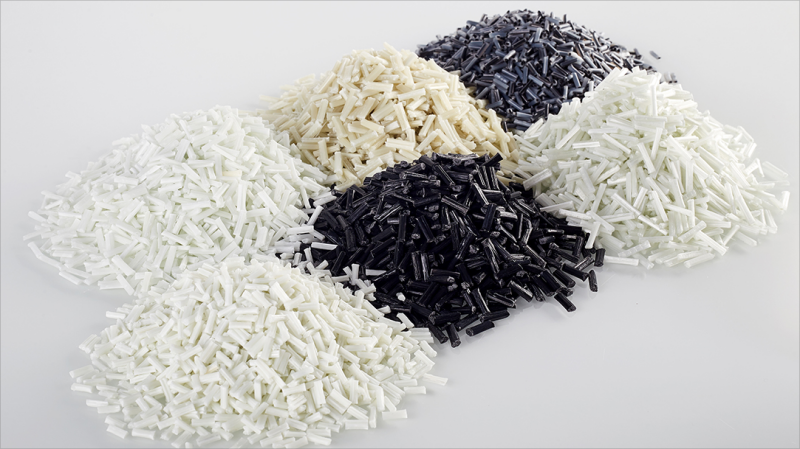
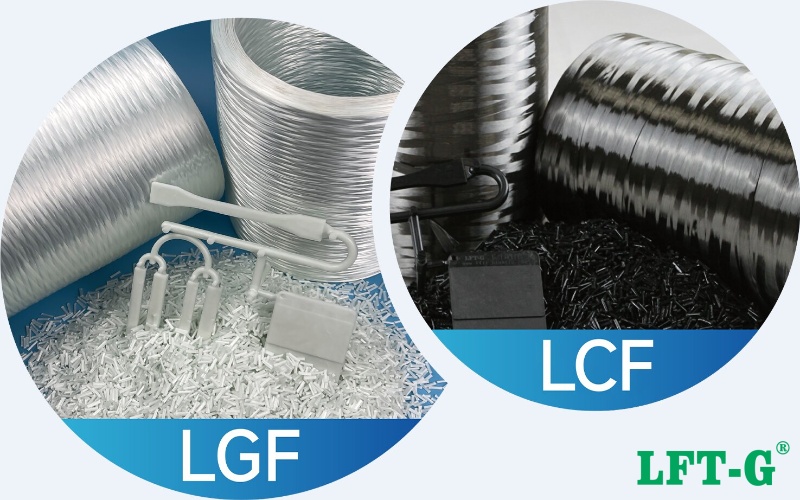
Carbon fiber possesses extremely high tensile strength and modulus, with tensile strength typically ranging from 3,000 to 7,000 MPa or even higher, and a modulus above 230 GPa, which is 4–5 times stronger than steel. When used to reinforce plastics, carbon fiber can significantly improve material strength and rigidity, allowing components to maintain structural stability under high stress. For example, carbon fiber–reinforced plastic parts in the aerospace industry can reliably operate in complex mechanical environments.
Glass fiber, on the other hand, has a tensile strength generally between 1,500 and 3,500 MPa. While it can also enhance the strength and stiffness of plastics, the improvement is relatively smaller compared to carbon fiber–reinforced materials at the same loading level.
Carbon fiber has a low density, typically 1.7–1.9 g/cm³, which allows carbon fiber–reinforced plastics to achieve high strength while remaining lightweight. This makes them ideal for applications requiring weight reduction, such as automotive lightweight components that reduce vehicle weight and improve fuel efficiency.
Glass fiber is relatively denser, at 2.4–2.7 g/cm³, so glass fiber–reinforced plastics are heavier than their carbon fiber counterparts under similar conditions.
Carbon fiber exhibits good electrical conductivity and thermal conductivity. Plastics reinforced with carbon fiber can be used in applications requiring antistatic properties or electromagnetic shielding, such as electronic device enclosures or explosion-proof switches.
Glass fiber is an insulating material and does not conduct electricity. Glass fiber–reinforced plastics therefore lack these properties and are mainly used in applications where electrical performance is not critical but mechanical reinforcement is needed.
Carbon fiber–reinforced plastics have excellent fatigue resistance and can withstand repeated stress without significant damage. This makes them suitable for sports equipment such as bicycle frames and tennis rackets, where long-term performance stability is important.
Glass fiber–reinforced plastics have relatively lower fatigue resistance and are more prone to fatigue damage under frequent cyclic loading.
Carbon fiber–reinforced materials are generally much more expensive than glass fiber–reinforced materials. From a raw material perspective, carbon fiber precursors such as polyacrylonitrile (PAN) or pitch undergo multiple complex processing steps to become carbon fiber, resulting in high costs. In contrast, glass fiber is essentially spun from glass, with much lower raw material costs.
In terms of manufacturing, producing carbon fiber composites requires specialized equipment and expertise, involving surface treatment, precise fabric alignment, adhesive bonding, and curing, all of which add to production costs. Glass fiber manufacturing is relatively simpler.
Additionally, glass fiber enjoys large-scale market demand, enabling economies of scale and further reducing costs, while the carbon fiber market is smaller, production is limited, and costs remain high. Typically, carbon fiber can cost several to tens of times more than glass fiber, making glass fiber more advantageous in cost-sensitive applications.
Aerospace: Carbon fiber–reinforced plastics are widely used in the manufacture of aircraft components such as wings and fuselage structures. Major aircraft manufacturers like Airbus and Boeing use carbon fiber–reinforced thermoplastic or thermoset composites to take advantage of their high strength and low density, reducing aircraft weight while improving fuel efficiency and flight performance.
Automotive: Carbon fiber is used in engine hoods, body panels, wheel hubs, and other components to achieve vehicle lightweighting, enhance handling, and improve fuel economy. High-end sports cars and new energy vehicles are increasingly incorporating carbon fiber parts.
Electronics: Applications include laptop shells, smartphone frames, and other electronic housings. Carbon fiber ensures product strength while reducing weight, and its electrical conductivity can provide electromagnetic shielding.
Sports Equipment: Used in golf clubs, tennis rackets, badminton rackets, and bicycle frames, carbon fiber improves equipment performance and enhances athletes’ competitive capabilities.
Automotive Industry: Glass fiber–reinforced plastics are widely used in interior components, bumpers, and engine-related parts. For example, plastic interior parts strengthened with glass fiber achieve improved strength and dimensional stability.
Electronics and Electrical Appliances: Commonly used in housings, sockets, and circuit board support materials. Applications include TV casings, computer chassis, and other electronic enclosures, where glass fiber reinforcement enhances material strength and protects internal components.
Construction Materials: Glass fiber–reinforced plastics are used to manufacture GRP pipes, cooling towers, building formworks, and other structural elements, playing a role in water supply, drainage, ventilation, and heat dissipation systems.
Daily Products: Items such as plastic tables and chairs, garbage bins, and household containers benefit from glass fiber reinforcement, which improves performance and extends service life.

Carbon fiber and glass fiber each have their own advantages and limitations in plastic modification. In practical applications, it is important to carefully consider factors such as product performance requirements and cost constraints, and to select the reinforcing material wisely to achieve the best balance between performance and value.
follow us :


-- get updates with latest topics

 e-mail
 English
 français
 Deutsch
 русский
 italiano
 español
 português
 العربية
 日本語
日本語 한국의
한국의 中文
中文