e-mail
 English
 français
 Deutsch
 русский
 italiano
 español
 português
 العربية
 日本語
日本語 한국의
한국의 中文
中文


-
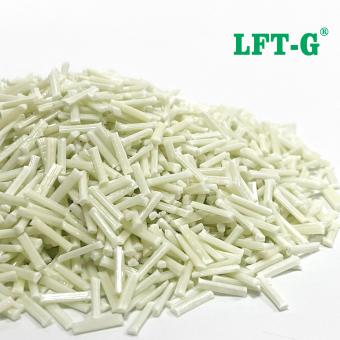
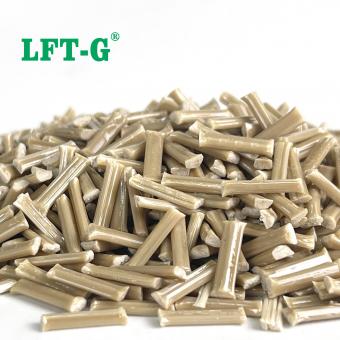
LFT PLA Manufacturer Carbon Fiber Compounds green materialsPLA (Polylactic Acid) is a semicrystalline thermoplastic polyester. It is derived from renewable sources and is therefore classified as a bioplastic.
- PLA recycled
- fiber filling polymer instead of metal steel
- Sample free natural plastic new CFRP
- PLA Carbon
- China manufacturer PLA
- pla resin customized service
Tags :
-
Polypropylene Carbon Fiber Modified with Excellent StrengthPP long carbon fiber reinforced composite is a high-performance lightweight material based on polypropylene matrix reinforced with long carbon fibers, offering excellent strength, stiffness, and fatigue resistance.
- pp cf
- polypropylene carbon fiber
- what are carbon fibers used for
- cfrp material
- carbon fibre melting temperature
- carbon fiber printing
Tags :
-
China Carbon Fiber Nylon 6,6 Modified CompoundsThe carbon fiber reinforcement improves strength, impact resistance, and overall structural integrity, making it ideal for critical applications. With excellent thermal stability and chemical resistance, it's well-suited for high-temperature and harsh environments.
- Reinforced PA66 plastic
- Lightweight structural materials
- High-strength PA66 thermoplastic
- CFRP
- difference between pa6 and pa66
- nylon 66 density
Tags :
-
Carbon Fiber Reinforced PLA Resin Pellets Injection MoldingLFR-PLA can be processed using conventional plastic processing techniques like injection molding and extrusion, offering good adaptability in manufacturing. It is widely used in industries like automotive, consumer electronics, 3D printing, and eco-friendly packaging due to its combination of high performance and sustainability.
- pla price per kg
- carbon fiber reinforced polypropylene
- lft g for automobile market
- applications of polymers in aerospace engineering
- thermoplastic cfrp
- carbon fiber composites
Tags :
-
Advanced Carbon Materials Nylon 6 PelletsPA6 long carbon fiber reinforced material offers high strength, excellent impact resistance, and lightweight properties. It provides outstanding dimensional stability and fatigue resistance, making it ideal for automotive and industrial applications. Suitable for replacing metal components to achieve weight reduction and enhanced performance.
- polyamide nylon pa6
- pa6 price per kg
- nylon pa6 plastic material
- CFRP materials
- China manufacturer carbon fiber
- Polyamide 6 plastics
Tags :
-
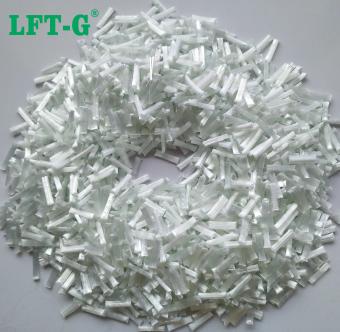
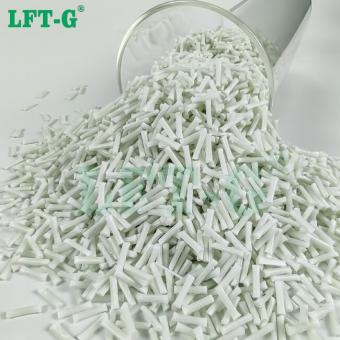
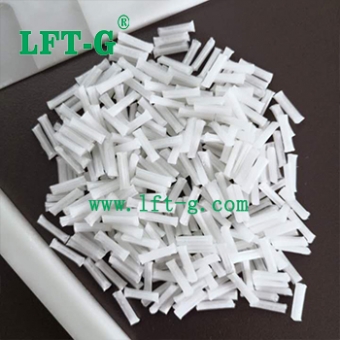
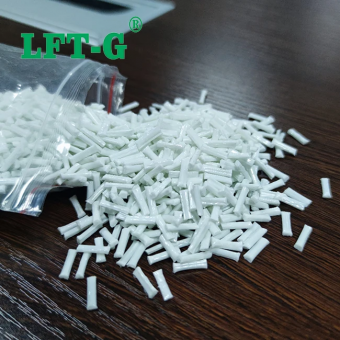
LFT PLA Manufacturer Carbon Fiber filled Compounds green materialsPLA is an opaque plastic suitable for making medical components as well as for prototyping applications. PLA is a high-strength but brittle plastic that cannot be used in applications that experience shock loads. The lactic acid building blocks of PLA can be made from fermented plant starch, like corn, under controlled conditions. It takes less energy to produce PLA than petroleum-based thermoplastics, making it relatively eco-friendly. PLA is often regarded as being biodegradable. What Are the Advantages of PLA? Some of the advantages of PLA plastic are listed below: Biocompatibility: PLA is non-toxic to humans. It can remain in contact with the skin for long periods without any negative effects. The decomposition products of PLA are also non-toxic: it degrades into harmless lactic acid. It is often used for stents and sutures that are designed to break down inside the body over several months. Low-Energy for Production: PLA takes less energy to produce compared to other petroleum-based plastics due to its relatively low melting point of 165 °C. The polymerization of PLA also consumes 25 to 55 % less energy than other conventional petroleum-based polymers. Mechanical Properties: PLA has good room temperature strength and stiffness, but is not suitable for sudden impact loads. Food Safe: PLA is non-toxic and is generally recognized as safe by the FDA (Food and Drug Administration). FAQ *What processes are LFT materials suitable for? LFT material is mainly suitable for injection molding, as well as partial extrusion. The requirements for injection molding machines are mainly reflected in the nozzle. *Why are your products so long? Why does the material I used before, filled with glass fiber, look different than this? Although long fiber modified materials (LFT) and short fiber modified materials (SFT) are through the combination of fiber and resin to produce higher properties of the complex. However, the two materials are different from the production process, internal structure, appearance, performance, application and so on. Production process: The fiber of SFT is chopped and mixed with resin, and the production process of LFT is melt impregnation. Internal structure: The fibers inside SFT particles are short and disordered, while the fibers inside LGF are neatly arranged and longer. Appearance: The length of SFT is usually less than 3 mm, and the length of LFT is 5-24mm. Performance: LFT impact performance than SFT increased 1-3 times, tensile strength increased by more than 50%, mechanical properties improved by 50-80%. Application: LFT is more suitable for use in products with high strength requirements, as load-bearing parts and structural parts. *What is your MOQ? MOQ is 25kg *Do you support custom service? Color: Please let us know which Pantone color you want to customize Length: Lengtjh between 5mm-24mm can be customized. If there are no special requirements, the length of the plastic particles is 10-12 mm. Our custom service is free, but the MOQ is 500kg. *Where is your factory? At present, our company headquarters and factory are in Xiamen, China. We also have several offices in other provinces in China, and an exclusive agent in Turkey.view more
-
PP CF Reinforced Polymer Injection Molding ProductsThe modified PP reinforced by carbon fiber has a series of advantages, such as light weight, high modulus, high specific strength, low coefficient of thermal expansion, high temperature resistance, heat shock resistance, corrosion resistance, good vibration absorption, etc., and can be applied to auto parts such as automobile sub-instrument assembly.
- reinforced composite materials
- carbon fiber composite materials
- fiber reinforced composite materials
- cfrp carbon fiber reinforced plastic
- carbon reinforced fiber
- fiber reinforced plastic
Tags :
-
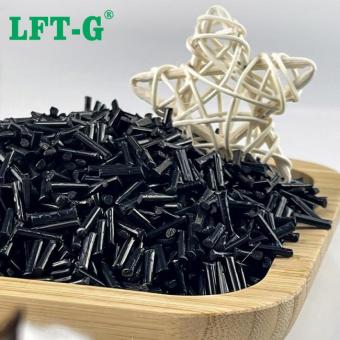
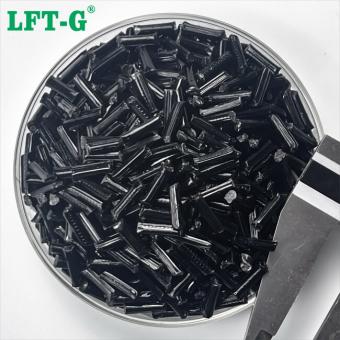
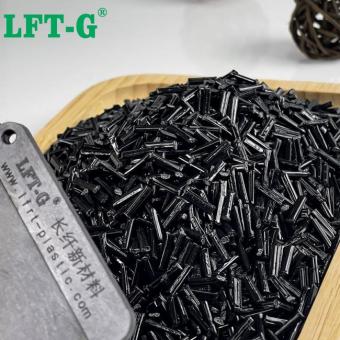
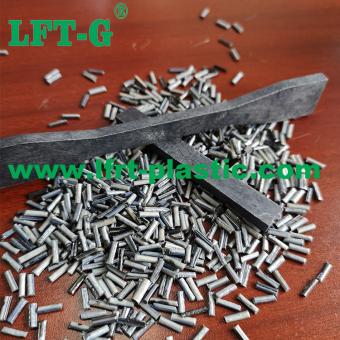
LFT-G Polyamide 12 long carbon fiber reinforced compounds nylon for car partsLong Carbon Fiber Carbon fiber exhibits outstanding properties, including extremely high axial strength and modulus, low density, and excellent specific performance. It shows no creep, outstanding fatigue resistance, excellent corrosion resistance, and maintains stability at very high temperatures in non-oxidizing environments. Carbon fiber also features good electrical and thermal conductivity, effective electromagnetic shielding, a low coefficient of thermal expansion, and strong anisotropy. Compared with traditional glass fiber, carbon fiber offers more than three times the Young’s modulus and approximately twice the modulus of aramid (Kevlar) fiber. It is insoluble and does not swell in organic solvents, acids, or alkalis, making it highly suitable for corrosive and demanding environments. One effective way to reduce the cost of carbon fiber applications is to combine it with engineering plastics such as nylon, creating high-performance composite materials with optimized cost-performance balance. As a result, carbon fiber reinforced nylon has become an important material system in modern composite engineering. Nylon itself is a high-performance engineering plastic, but it suffers from moisture absorption, limited dimensional stability, and mechanical properties far below those of metals. To overcome these limitations, fiber reinforcement has been applied since the 1970s. Carbon fiber reinforced nylon significantly improves strength, stiffness, thermal stability, creep resistance, wear resistance, and dimensional accuracy. Compared with glass fiber reinforced nylon, carbon fiber reinforced nylon offers superior damping behavior and overall mechanical performance. Therefore, carbon fiber reinforced nylon (CF/PA) composites have developed rapidly in recent years. In particular, for additive manufacturing, SLS (Selective Laser Sintering) technology is considered one of the most suitable methods for processing carbon fiber reinforced nylon materials. TDS for Reference Applications Our Company Xiamen LFT Composite Plastic Co., Ltd. is a professional manufacturer specializing in Long Fiber Reinforced Thermoplastics (LFT & LFRT), including Long Glass Fiber (LGF) and Long Carbon Fiber (LCF) series. Our LFT materials are suitable for LFT-G injection molding, extrusion processes, and LFT-D compression molding. Fiber length can be customized from 5 to 25 mm according to customer requirements. Our continuous fiber impregnation technology has passed ISO 9001 and IATF 16949 certification, and our products are protected by multiple trademarks and patents.
- long fibre reinforced thermoplastics
- carbon fiber reinforced plastics granules
- long carbon fiber reinforced pa12
- long fiber composite pa6 granules
- pa6 lcf polymers carbon fiber CFRP good price polymer
Tags :
-
Advanced Carbon Materials Nylon 6 PelletsPA6 long carbon fiber reinforced material offers high strength, excellent impact resistance, and lightweight properties. It provides outstanding dimensional stability and fatigue resistance, making it ideal for automotive and industrial applications. Suitable for replacing metal components to achieve weight reduction and enhanced performance.view more
-
Polyphenyl sulfide fill Long Carbon Fiber Polymer PPSPolyphenylene sulfide is a new functional engineering plastic.
- Car parts plastic materials
- PPS plastic rein forced compounds
- Composite material pps industrial use
- Filling lcf 30 pps composite plastic new materials
- High flame retardant car parts CFRP
- Factory use raw material modified plastic high performance
Tags :
-
LFT-G Polyamide 12 long carbon fiber reinforced compounds nylon for car partsLong carbon fiber Carbon fiber has many excellent properties, high axial strength and modulus, low density, high specific performance, no creep, super high temperature resistance in non-oxidizing environment, good fatigue resistance, specific heat and electrical conductivity between non-metal and metal, small coefficient of thermal expansion and anisotropy, good corrosion resistance, good X-ray transmission. Good electrical and thermal conductivity, good electromagnetic shielding, etc. Compared with traditional glass fiber, carbon fiber has more than 3 times of Young's modulus; it is about 2 times of Young's modulus compared with Kevlar fiber, which is insoluble and swollen in organic solvents, acids and alkalis, and has outstanding corrosion resistance. But is there a way to reduce the price of carbon fiber? That is to mix it with relatively cheap nylon material to form a composite material with good performance and meet the requirements. In that case, there is no doubt that carbon fiber nylon will definitely have a place in the composite material. Nylon itself is an engineering plastic with excellent performance, but moisture absorption, poor dimensional stability of products. Strength and hardness are also far from metal. In order to overcome these shortcomings, as early as before the 70s. People have used carbon fiber or other varieties of fibers for reinforcement to improve its performance. Carbon fiber reinforced nylon materials have developed rapidly in recent years, because nylon and carbon fiber are excellent performance in the field of engineering plastics materials, its compound material synthesis reflects the superiority of the two, such as strength and rigidity than unreinforced nylon is much higher, high temperature creep is small, thermal stability has improved significantly, good dimensional accuracy, wear resistance. Excellent damping, compared with glass fiber reinforced has better performance. Therefore, carbon fiber reinforced nylon (CF / PA) composites have developed rapidly in recent years. And for 3D printing using SLS technology is the most suitable technical means to achieve carbon fiber reinforced nylon. TDS for reference Application Our company Xiamen LFT composite plastic Co., Ltd is a brand-name company that focuses on LFT&LFRT. Long Glass Fiber Series (LGF) & Long Carbon Fiber Series (LCF). The company's thermoplastic LFT can be used for LFT-G injection molding and extrusion, and can also be used for LFT-D molding. It can be produced according to customer requirements: 5~25mm in length. The company's continuous infiltration reinforced thermoplastics have passed ISO9001&16949 system certification, and the products have obtained lots of national trademarks and patents.
- carbon reinforced resin
Tags :