e-mail
 English
 français
 Deutsch
 русский
 italiano
 español
 português
 العربية
 日本語
日本語 한국의
한국의 中文
中文


-
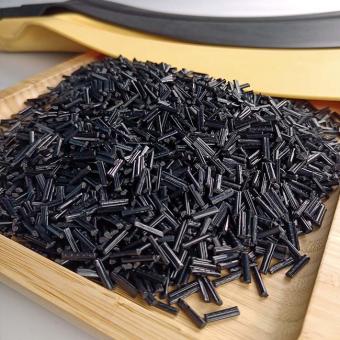
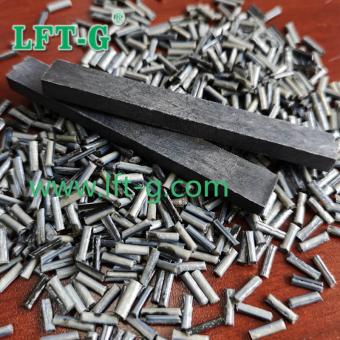
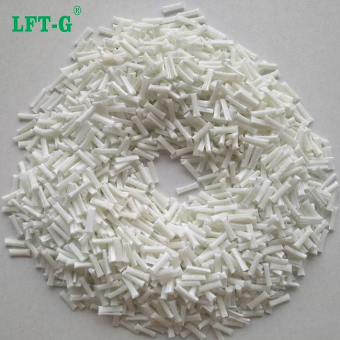
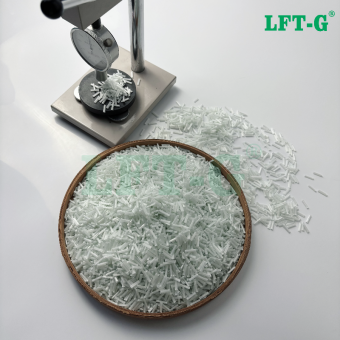
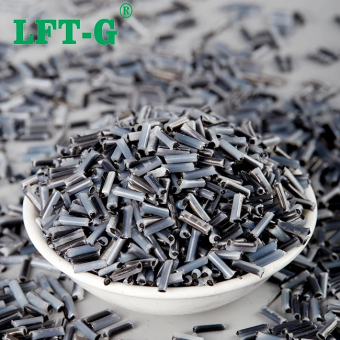
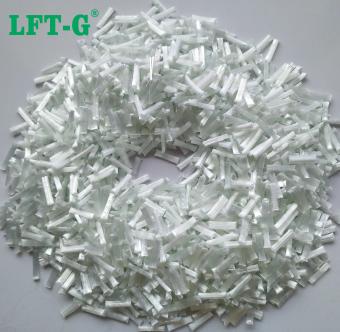
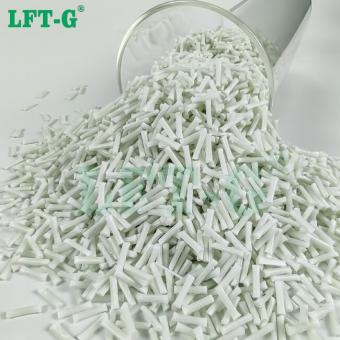
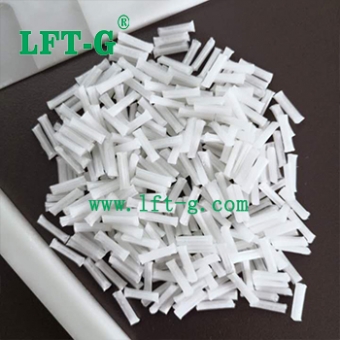
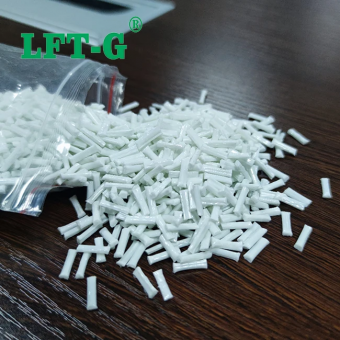
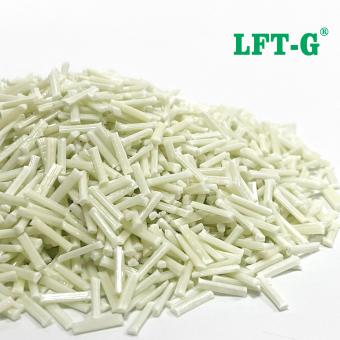
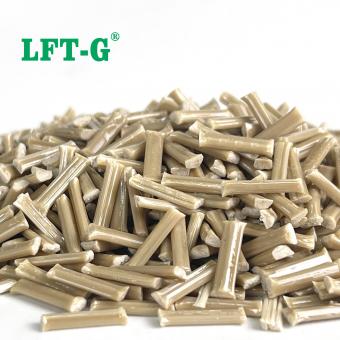
LFT Polypropylene reinforced plastic long carbon fiber higher performance 12mm natural colorPP Material & LFT Solutions body { font-family: Arial, sans-serif; line-height: 1.6; color: #333; margin: 20px; } h2 { font-size: 24px; background-color: #CCCCCC; padding: 10px; } h3 { font-size: 20px; margin-top: 20px; } p { margin: 10px 0; } .highlight { background-color: #FFFF99; color: #333; padding: 5px; } img { max-width: 100%; height: auto; display: block; margin: 10px 0; } ul { margin: 10px 0 10px 20px; } PP Material PP is a polymer made of propylene as monomer by coordination polymerization, and is one of the five major general-purpose plastics: PE, PP, PVC, PS, and ABS. Key Properties: Colorless, tasteless, non-toxic; can meet FDA and other food-grade material requirements when unadded. Due to crystalline nature, the original color is milky white translucent with better transparency than PE. Low specific gravity of 0.9, making it one of the lightest plastics compared to water. Good toughness, especially repeated bending resistance, commonly known as “100-fold rubber”. Better heat resistance than PE, up to 120°C. Good resistance to hydrolysis; can be sterilized by high-temperature steam. Excellent chemical resistance, particularly to acids; suitable for storing concentrated sulfuric acid. Outdoor use is susceptible to light, UV, and aging. Modified PP Material By filling PP with carbon fiber, the rigidity and modulus are increased, reducing deformation caused by shrinkage. However, toughness decreases. Adding anti-UV or anti-aging agents improves outdoor performance, and adding flame retardant materials improves fire resistance. TDS for Reference Only SGF vs LGF Long Carbon Fiber Specification Application Product Processing We Will Offer You LFT & LFRT material technical parameters and leading-edge design Mold front design and recommendations Technical support for injection molding and extrusion molding
- carbon fiber reinforced plastics granules
- long carbon fiber reinforced pp
- long fiber compounds pp
- long fiber composite PP granules
- long carbon fiber polypropylene
Tags :
-
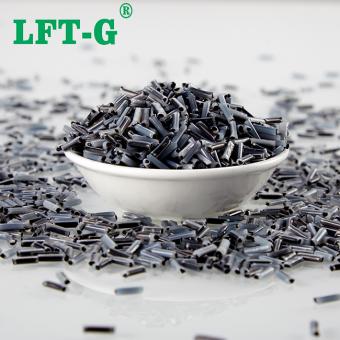
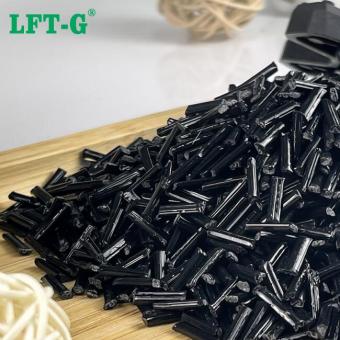
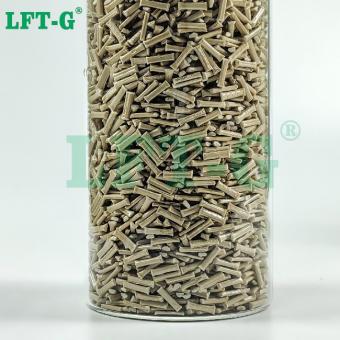
LFT Polyamide12 Long Carbon Fiber composites lightweight high toughnessPA12 & PA12-LCF Information body { font-family: Arial, sans-serif; line-height: 1.6; color: #333; margin: 20px; } h2 { font-size: 24px; color: #339933; background-color: #f0f0f0; padding: 10px; } h3 { font-size: 20px; margin-top: 20px; } p { margin: 10px 0; } ul { margin: 10px 0 10px 20px; } a { color: #0073e6; text-decoration: none; } a:hover { text-decoration: underline; } img { max-width: 100%; height: auto; display: block; margin: 10px 0; } .product-links a { background-color: #CCCCCC; padding: 5px 10px; margin-right: 10px; display: inline-block; text-decoration: none; color: #000; } .faq strong { display: block; margin-top: 10px; } PA12 Information Long carbon chain nylon is a nylon with amide groups in the main chain repeating unit, where the methylene group between two amide groups is more than 10. Examples include nylon 11, nylon 12, etc. PA12, also known as poly(dodecalactam) or poly(laurolactam), is a semi-crystalline thermoplastic material. It has low water absorption, high dimensional stability, heat resistance, corrosion resistance, toughness, and easy processing. Compared with PA11, PA12's raw material is only one-third the cost of PA11, making it widely used in automotive fuel hoses, air brake hoses, submarine cables, and 3D printing. PA12 offers advantages over other nylons, including low water absorption, low density, low melting point, impact and friction resistance, low-temperature resistance, fuel resistance, good dimensional stability, and noise reduction. It combines the properties of PA6, PA66, and polyolefins (PE, PP) for lightweight yet strong materials. PA12-LCF Adding carbon fiber to PA12 is like adding steel reinforcement to concrete. The fiber bears most of the external forces, improving overall structural strength. Carbon fiber has high axial strength and modulus, low density, high specific performance, no creep, excellent fatigue resistance, corrosion resistance, and superior thermal and electrical properties. Compared with glass fiber, carbon fiber has over 3 times the Young's modulus, and about twice that of Kevlar fiber. Carbon fiber reinforced nylon materials (CF/PA) have developed rapidly due to high strength, rigidity, thermal stability, dimensional accuracy, wear resistance, and excellent damping properties compared to glass fiber reinforced nylon. Datasheet for Reference PA12 has low water absorption, good low-temperature resistance, excellent air tightness, alkali and grease resistance, medium resistance to alcohols and dilute inorganic acids, and good mechanical and electrical properties. It is also self-extinguishing. Application Suitable for automotive, sports parts, solar energy, high-end toys, and other industries. Other Products You May Wonder PP-LCF PA6-LCF PA66-LCF Frequently Asked Questions 1. How does thermoplastic carbon fiber composite material achieve low cost and environmental protection? Thermoplastic carbon fiber composites are used to make parts for high-end machinery. They have excellent machinability, vacuum forming, stamping mold plasticity, and bending processability. 2. Are thermoplastic carbon fiber composites only suitable for injection molding? Injection molding offers high automation, protects material from contamination, and ensures product quality and precision. It is suitable for complex-shaped and mass production. Reinforcement is done with short or powdered carbon fibers; continuous fiber cannot be used in this process. Compression molding is simpler and cheaper for equipment and molds. It can be used for both thermosetting and thermoplastic resins, reduces raw material loss, and is suitable for mass production with lower cost. Xiamen LFT Composite Plastic Co., Ltd. We Will Provide You: LFT & LFRT material technical parameters and leading-edge design Mold front design and recommendations Technical support for injection molding and extrusion molding
- Nylon composite pellets Polymer granules
- Nylon polymer LCF manufacturer
- Modified materials Nylon PA12
- extrusion level Nylon modified
- pa lcf30 producer mess production good price
- carbone fiber reinforced pa12 pellets
Tags :
-
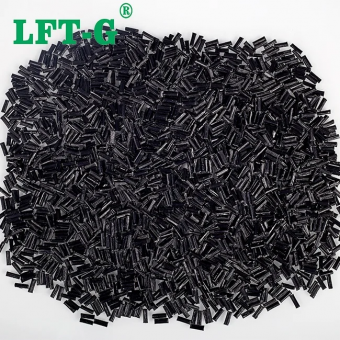
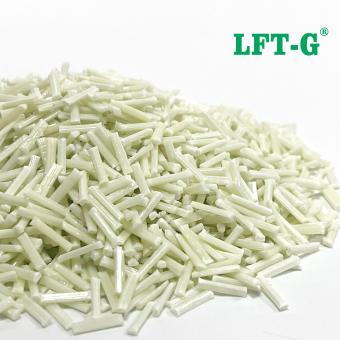
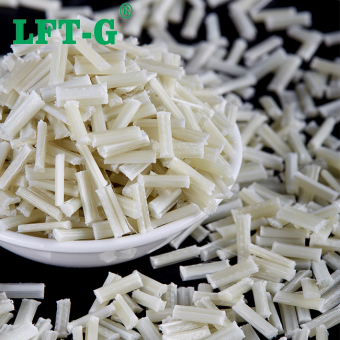
Xiamen LFT PLA filling Long carbon fiber Reinforced polylactic acidPLA materials are current pioneering materials in biodegradable materials. Long carbon fiber Reinforced polylactic acid PLA modified materials are likely to become global advantages in future green materials.
- PLA long carbon fiber high rigidity and strength
- Reinforced polyactic pla instead metal
- PLA composite green materials
- long carbon fiber with PLA modification
- PolyacticDegradable material
Tags :
-
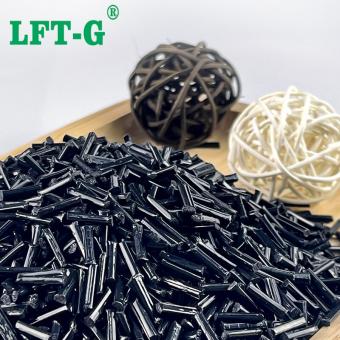
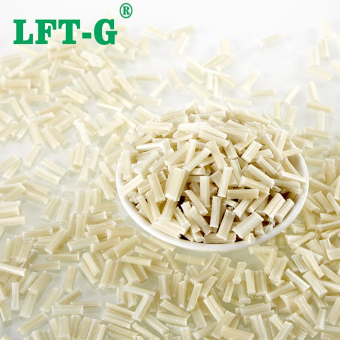
Xiamen LFT-G Polyamide 6 filling Long Carbon Fiber reinforced thermoplastic materialPA6 Long Carbon Fiber Composite body { font-family: Arial, sans-serif; line-height: 1.6; color: #333; margin: 20px; } h2 { font-size: 24px; background-color: #f0f0f0; padding: 10px; color: #339933; } p { margin: 10px 0; } ul { margin: 10px 0 10px 20px; } img { max-width: 100%; height: auto; display: block; margin: 10px 0; } Polyamide 6 (PA6) Nylon 6 (PA6) is a general engineering plastic with lightweight, wear resistance, corrosion resistance, and good toughness. As a thermoplastic resin, it softens when heated and hardens when cooled, allowing repeated processing. Long Carbon Fiber Carbon fiber has high strength, high modulus, large specific surface area, and high electrical conductivity. Compared with glass fiber, carbon fiber provides maximum strength along the fiber direction. Carbon fiber reinforced composites are stronger than polymer matrix materials while maintaining light weight, gradually replacing traditional metals in electronics, electric vehicles, medical devices, industrial equipment, and sports/leisure products. LCF VS SCF Advantages of Long Carbon Fiber Filled High strength and high toughness Small coefficient of thermal expansion Low hardness and light weight Corrosion resistance and aging resistance Temperature resistance TDS of PA6 for Reference Application of PA6 Suitable for manufacturing helmets, car bumpers, treadmills, etc. Certifications Factory & Warehouse Teams & Customers About Us Xiamen LFT Composite Plastic Co., Ltd is a brand-name company focusing on LFT & LFRT: Long Glass Fiber Series (LGF) & Long Carbon Fiber Series (LCF). Our thermoplastic LFT materials can be used for LFT-G injection molding, extrusion, and LFT-D molding. Fiber lengths can be customized from 5~25mm. Our continuous infiltration reinforced thermoplastics have passed ISO9001 & IATF16949 certification, and products hold multiple national trademarks and patents.
- long fibre reinforced thermoplastics
- long carbon fiber reinforced pa6
- long fiber compounds pa6 nylon
- long fiber composite pa6 granules
- long carbon fiber polyamide6 higher peroformance
Tags :
-
LFT High Properties Polyetheretherketone Long Carbon Fiber Reinforced Thermoplastic CompoundsThe mechanical properties of PEEK allow it to be used as reinforcement material in various scenarios.
- carbon fiber reinforced peek mechanical properties
- peek 30 carbon fiber-reinforced
- peek carbon fiber composite
- peek material advantages and disadvantages
- peek material aerospace
- polyetheretherketone (peek) for medical applications
Tags :
-
LFT-G Polyamide 12 long carbon fiber reinforced compounds nylon for car partsLong carbon fiber Carbon fiber has many excellent properties, high axial strength and modulus, low density, high specific performance, no creep, super high temperature resistance in non-oxidizing environment, good fatigue resistance, specific heat and electrical conductivity between non-metal and metal, small coefficient of thermal expansion and anisotropy, good corrosion resistance, good X-ray transmission. Good electrical and thermal conductivity, good electromagnetic shielding, etc. Compared with traditional glass fiber, carbon fiber has more than 3 times of Young's modulus; it is about 2 times of Young's modulus compared with Kevlar fiber, which is insoluble and swollen in organic solvents, acids and alkalis, and has outstanding corrosion resistance. But is there a way to reduce the price of carbon fiber? That is to mix it with relatively cheap nylon material to form a composite material with good performance and meet the requirements. In that case, there is no doubt that carbon fiber nylon will definitely have a place in the composite material. Nylon itself is an engineering plastic with excellent performance, but moisture absorption, poor dimensional stability of products. Strength and hardness are also far from metal. In order to overcome these shortcomings, as early as before the 70s. People have used carbon fiber or other varieties of fibers for reinforcement to improve its performance. Carbon fiber reinforced nylon materials have developed rapidly in recent years, because nylon and carbon fiber are excellent performance in the field of engineering plastics materials, its compound material synthesis reflects the superiority of the two, such as strength and rigidity than unreinforced nylon is much higher, high temperature creep is small, thermal stability has improved significantly, good dimensional accuracy, wear resistance. Excellent damping, compared with glass fiber reinforced has better performance. Therefore, carbon fiber reinforced nylon (CF / PA) composites have developed rapidly in recent years. And for 3D printing using SLS technology is the most suitable technical means to achieve carbon fiber reinforced nylon. TDS for reference Application Our company Xiamen LFT composite plastic Co., Ltd is a brand-name company that focuses on LFT&LFRT. Long Glass Fiber Series (LGF) & Long Carbon Fiber Series (LCF). The company's thermoplastic LFT can be used for LFT-G injection molding and extrusion, and can also be used for LFT-D molding. It can be produced according to customer requirements: 5~25mm in length. The company's continuous infiltration reinforced thermoplastics have passed ISO9001&16949 system certification, and the products have obtained lots of national trademarks and patents.
- carbon reinforced resin
- long carbon fiber reinforced pa12
- pa6 lcf polymers carbon fiber CFRP good price polymer
Tags :
-
LFT PPA Glass Fiber reinforced thermoplastic resinMost PPA are filled with glass fiber or carbon fiber to enhance stiffness for high-temperature applications. As a result, PPA is often used in applications in place of metal or higher-priced thermoplastic.
- Glass Fiber Reinforced PPA applications
- PPA long glass fiber mechanical properties
- PPA glass fiber reinforcement benefits
- High-performance PPA materials
- PPA composites for automotive parts
- Durability of long glass fiber reinforced PPA
Tags :
-
LFT Polyamide6 compounds with long glass fiber instead metal high strengthWhat is Polyamide 66 plastic? PA66 melting point 260~265℃, glass transition temperature (dry state) is 50℃. Density is 1.13~1.16 g/cm3. PA66 has low water absorption, excellent dimensional stability and high rigidity. Higher melting point, can be used for a long time in harsh environments, in a wide range of temperatures can still maintain sufficient stress, continuous use temperature of 105 ℃. Long glass fiber reinforced composite Glass fiber reinforced plastic is based on the original pure plastic, filling glass fibers and other additives, so as to improve the scope of use of the material. Generally speaking, most of the glass fiber reinforced materials are used in the structural parts of the products, which is a kind of structural engineering materials, such as: PP, ABS, PA66, PA6, TPU, PPA, PBT, PEEK, PBT, PPS and so on. Advantages 1)After glass fiber reinforcement, glass fiber is a high temperature resistant material, therefore, the heat-resistant temperature of reinforced plastics is much higher than before without glass fiber, especially nylon plastics. 2)After the glass fiber reinforcement, due to the addition of glass fiber, the plastic polymer chain is restricted to move with each other, therefore, the shrinkage of reinforced plastics decreases a lot, and the rigidity is greatly improved. 3)After glass fiber reinforced, the reinforced plastic will not stress cracking, at the same time, the impact resistance of the plastic improves a lot. 4)After the glass fiber reinforcement, the glass fiber is a high strength material, which also greatly improves the strength of the plastic, such as: tensile strength, compression strength, bending strength, improve a lot. 5)After glass fiber reinforcement, due to the addition of glass fiber and other additives, the combustion performance of the reinforced plastics decreases a lot, most of the materials can not be ignited, it is a kind of flame-retardant material. Datasheet for reference Applications PA66's comprehensive performance is good, with high strength, good rigidity, impact resistance, oil and chemical resistance, abrasion resistance and self-lubricating advantages, especially hardness, rigidity, heat resistance and creep performance is better. Datails Grade Fiber specification Main characteristics Applications General grade 20%-60% high toughness (especially at low temperatures), excellent creep and fatigue resistance, low warpage Automobiles, electronic and electrical appliances, sports equipment, power tools, high-speed rail parts, etc. Toughen resistance grade 20%-50% high impact strength, light texture Automobiles, electronic appliances, sports equipment, power tools, tool handles, high-speed rail parts, gears, etc. Lab & Factory About company Xiamen LFT Composite Plastic Co.,LTD was established in 2009, is a brand-name global suppliers of long fiber reinforced thermoplastic materials integrating product research & development(R&D), production and sale marketing. Our LFT products have passed the ISO9001&16949 system certification and have obtained lots of national trademarks and patents, covering the fields of automotive, military parts and firearms, aerospace, new energy, medical equipment, power wind energy, sports equipment, etc.
- PA66 Nylon pellets reinforced plastic
- polyamide 6 engineering plastics lgf
- Low warpage modified PA6 LGRF
- injection mold PA66 auto parts polymers
- long glass fiber reinforced plastic pa66
Tags :
-
Thermoplastic Polyurethane resin filled long glass fiber engineering plastics high strengthTPU introduction Thermoplastic polyurethane (TPU) elastomers are linear polymers formed by the copolymerization of hard and soft chain segments, which have physical properties such as tensile, abrasion and heat resistance, and elasticity similar to rubber. Thanks to the excellent product performance, the application fields of TPU are expanding, including daily consumer goods, construction, medical, military, automotive, agriculture and many other fields. New products and applications are also emerging, such as large-diameter hoses (shale gas extraction), charging cables for new energy vehicles, foamed TPU (ETPU) sports shoes midsoles prepared by supercritical foaming process, invisible braces, etc. Fiber reinforced modified TPU composites TPU has good impact resistance, but in some applications, high modulus of elasticity and very hard material is required. Glass fiber reinforced modification is a common technical means to improve the elastic modulus of the material. Through modification, thermoplastic composites with many advantages such as high elastic modulus, good insulation, heat resistance, good elastic recovery, good corrosion resistance, impact resistance, low coefficient of expansion and dimensional stability can be obtained. Long glass fiber VS Short glass fiber Compared with the short fiber, long fiber has more excellent performance in mechanical properties. It is more suitable for large products and structural parts. It has 1-3 times higher toughness than short fiber, and the tensile strength is increased by 0.5-1 times. Thermoplastics VS Thermosets Thermosets: when heated for the first time, they can soften and flow, and when heated to a certain temperature, they produce a chemical reaction a cross-chain curing and become hard, this change is irreversible, after that, when heated again, they can no longer become soft and flow. Thermoplastic: thermoplastic resin is the main component, and various additives are added to form a plastic. Under certain temperature conditions, plastic can be softened or melted into any shape, and the shape remains unchanged after cooling; this state can be repeated many times and always has plasticity, and this repeated is only a physical change. Advantages Thermosets: Thermoset plastics retain their strength and shape even when heated. This makes thermoset plastics ideal for producing permanent parts and large, strong shapes. In addition, these parts have excellent strength properties (despite their fragility) and do not lose significant strength when exposed to higher operating temperatures. Thermoplastics: Thermoplastics are the most widely used plastics and typically have high chemical and thermal resistance, as well as a high strength structure that is not easily deformed. It is made of thermoplastic resin as the main component with various additives. Thermoplastic products have excellent electrical insulation, with very low dielectric constant and dielectric loss, suitable for high Frequency and high voltage insulation materials. TPU-LGF applications TDS for TPU-LGF Products details Number Length Colour Sample Price MOQ Package Delivery time TPU-NA-LGF30 12mm (can be customized) Natural colour (can be customized) Available Need to be confirmed 25kg 25kg/bag 7-15 days after shipment About us Company Xiamen LFT composite plastic Co., Ltd. is a brand-name company that focuses on LFT&LFRT. Long Glass Fiber Series (LGF) & Long Carbon Fiber Series (LCF). The company's thermoplastic LFT can be used for LFT-G injection molding and extrusion, and can also be used for LFT-D molding. It can be produced according to customer requirements: 5~25mm in length. The company's long-fiber continuous infiltration reinforced thermoplastics have passed ISO9001 &16949 system certification, and the products have obtained lots of national trademarks and patents.
- Low warpage electronic appliance
- tpu lgf30 for toe cap enhanced
- self owing tpu pellets instead metal
- tpu different resin lgf reinforced materials
- high strength and high toughness reinforced tpu pellets
- self owing tpu pellets polymer
Tags :
-
LFT-G PPS Polyphenylene sulfide LGF composite long glass fiber customized engineering plasticsPPS & PPS-LGF Overview body { font-family: Arial, sans-serif; line-height: 1.6; color: #333; } h2 { font-size: 24px; color: #000; margin-top: 30px; } p { font-size: 18px; } table { width: 100%; border-collapse: collapse; margin-top: 15px; margin-bottom: 15px; } table, th, td { border: 1px solid #000; } th, td { padding: 8px; text-align: center; } img { max-width: 100%; margin-top: 15px; margin-bottom: 15px; } What is PPS? Polyphenylene sulfide (PPS) is a high-performance thermoplastic resin. With excellent high temperature resistance, corrosion resistance, wear resistance, flame retardancy, balanced physical and mechanical properties, dimensional stability, and electrical properties, it offers high mechanical strength, chemical resistance, flame resistance, good thermal stability, and excellent electrical properties. PPS is hard and brittle with high crystallinity, good thermal stability, and strong chemical corrosion resistance. Pure PPS has relatively low impact strength. It has good creep resistance under load, high hardness, high wear resistance (wear at 1000 RPM is only 0.04g), and certain self-lubrication properties. Its mechanical properties are less sensitive to temperature. What is PPS-LGF? PPS is one of the best heat-resistant engineering plastics. When modified with glass fiber, its heat distortion temperature is generally above 260°C, and its chemical resistance is second only to PTFE. Advantages include small shrinkage, low water absorption, good fire resistance, vibration fatigue resistance, arc resistance at high temperature, and excellent electrical insulation in high humidity. Its disadvantages, such as brittleness and low impact strength, can be overcome with modifications, resulting in excellent comprehensive performance. PPS-LGF can replace metals including stainless steel, copper, aluminum, and alloys in many applications. Applications of PPS-LGF PPS-LGF is widely used in automotive, aerospace, household appliances, mechanical construction, and chemical industries for structural parts, transmission parts, insulation parts, corrosion-resistant parts, and seals. It allows products to maintain strength while reducing weight. Datasheet for reference Product Details Number Color Length MOQ Package Sample Delivery Time Port of Loading PPS-NA-LGF30 Original color (can be customized) 5-25mm above 25kg 25kg/bag Available 7-15 days after shipment Xiamen Port Production Process Trademarks and Patents Teams and Customers Technical Support We Offer We will provide you with: LFT & LFRT material technical parameters and leading-edge design Mold front design and recommendations Technical support for injection molding and extrusion molding
- PPS Long glass fiber 40
- pps compounds lgf
- pps resin materials lft
- lft-g pps reinforced plastic
- long glass fiber filling pps
- termoplastic resin pps lgf
Tags :
-
Acrylonitrile Butadiene Styrene ABS filling long glass fiber modified thermoplastic resinABS & Long Glass Fiber Compounds body { font-family: Arial, sans-serif; color: #333; line-height: 1.6; } h2 { font-size: 24px; color: #339933; margin-top: 30px; } h3 { font-size: 20px; color: #339933; margin-top: 20px; } p, ul { font-size: 18px; } ul { margin-left: 20px; } table { width: 100%; border-collapse: collapse; margin-top: 15px; margin-bottom: 15px; } table, th, td { border: 1px solid #000; } th, td { text-align: center; padding: 5px; font-size: 18px; } img { max-width: 100%; margin-top: 15px; margin-bottom: 15px; } What is ABS material? ABS (Acrylonitrile Butadiene Styrene) is a thermoplastic polymer structural material with high strength, good toughness, and easy machinability. ABS appears as opaque ivory grains, but products can be colored and have a high gloss finish. Why fill with Long Glass Fiber? Long fiber reinforced thermoplastics (LFT & LFRT) differ from conventional short fiber reinforced thermoplastics. Short fibers are usually 1–2 mm long, while long fiber processes maintain lengths of 5–25 mm. The long fiber is impregnated with a special resin system, cut to desired lengths, and can be used in injection molding, extrusion, and other applications. This enables direct replacement of steel and thermoset products. Advantages of ABS filling Long Glass Fiber Compounds Glass fiber is heat resistant, increasing the heat resistance of reinforced plastics, especially for nylon plastics. Reduces shrinkage and greatly improves rigidity by limiting polymer chain movement. Prevents stress cracking and significantly improves impact resistance. Enhances mechanical strength, including tensile, compressive, and bending strength. Flame retardancy: Most reinforced plastics cannot ignite due to added fibers and additives. Datasheet for Reference Applications of ABS Filling Long Glass Fiber Compounds Mainly used in load-bearing and structural parts. Product Details Number Length Color MOQ Package Sample Delivery Time Port of Loading ABS-NA-LGF30 5–25 mm Original color (customizable) 25 kg 25 kg/bag Available 7–15 days after shipment Xiamen Port Our Company Our Teams & Customers We Offer You LFT & LFRT material technical parameters and leading-edge design. Mold front design and recommendations. Technical support for injection molding and extrusion molding. Contact Way Ms. Wallis Email: sale02@lfrtplastic.com Whatsapp: (+86) 13950095727 WeChat: 13950095727
- long glass fiber Acrylonitrile Butadiene Styrene
- long fiber compounds ABS glass fiber
- long fiber composite ABS granules
- ABS LGF30 green materials can be recycled
- abs glass fiber instead metal and steel light weight
Tags :
-
lft-g reinforced plastic PA12 nylon12 filling long glass fiber high tensile strengthWhat is PA12? PA12, scientifically known as polydodecalactam (Nylon 12), is a semi-crystalline thermoplastic polymer. Its primary raw material is derived from petrochemical sources such as butadiene. PA12 features a unique crystal structure compared to other polyamides, offering excellent electrical insulation performance and low sensitivity to moisture. It also provides outstanding flexibility, impact resistance, and chemical stability. What is PA12-LGF? PA12-LGF is a high-performance composite material reinforced with long glass fibers based on PA12 resin. The addition of long fibers significantly enhances the structural and thermal properties of the material. High temperature resistance Excellent dimensional stability Superior toughness and impact resistance Good electrical insulation Strong corrosion resistance High mechanical strength Datasheet (Reference) Applications PA12-LGF materials are widely used in: Automotive components Sports equipment Solar and photovoltaic systems Industrial structural parts Product Details Grade Color Fiber Length Sample MOQ Package Port of Loading Lead Time PA12-NA-LGF30 Natural (customizable) ~12 mm (customizable) Available 25 KG 25 KG/Bag Xiamen Port 7–15 days About Us Xiamen LFT Composite Plastic Co., Ltd. specializes in long fiber reinforced thermoplastics (LFT & LFRT), including Long Glass Fiber (LGF) and Long Carbon Fiber (LCF) materials. Our products are suitable for injection molding (LFT-G), extrusion, and direct molding (LFT-D). Fiber lengths can be customized from 5–25 mm to meet specific customer requirements. With advanced continuous fiber impregnation technology, our materials deliver excellent mechanical performance and stability. The company is certified under ISO9001 and IATF16949 systems, with multiple patents and registered trademarks. Contact us for more technical support and customized solutions.
- LFT-G PA12 polyamide12
- thermoplastic pa12 lgf 30
- lft pa12 raw materials lgf white
- Injection mold plastic pa12 gfrp
- xiamen lft price good reinforced pa12
- sample available modified pa12 glass fiber
Tags :