e-mail
 English
 français
 Deutsch
 русский
 italiano
 español
 português
 العربية
 日本語
日本語 한국의
한국의 中文
中文


-
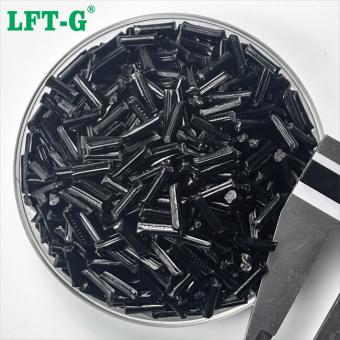
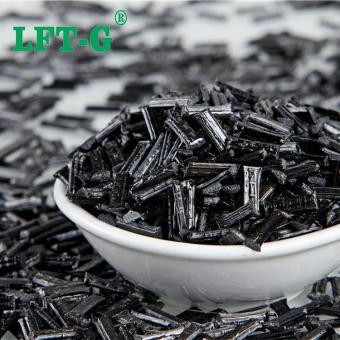
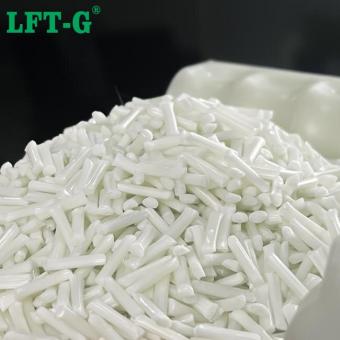
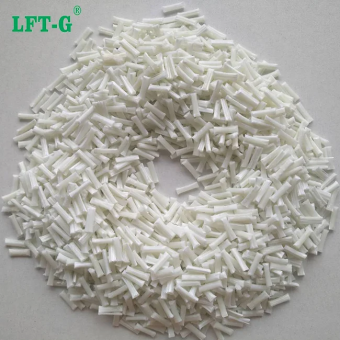
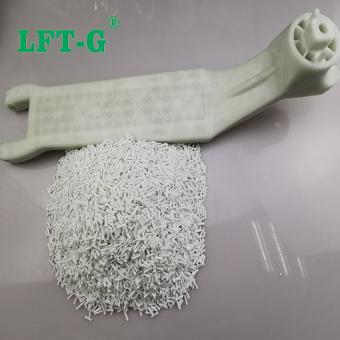
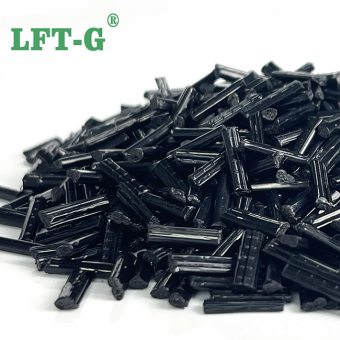
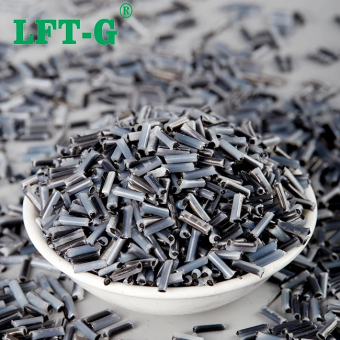
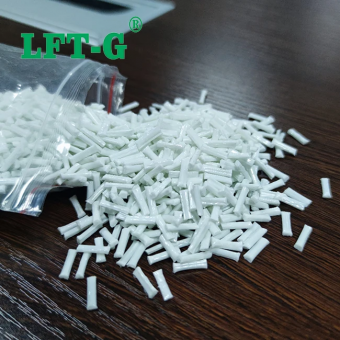
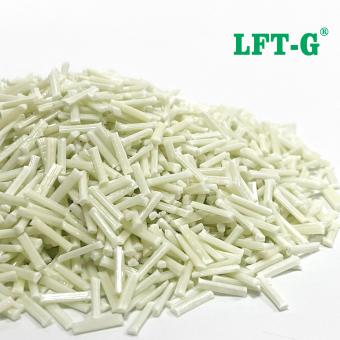
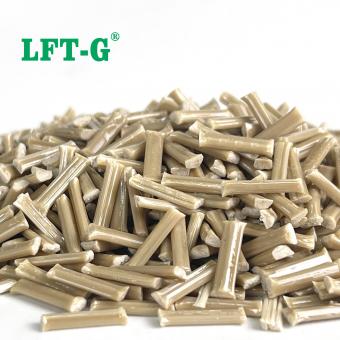
Polypropylene PP Copolymer with Long Carbon Fiber Reinforcement PolymersLong fiber reinforced thermoplastics are an excellent option to consider for metal replacement at a fraction of the weight.
- Plastic increased mechanical properties
- Customization materials high quality ISO
- Injection molding plastic engineering factory
- LCF Carbon fiber filled thermoplastic resin
- long length pellets compounds manufacturer
- Continuous fibre long cut good performance
Tags :
-
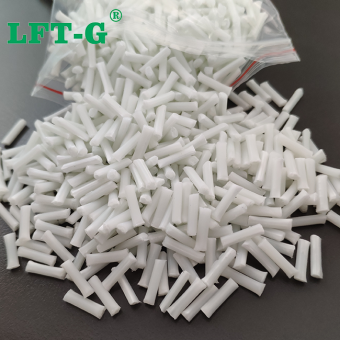
LFT modified Polyamide 6 reinforced plastic long carbon fiber thermoplastic resinPolyamide 6 (PA6) Material Polyamide 6 (PA6) has chemical and physical properties very similar to PA66. However, differences in molecular structure lead to distinct performance characteristics. PA6 features a lower melting point and a wider processing temperature window, offering better impact resistance and solubility resistance than PA66, while also exhibiting higher moisture absorption. Since many quality characteristics of plastic parts are affected by hygroscopicity, molding shrinkage is largely influenced by crystallinity and moisture absorption. Therefore, these factors must be carefully considered when designing PA6 products. Fiber-reinforced PA6 effectively reduces shrinkage and mitigates issues caused by moisture absorption. Its high crystallinity and excellent flowability contribute to improved dimensional stability and overall part performance. Datasheet Nylon products should be used with attention to dimensional deviation caused by thermal expansion and moisture absorption. Conventional PA6 also shows limited acid resistance and UV resistance. Long-term exposure to high temperatures may cause thermal oxidation, resulting in discoloration and eventual material degradation. Therefore, unmodified nylon is generally not recommended for outdoor applications. Carbon fiber reinforced modified PA6 significantly improves creep resistance, rigidity, wear resistance, and mechanical strength, enabling stable performance in outdoor and demanding environments. *Tip: Poor compatibility between carbon fiber and PA6 may lead to fiber floating and reduced mechanical properties. Xiamen LFT’s PA6 composites feature excellent fiber–matrix compatibility, effectively avoiding these issues. Advantages Strength & Durability: Excellent balance of rigidity and heat resistance Optimized Design: Superior surface appearance suitable for complex structures Excellent Processability: High flowability and thermal stability for precision molding High Thermal Stability: Reliable performance under elevated temperatures Stable Electrical Properties: Consistent insulation across wide temperature and frequency ranges Applications Long carbon fiber reinforced PA6 enhances strength, heat resistance, impact resistance, and dimensional stability, making it suitable for both industrial and consumer applications. With trends toward lightweight and compact automotive design, under-the-hood temperatures continue to rise. Carbon fiber reinforced PA6 meets these demanding requirements and is widely used in automotive engine components, electrical systems, body structures, and airbag-related parts. Due to its excellent mechanical properties, dimensional stability, heat resistance, and aging resistance, carbon fiber reinforced PA6 is also commonly applied in mechanical parts and aerospace equipment components. Long carbon fiber reinforced PA6 features high flowability, high rigidity, excellent mechanical strength, low shrinkage, creep resistance, thermal stability, wear resistance, oil resistance, uniform fiber dispersion, and good surface gloss. Typical applications include power tools, fishing equipment, automotive parts, machinery components, and office accessories. Certifications ISO 9001 & IATF 16949 Quality Management System Certification National Laboratory Accreditation Certificate Modified Plastics Innovation Enterprise REACH & RoHS Heavy Metal Compliance Factory Contact Us
- pa6 lcf granules high rigidity strength
- PA6 long carbon fiber extrusion or injection molding
- thermoplastic resin pa6 with fiber natural black
- Nylon composite pellets Polymer granules PA6
- Long carbon fiber Reinforced Polypropylene for electrial accessories
- LFT-G pellets pa6 low warping
Tags :
-
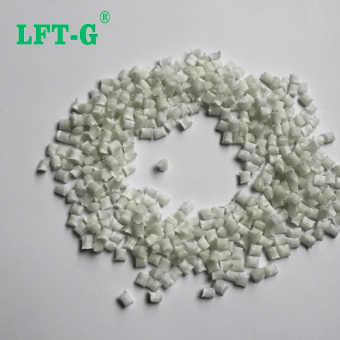
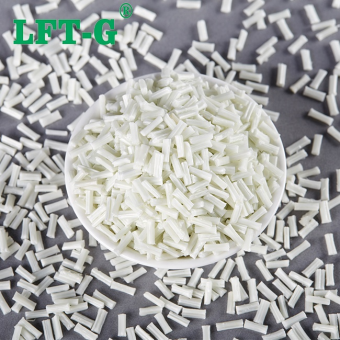
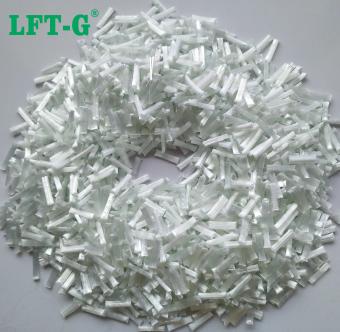
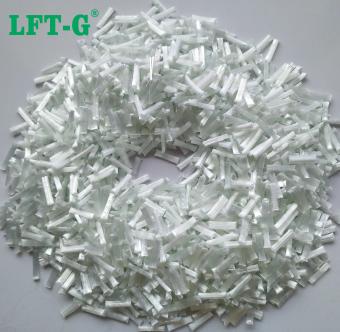
Xiamen LFT PP Polypropylene engineeing plastic long glass fiber composite granules 12mmWhat is Long Glass Fiber (LGF)? Long glass fiber reinforced plastics (LFT) are engineered materials in which long glass fibers and additives are incorporated into a base thermoplastic. This significantly improves mechanical strength, heat resistance, dimensional stability, and the overall performance of the material. Why Reinforce with Long Glass Fiber? High heat resistance: LFT significantly increases the thermal performance, especially for nylon-based plastics. Reduced shrinkage & higher rigidity: Fiber reinforcement restricts polymer chain movement, improving dimensional stability and stiffness. Improved impact resistance: Reinforced plastics are less prone to stress cracking and have better toughness. High strength: Long glass fibers increase tensile, compressive, and bending strength. Flame retardancy: Most LFT materials are self-extinguishing due to additives and fiber content. Why Choose Long Glass Fiber over Short Glass Fiber? Longer fiber length significantly enhances mechanical properties. High specific stiffness and strength with excellent impact resistance, ideal for automotive applications. Superior creep resistance and dimensional stability for precision parts. Excellent fatigue resistance for long-life components. Improved stability under hot and humid environments. Minimal fiber damage during molding due to relative fiber movement in the mold. Appearance of PP-LGF Applications of PP-LGF Automotive Parts Front end modules, door modules, shift mechanisms, electronic accelerator pedals, dashboards, cooling fans, battery carriers, bumper brackets, underbody protection plates, sunroof frames, etc. – replacing reinforced PA or metal components. Household Appliances Washing machine drums, brackets, air conditioning fans, etc. – replacing short glass fiber reinforced PA and metal components. Communications, Electronics, Electrical Appliances High-precision connectors, igniter components, coil shafts, relay bases, microwave transformer frames, solenoid valve housings, scanner components, etc. Other Applications Power tool housings, water pump/meter housings, impellers, bicycle frames, skis, locomotive pedals, safety helmets, safety shoes – replacing short fiber reinforced PA or PPO. Datasheet for Reference About Us Xiamen LFT Composite Plastics Co., Ltd. is a leading supplier of Long Glass Fiber (LGF) and Long Carbon Fiber (LCF) reinforced thermoplastics. Our LFT materials support injection molding, extrusion molding, and are available in fiber lengths of 5–25mm, tailored to customer requirements. ISO9001 & IATF16949 certified, our products are patented and widely used in automotive, electronics, industrial, and defense applications. What We Offer Technical data and guidance for LFT & LFRT materials. Mold design recommendations for optimized production. Injection molding and extrusion support for consistent product quality.
- Polypropylene filling lgf GFRP 30
- thermopalstic Polymer virgin grade
- LFT-G car parts home appliance parts
- PP resin GF made in China modified plastic
- long fiber compounds pp instead metal and steel
- injection molding pp composite
Tags :
-
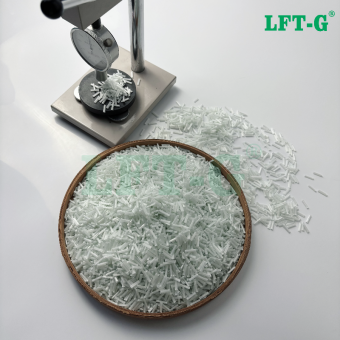
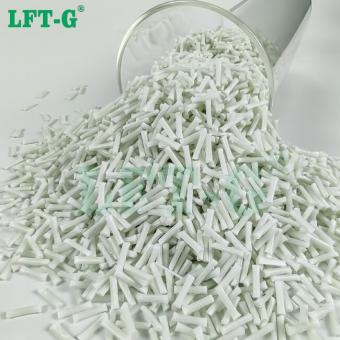
Xiamen LFT-G Nylon 6 Polyamide 6 composite Long Glass Fiber modified plastic 12mm original colorPA6 Material Overview PA6 (Polyamide 6) is a widely used engineering plastic with excellent balanced performance. Its raw materials are readily available and cost-effective, making it accessible without dependence on foreign technology. However, PA6 has some limitations such as high water absorption, lower low-temperature impact toughness, and moderate dimensional stability. To overcome these limitations, PA6 is often reinforced with glass fiber (GF) to enhance mechanical properties. PA6-LGF (Long Glass Fiber Reinforced PA6) 1. Influence of Glass Fiber Content Glass fiber content is a key factor in the performance of reinforced composites. Increasing fiber content increases fiber density, thinning the PA6 matrix between fibers. This enhances impact toughness, tensile strength, and bending strength. Example: For PA6-LGF, increasing fiber content to 35% raised notch impact strength from 24.8 J/m to 128.5 J/m. However, excessive fiber content can reduce impact strength. Bending strength also improves as fibers transfer stress and absorb energy when broken, with experimental results showing bending modulus up to 4.99 GPa for 35% LGF. 2. Influence of Fiber Retention Length Fiber length significantly affects mechanical properties. When fiber length is below the critical length, increasing length improves resin-fiber bonding and tensile load resistance. When fiber exceeds the critical length, longer fibers absorb more impact energy and improve impact strength, as the number of fiber ends (crack initiation points) decreases. Example: At 40% fiber content, increasing fiber length from 4mm to 13mm improved tensile strength from 154.8 MPa to 164.4 MPa, with bending strength and notched impact strength increasing by 24% and 28%, respectively. Fibers longer than 7mm enhance warping resistance and mechanical stability under high temperature and humidity. Technical Data Reference (TDS) PA6-LGF can be reinforced with 20%-60% long glass fiber depending on product requirements. Compared to unreinforced PA6, PA6-LGF offers enhanced strength, heat resistance, impact resistance, dimensional stability, and reduced warping. The following TDS shows the data for PA6-LGF30. Applications of PA6-LGF PA6-LGF is widely used in automotive, electronic/electrical, and machinery/engineering parts. Automotive Parts Lightweight and miniaturization trends promote PA6-LGF use in engines, electrical systems, and body components. Electronic & Electrical Components Excellent flame retardancy and corrosion resistance make PA6-LGF suitable for switchgear, circuit breakers, contactors, connectors, and cable protection tubes. Mechanical & Engineering Parts Good impact resistance, wear resistance, and self-lubrication properties allow PA6-LGF to be used in machinery and engineering accessories. About Xiamen LFT Composite Plastics Co., Ltd. Xiamen LFT focuses on Long Glass Fiber (LGF) and Long Carbon Fiber (LCF) reinforced thermoplastics. Our LFT materials support injection molding (LFT-G) and extrusion molding, as well as LFT-D molding, with fiber lengths from 5–25mm. Our products are ISO9001 & IATF16949 certified, patented, and widely used in automotive, electronics, industrial, and engineering applications.
- PA6 thermoplastic resin materials
- nylon 6 granules
- glass fiber reinforced plastics granules
- long fiber compounds pa6
- Injection molding plastic
- LFT-G reinforced material
Tags :
-
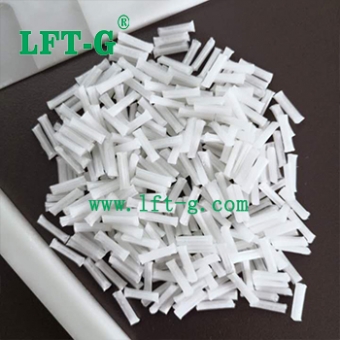
Nylon series Polyamide 66 Long Glass Fiber Reinforced Thermoplastic ResinPolyamide, which is also known by the trade name, Nylon, has excellent heat resistant properties, especially when combined with additives and filler materials. In addition to this, Nylon is very resistant to abrasion. Xiamen LFT offers a wide range of temperature-resistant nylons with many different filler materials. About PA66-LGF compounds Nylon 6,6, also written as nylon 6-6, nylon 66, or nylon 6/6, is a more crystalline version of nylon 6. It is also referred to as polyamide 66 or PA 66. It has improved mechanical properties due to its more ordered molecular structure. Nylon 66 for machining has improved temperature resistance and lower rates of water absorption when compared to standard nylon 6. The advantages of nylon 6,6 are that the yield strength is higher than nylon 6 and nylon 610. It has high strength, toughness, rigidity, and low coefficient of friction in a wide temperature range. In addition, it is oil resistant and resistant to chemical reagents and solvents. However, PA66 has strong hygroscopicity and poor dimensional stability, which limits its application. In order to obtain nylon 66 engineering material with higher strength, it should be modified by glass fiber reinforcement. The mechanical properties of long glass fiber reinforced nylon 66 (LGFR-PA66) are obviously better than those of short glass fiber reinforced nylon 66 (SGFR-PA66), and the molding processing performance is also better. It can be molded by various molding methods such as injection molding and compression molding, and complex components can also be formed. Therefore, long glass fiber reinforced nylon 66 can be widely used in building materials, aerospace, electronic devices, furniture and other fields, especially in the automotive industry application market. The production process of long glass fiber reinforced nylon 66 is different from that of short glass fiber reinforced nylon 66. The short glass fiber reinforced nylon 66 particle is chopped under the friction and shearing of screw and barrel, and the short glass fiber reinforced nylon 66 particle is obtained with the length of glass fiber monofilament about 0.5mm. The length of some glass fiber monofilament in the final product is lower than the critical length of reinforcement, and the glass fiber is easy to be extracted from the nylon 66 matrix when the product is stressed. The strength of glass fiber is not fully utilized, and the mechanical properties of the product are not high. Long glass fiber reinforced nylon 66 has better reinforcement effect and dimensional stability, and the rigidity, tensile, bending, impact resistance and fatigue resistance of the manufactured products are better, and the service life is longer. Materials Details Number PA66-NA-LGF Color Natural color or Customized Length 6-25 mm Package 25kg/bag MOQ 25kg Lead time 2-15 days Port of Loading Xiamen Port Trade terms EXW/FOB/CFR/CIF/DDU/DDP About Xiamen LFT Xiamen LFT Composite Plastic Co.,LTD was established in 2009, is a brand-name global suppliers of long fiber reinforced thermoplastic materials integrating product research & developmen (R&D), production and sale marketing. Our LFT products have passed the ISO9001&16949 system certification and have obtained lots of national trademarks and patents, covering the fields of automotive, military parts and firearms, aerospace, new energy, medical equipment, power wind energy, sports equipment, etc. LFT long fiber reinforced thermoplastic engineering materials,compared to ordinary short fiber reinforced thermoplastic materials (fiber length is less than 1-2 mm), the LFT process produces thermoplastic engineering material's fibers in lengths of 5-25 mm. The long fibers are impregnated with the resin through a special mold system to obtain long strips that are fully impregnated with the resin ,and then cut to the length as required. The most used base resin is PP, by PA6, PA66, PPA,PA12,MXD6,PBT,TPU,PPS, ABS,PEEK, etc. Conventional fibers include glass fiber, carbon fiber. Depending on the end use, the finished products can be used for injection molding,extrusion, molding, etc., or directly used for plastic instead of steel and thermoset products.
- PA66 PA 6.6 Enginering materials
- excellent heat resistance with filler
- injection molding products light weight
- car parts toy home applance use
- modified plastic manufacturer can be customized
- can be recylced GFRP GF30
Tags :
-
Xiamen LFT ABS (Acrylonitrile Butadiene Styrene) Long Glass Fiber Reinforced Thermoplastic CompoundsABS-LGF (Glass Fiber Reinforced ABS) Overview ABS is a versatile engineering plastic known for chemical and thermal stability, strength, toughness, and glossy finish. It is widely used in consumer products such as toys and helmets, as well as automotive applications like interior trim, housings for electronics, and more. Reinforcing ABS with glass fiber significantly improves rigidity, heat resistance, and dimensional stability. ABS-LGF composites provide excellent cost-performance balance, helping manufacturers reduce costs while meeting production needs. About ABS-LGF Compounds Applications of Modified ABS 1. Automotive Parts: Instrument panels, fenders, interiors, lights, mirrors, audio systems. 2. Electronic & Electrical Components: IT and OA equipment shells, converters, power sockets. 3. Electronic Appliances: Switches, controllers, monitors, housings, brackets. 4. Home Appliances: Electrical components, control boxes. Advantages of ABS Injection Molding High Productivity: Efficient, low-waste process ideal for high-volume manufacturing. Complex Part Design: Capable of multi-featured components, including overmolding and metal inserts. Increased Strength: ABS provides excellent mechanical strength and durability. Flexible Color & Material Options: Easily colored, painted, or electroplated to improve environmental resistance. Decreased Waste: Low-wastage production, limited to sprue, runners, and flashing. Low Labor Cost: Highly automated process reduces human intervention and lowers cost per part. Material Details Number ABS-NA-LGF Color Natural or Customized Length 6-25 mm Package 25kg/bag MOQ 25kg Lead Time 2-15 days Port of Loading Xiamen Port Trade Terms EXW / FOB / CFR / CIF / DDU / DDP About Xiamen LFT Founded in 2009, Xiamen LFT Composite Plastics Co., Ltd. is a leading global supplier of long fiber reinforced thermoplastic materials, integrating R&D, production, and marketing. Our products are ISO9001 & IATF16949 certified, patented, and applied in automotive, aerospace, medical, new energy, military, sports equipment, and more. Compared to short fiber thermoplastics (1-2 mm fibers), our LFT materials (5-25 mm fibers) are fully impregnated with resin, ensuring superior mechanical performance. Base resins include PP, PA6, PA66, PPA, PA12, MXD6, PBT, TPU, PPS, ABS, PEEK, etc. Conventional fibers include glass and carbon fibers. Finished products can be used for injection molding, extrusion, or directly replace steel and thermoset components.view more
-
LFT POLYAMIDE 6 Nylon Reinforced long glass fiber orginal color for automotive partsPA6-LGF PA6 modified plastics use pure PA6 as the matrix and enhance internal and external properties through blending, filling, strengthening, copolymerization, crosslinking, and other methods. They account for approximately 15% of PA6 applications. Long glass fiber content ranges from 20%–60%, adjusted according to product requirements, providing high strength, superior heat resistance, good impact resistance, and lightweight alternatives to certain metals. Common applications include power tool shells, garden tools, gears, sports equipment, and automotive parts. Other Specifications of PA6-LGF Flame Retardant PA6: PA6 is naturally flammable, but adding flame retardants changes its combustion properties. Mechanical mixing incorporates nitrogen, phosphorus, bromine-based, or mineral flame retardants. These materials are suitable for switches, low-voltage electrical housings, wiring terminals, and circuit breakers. Toughened PA6: Incorporating toughening agents improves low-temperature resistance, flexibility, fluidity, reduces shrinkage and water absorption, enhances impact and aging resistance. Ideal for baby carriage parts, rolling belts, line clips, and connectors. Applications Beyond daily applications, PA6 modified plastics are increasingly used in high-end fields such as rail transit, medical devices, military, and aerospace. TDS for Reference Nylon reinforced materials are made from PA6/PA66 resins with 20–60% glass fiber to increase strength. 30% fiber content is most common, but 40–50% can be used based on product requirements. Advantages of Long Glass Fiber Compounds 1. High-temperature resistance improves significantly after glass fiber reinforcement, especially for nylon plastics. 2. Shrinkage decreases and rigidity increases due to limited polymer chain movement. 3. Stress cracking is reduced and impact resistance improves. 4. Mechanical properties such as tensile, compression, and bending strength are enhanced. 5. Flame retardancy improves; most reinforced materials become self-extinguishing. Xiamen LFT Composite Plastic Co., Ltd. Xiamen LFT Composite Plastic Co., Ltd. specializes in LFT & LFRT, including Long Glass Fiber (LGF) and Long Carbon Fiber (LCF) series. Thermoplastic LFT can be used for LFT-G injection molding or LFT-D molding and customized in 5–25mm lengths. The company’s continuous fiber reinforced thermoplastics are ISO9001 & IATF16949 certified and have obtained multiple national trademarks and patents.
- Polyamide 6 composite materials
- lgf thermoplastic resin granules
- High impact pa series engineer plastic
- injection molding plastic
- pa6 filling long glass fiber
- made in China high performance plastic
Tags :
-
LFT POLYAMIDE 6 Nylon Reinforced long glass fiber orginal color for automotive partsWhat is PA6 (Nylon 6)? PA6 (Polyamide 6), commonly known as Nylon 6, is a semi-crystalline thermoplastic engineering plastic containing amide groups (-CONH-) in its molecular backbone. It is one of the most widely used engineering polymers in the world. PA6 is produced from caprolactam and is available in various grades including PA6, PA66, PA610, etc., depending on the monomer structure. Among them, PA6 and PA66 are the most commonly used in industrial applications. PA6 offers excellent mechanical strength, wear resistance, and processability, making it widely used in fibers, engineering plastics, and films. Properties of PA6 PA6 provides a balanced combination of mechanical and chemical performance, including: High tensile and compressive strength Excellent toughness and fatigue resistance Good wear and abrasion resistance Strong resistance to oils, fuels, and most organic solvents Good electrical insulation properties Easy processing and good moldability However, PA6 also has some limitations such as high moisture absorption, dimensional instability, and reduced impact performance at low temperatures. Limitations of PA6 High water absorption affects dimensional stability Poor UV resistance and long-term thermal oxidation behavior Property variation under humid environments Processing sensitivity to moisture content Why Reinforce PA6 with Long Glass Fiber? To overcome the limitations of neat PA6, reinforcement with long glass fibers (LGF) is widely used. This is a common physical modification method to significantly enhance material performance. By incorporating long glass fibers into the PA6 matrix, the following properties are greatly improved: Mechanical strength and stiffness Dimensional stability Heat resistance Fatigue performance Load-bearing capability Applications of PA6-LGF 30% long glass fiber reinforced PA6 is widely used in high-performance structural components, including: Power tools: housings and structural parts Automotive industry: engine components, structural brackets, interior and exterior parts Industrial equipment: mechanical parts and housings Its fatigue strength can reach up to 2.5× higher than unreinforced PA6, making it ideal for demanding applications. Processing Guidelines (PA6-LGF 30%) The addition of 30% long glass fiber significantly reduces shrinkage to approximately 0.3%, compared to 1.0–1.5% for neat PA6. Higher fiber content generally leads to lower shrinkage, but may also increase surface fiber exposure and processing challenges. Recommended processing notes: Recycled material usage should be controlled within 25% Material must be properly dried before processing Excessive reprocessing may affect mechanical performance and color stability Mold design should consider fiber orientation and flow balance Post-cooling in warm water helps reduce warpage and internal stress Customers & Production Certificationsview more
-
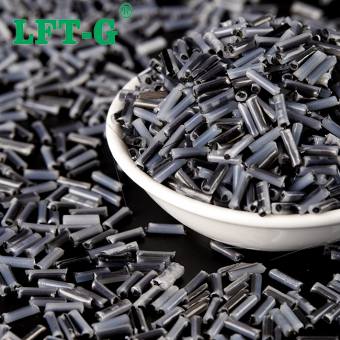
Polyamide 6 filling Long Carbon Fiber composite engineering plastic 5-25mm lengthProduct number: PA6-NA-LCF40 Product fiber: 20%-60% Product application: Suitable for manufacturing helmets, Car bumps and Robotic and arms etc. Product feature: High toughness, Light weight, High strength, Wear strength, Corrosion resistance, Creep resistance, Conduction, Heat transfer.
- Black color pa6 LCF 20-60 injection molding
- Heat transfer high performance PA6
- Sample available compounds pa6
- Customized products polyamide can be recycled
- Manufacturing use pa6 thermoplastic resin
- Instead medal nylon 6 for home appliance parts
Tags :
-
Plastic Factory Polypropylene Fiber Reinforced PelletsPolypropylene, also known as PP, is a polyolefin or saturated polymer. It is a low-density thermoplastic with good resistance to heat. Other characteristics of PP include: chemical resistance, elasticity, toughness, fatigue resistance, and electrical insulation capability.
- plastic injection molding parts
- reinforced carbon fiber
- carbon fiber reinforced composites
- polypropylene tensile strength
- high density polypropylene
- automotive PP composite material
Tags :
-
LFT-G modified ABS compounds Long Glass Fiber for automotive partsABS material Acrylonitrile-butadiene styrene (ABS) resin is an opaque amorphous thermoplastic engineering plastic with complex two-phase structure. It is composed of styrene, acrylonitrile and butadiene in different proportions. In the 1970s, it began to be recognized by the public and began to be used. In the 1990s, the market demand grew rapidly. At present, it should be used in domestic and foreign markets, especially in construction, home appliances, automobiles and other industries. ABS-LGF Long glass fiber is widely used in engineering plastics. Reinforced ABS composites are made by adding a certain percentage of glass fiber, with the addition of 30% to 50% glass fiber being the most common. So as to improve the mechanical properties of ABS. Such as tensile properties, bending properties, and the corresponding molding shrinkage rate is not reduced, so that the material will not stress cracking. Advantages: 1. Long glass fiber reinforced, glass fiber is a high temperature resistant material, therefore, the heat resistant temperature of reinforced plastic is much higher than before without glass fiber, especially nylon plastics 2. After long glass fiber reinforcement, due to the addition of long glass fiber, the mutual movement between polymer chains of plastic is limited, therefore, the shrinkage rate of reinforced plastics decreases a lot, and the rigidity is greatly improved. 3. After long glass fiber reinforcement, reinforced plastics will not stress crack, at the same time, the anti-impact performance of plastics is improved a lot. 4. After long glass fiber reinforcement, glass fiber is a high strength material, which also greatly improves the strength of plastic, such as: tensile strength, compression strength, bending strength, improve a lot. 5. Long glass fiber reinforced after, due to the addition of glass fiber and other additives, the combustion performance of reinforced plastics decreased a lot, most of the material can not ignite, is a kind of flame retardant material. Datasheet for reference only Processing flow Cases About Xiamen LFT-G Xiamen LFT composite plastic Co., Ltd. is a brand-name company that focuses on LFT&LFRT. Long Glass Fiber Series(LGF) & Long Carbon Fiber Series(LCF). The company's thermoplastic LFT can be used for LFT-G injection molding and extrusion, and can also be used for LFT-D molding. It can be produced according to customer requirements: 5~25mm length. The company's long-fiber continuous infiltration reinforced thermoplastics have passed ISO9001 & 16949 system certification, and the products have obtained lots of national trademarks and patents.
- Modified material lft injection molding
- ABS compounds long glass fiber
- lgf injection mold abs for engineering
- reinforced material abs filling lgf
- ABS-LGF30 thermoplastic resin
- Thermoplastic resin ABS
Tags :
-
Polylactic acid compounds glass fiber thermoplastic resinPLA (Polylactic Acid) is a semicrystalline thermoplastic polyester. It is derived from renewable sources and is therefore classified as a bioplastic.
- PLA Long fiberglass factory
- Injection molding pla special plastic
- fiber reinfoced plastic pla polymer
- PLA manufacturer good strength
- Special engineering plastic pla
- PLA pure pellets virgin grade lft
Tags :