e-mail
 English
 français
 Deutsch
 русский
 italiano
 español
 português
 العربية
 日本語
日本語 한국의
한국의 中文
中文


-
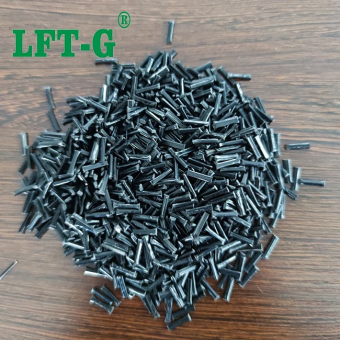
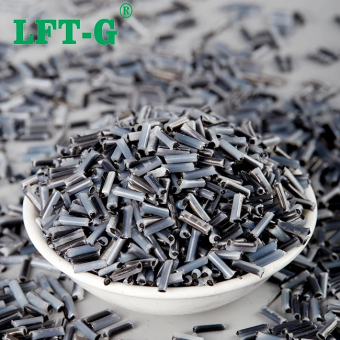
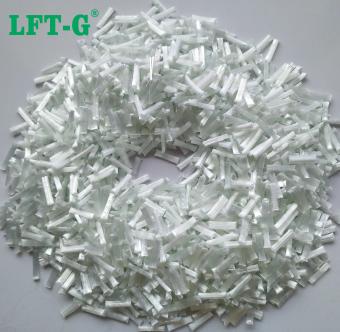
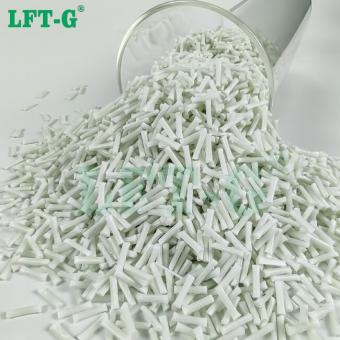
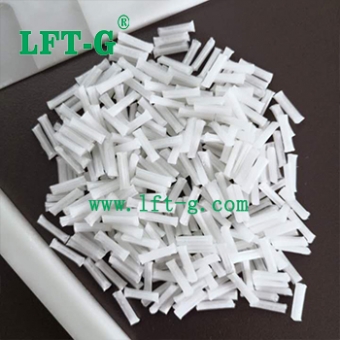
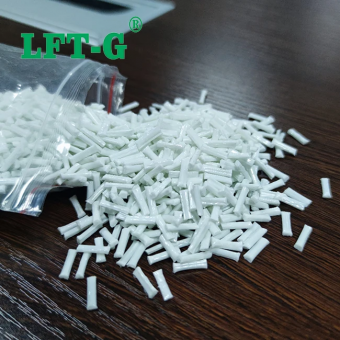
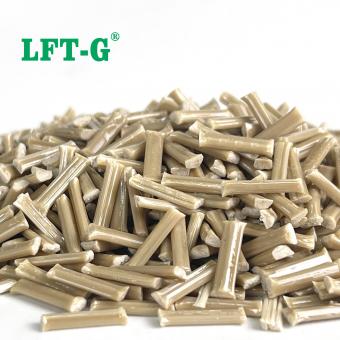
LFT virgin composite PEEK Long Carbon Fiber Reinforcement high strength and rigidityPEEK-Long carbon fiber Polyetheretherketone (PEEK), the complete English name for polyetheretherketone, is a specialty engineering plastic with excellent performance, and has more advantages than other specialty engineering plastics, such as wear resistance, high temperature resistance, high strength and high modulus, flame retardant and radiation resistant, and so on. In addition polyetheretherketone (PEEK) has good thermal stability and melt flow above the melting point, so polyetheretherketone (PEEK) also has the typical processing properties of thermoplastics. PEEK resin is nontoxic, lightweight, corrosion-resistant, and one of the closest materials to the human skeleton, which is well compatible with the musculature, so it is often used instead of metal to make human bones. Carbon fiber-reinforced PEEK composites make up for the weaknesses of toughness and deviations in impact strength. Carbon fiber-reinforced PEEK composites can exhibit high mechanical strength and hydrolytic stability under conditions such as hot water, steam, solvents, and chemical reagents, and can be used to prepare various medical devices that require high-temperature steam sterilization. Advantages of PEEK-LCF PEEK has high rigidity, good dimensional stability, low coefficient of linear expansion, and can withstand great stress without significant elongation over time, and its low density and good processing properties make it suitable for parts with high requirements for fineness. Among these elements, carbon fiber materials overlap highly with the characteristics of PEEK. Carbon fiber is not only one of the typical lightweight materials, it is also outstanding in terms of mechanical properties. As a result, carbon fiber reinforced PEEK composites can reduce weight by at least 70% compared to traditional metal materials. PEEK material itself is very wear-resistant, and good interface bonding with carbon fibers to further enhance its wear resistance, through the carbon fiber reinforced PEEK composite parts and cobalt alloy materials for wear comparison experiments, the results show that: at 23 ℃, using the M-200 wear machine at 400 rpm after 100 minutes of wear, found that the carbon fiber reinforced PEEK composite surface smooth The wear marks were small, and the carbon fiber bonded well with PEEK without fiber extraction. In contrast, the cobalt alloy surface wear marks are very obvious, even a large number of wear particles appear, the metal internal impurities image visible. PEEK exhibits high mechanical strength and hydrolytic stability in hot water, steam, solvents and chemical reagents, etc. Datasheet for reference PEEK-LCF application Q&A 1. What are the types of thermoplastic carbon fiber composites? Carbon fiber thermoplastic composites are composites with carbon fiber as the reinforcing material and thermoplastic resin as the matrix. From the reinforcement method of carbon fiber, it can be divided into long-cut carbon fiber (LCF) reinforced thermoplastic composites, short-cut carbon fiber (SCF) reinforced thermoplastic composites and continuous carbon fiber (CCF) reinforced thermoplastic composites. Long-cut carbon fiber and short-cut carbon fiber mainly refer to the application length of carbon fiber materials, there is no strict fixed distinction between the two, generally between a few millimeters to a few centimeters, the more common specifications are 6mm, 12mm, 20mm, 30mm, 50mm. Carbon fiber thermoplastic composites can also be classified according to the thermoplastic resin. There are many common thermoplastic resins, such as PE, PP, PVC, etc. However, thermoplastic resin composites with carbon fiber reinforcement are mostly used in aerospace, precision equipment and other demanding working environments, therefore, carbon fiber thermoplastic composites are more often made of polyether ether ketone (PEEK), PPS, polyimide ( PI), polyetherimide (PAI) and other mid- to high-end thermoplastic resins as the matrix to achieve the optimization of material performance. 2. How does thermoplastic carbon fiber composite material achieve low cost and environmental protection? Thermoplastic carbon fiber composites are used to make parts for high-end machinery. They have excellent machinability, vacuum forming, stamping mold plasticity, and bending processability. For example, Teijin has been able to add a recycling process to the process according to specific needs, and to shred and mold the corners of thermoplastic carbon fiber composite materials after stamping to make recycled materials for making small products or for molding nuts and studs on carbon fiber prototypes. This method can greatly reduce the loss of raw materials, improve the efficiency of the use of thermoplastic carbon fiber composite materials, reduce the overall cost, and thus achieve the purpose of environmental protection. In addition, thermoplastic carbon fiber composites can reduce the molding cycle time compared with thermoset carbon fiber composi...
- PEEK with long carbon fiber
- Modified Plastic pellets special engineering plastic
- factory in Xiamen thermoplastics
- peek cf30 instead metal high demanding
- PEEK pellets lcf 30 polymer
- self owing peek pellets
Tags :
-
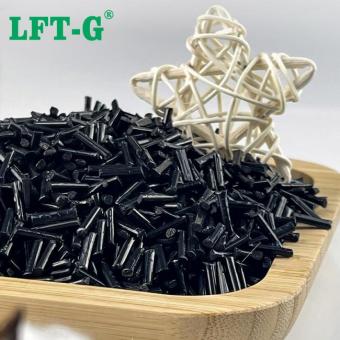
Polypropylene long carbon fiber filled PP high mechanical properties polymerWhat is Long carbon fiber (LCF) Carbon fiber was first used in aviation, military and other fields, and later was cited in the production of racing car parts. In recent years, it began to come into the consumer market, and is also one of the materials that international manufacturers are keen on. Carbon fiber composite materials are characterized by very light, rigid, and can withstand the same pressure as steel, the cost is higher. However, the material is more durable and has a high recycling value, so it can save costs to a certain extent. Carbon fiber composites include carbon fiber powders, short fibers, long fibers, and long fiber reinforced composites. Long carbon fiber composites have better mechanical properties than short carbon fiber composites, but there are certain requirements for the injection molding machine and mold of the product. Carbon fiber has excellent mechanical properties and chemical stability, lower density than aluminum, higher strength than steel, is the highest specific strength and highest specific modulus among the high-performance fibers that have been produced in large quantities, and has the characteristics of low density, corrosion resistance, high temperature resistance, friction resistance, fatigue resistance, high electrical and thermal conductivity, low coefficient of thermal and wet expansion, etc. It is an important strategic material for the development of national defense and national economy. The characteristics of corrosion resistance, high temperature resistance and low coefficient of expansion make it an alternative material to metal materials in harsh environments; the electrical and thermal conductivity properties expand its application in the field of communications and electronics; as the highest specific strength (strength to density) and highest specific stiffness (modulus to density) among the high-performance fibers currently in mass production, carbon fiber is an important material for aerospace, wind power blades, new energy vehicles, transportation, sports and leisure, etc, Carbon fiber is an ideal material for aerospace, wind power blades, new energy vehicles, transportation, sports and leisure, and other fields with light weight needs. Xiamen LGT-G LCF compounds have the following appearance: Flat grain, very light weight, shows flawless finish, no floating fibers, bubbles, etc. The color is natural black and the length is around 6 to 25 mm. The application of PP filling long carbon fiber compounds Datasheet for reference Homo-PP & Copo-PP PP is divided into homopolymer PP and copolymer PP according to the different types of monomers involved in polymerization. Homopolymer PP is made by polymerization of propylene monomer only, and there is only one kind of link in the polymer molecular chain, with high crystallinity and good mechanical properties and heat resistance. Copolymerized PP is mainly made of propylene monomer and ethylene monomer, and there are ethylene links in addition to propylene links in the polymer molecular chain, which has high impact resistance. HPP composites and CPP composites, both of them are available for us. Details Number Color Length Package Sample MOQ Port of Loading Delivery time HPP-NA-LCF Natural color, or customized 6-25mm 20kg/bag Available 20kg Xiamen Port 7-15 days after shipment Certifications Test Xiamen LFT composite plastic CO., Ltd. Xiamen LFT composite plastic Co., Ltd. is a brand-name company that focuses on LFT&LFRT. Long Glass Fiber Series (LGF) & Long Carbon Fiber Series (LCF). The company's thermoplastic LFT can be used for LFT-G injection molding and extrusion, and can also be used for LFT-D molding. It can be produced according to customer requirements: 5~25mm length. The company's long-fiber continuous infiltration reinforced thermoplastics have passed ISO9001&16949 system certification, and the products have obtained lots of national trademarks and patents. Please contact Ms. Wallis for more information. Email: sale02@lfrtplastic.com Whatsapp: (+86) 13950095727
- Long carbon fiber Reinforced Polypropylene for electrial accessories
- PP pellets lcf 30 polymer compounds resin
- best long carbon fiber pp lcf30 granules
- carbone fiber reinforced pp pellets
- pp lcf injection mold extrusion mold thermoplastic
- pp modified granules manufacturer
Tags :
-
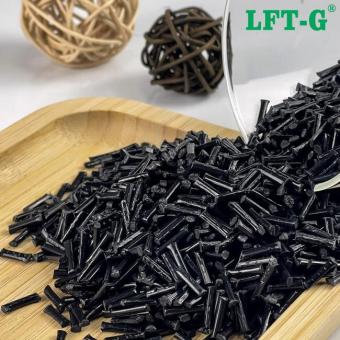
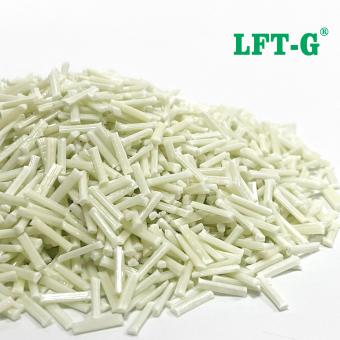
LFT-G™ Long Carbon Fiber Reinforced PP for High Performance ApplicationsOur Long Carbon Fiber PP is a high-performance polypropylene composite, engineered for exceptional strength and lightweight properties, making it ideal for demanding applications like automotive parts.
- PP Composite Materials
- Carbon Fiber PP for Automotive
- Lightweight Carbon Fiber Plastic
- Long Carbon Fiber PP
- Carbon Fiber Reinforced Polypropylene
- High-Performance Polypropylene
Tags :
-
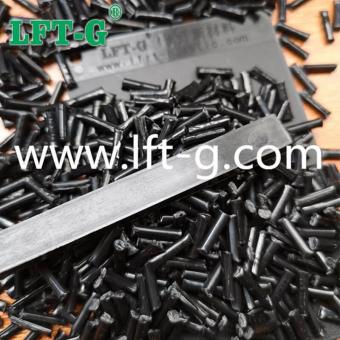
LFT-G Polyamide 66 Long Carbon Fiber filled wear resistance.card{ background:#ffffff; border:1px solid #eaeaea; border-radius:14px; padding:22px; margin-bottom:20px; transition:all 0.3s ease; box-shadow:0 2px 10px rgba(0,0,0,0.04); } .card:hover{ transform:translateY(-6px); box-shadow:0 10px 25px rgba(0,0,0,0.10); border-color:#cfead3; } h2{ color:#2f7d32; margin-bottom:12px; font-size:20px; } p,li{ color:#666; font-size:15px; line-height:1.8; } ul{ padding-left:20px; } .table{ width:100%; border-collapse:collapse; margin-top:10px; } .table th,.table td{ border:1px solid #e5e5e5; padding:10px; text-align:left; font-size:14px; } .table th{ background:#f3f8f4; color:#2f7d32; } .cta-btn{ display:inline-block; margin-top:10px; padding:12px 22px; background:#2f7d32; color:#fff; text-decoration:none; border-radius:8px; transition:0.3s; font-weight:bold; } .cta-btn:hover{ background:#256428; } .faq{ margin-top:10px; } .faq-item{ border-bottom:1px solid #eee; } .faq-item input{ display:none; } .faq-item label{ display:block; padding:14px 0; cursor:pointer; font-size:15px; font-weight:bold; color:#2f7d32; position:relative; } .faq-item label::after{ content:"+"; position:absolute; right:0; font-size:18px; } .faq-content{ max-height:0; overflow:hidden; transition:all 0.3s ease; } .faq-content p{ margin:0; padding:0 0 12px 0; } .faq-item input:checked ~ .faq-content{ max-height:200px; } .faq-item input:checked + label::after{ content:"−"; } Introduction to Long Carbon Fiber Reinforced PA66 Long Carbon Fiber Reinforced PA66 (Polyamide 66) is a high-performance engineering thermoplastic composite designed for demanding structural and mechanical applications. Reinforced with 40% long carbon fiber, PA66-LCF40 delivers significantly improved strength, stiffness, fatigue resistance, and dimensional stability compared to standard PA66 materials, making it an ideal metal replacement solution in automotive, industrial, and electrical applications. Composition and Structure PA66-LCF40 consists of a polyamide 66 matrix reinforced with 40% long carbon fibers. The long fiber reinforcement forms a continuous load-bearing network that enhances stress transfer efficiency, resulting in superior mechanical strength, improved creep resistance, and excellent long-term durability under dynamic loads. Key Features High Strength and Stiffness Excellent Fatigue Resistance Outstanding Impact Performance Good Heat Resistance Excellent Dimensional Stability Low Creep Under Load Lightweight Metal Replacement Material Good Wear Resistance Improved Structural Integrity Typical Applications Automotive Structural Components Electric Vehicle Battery Parts Power Tool Housings and Structural Frames Industrial Machinery Components Mechanical Brackets and Supports Electrical and Electronic Housings Sports Equipment Structural Parts Transportation and Logistics Components Our Working Process Requirement Analysis Material Selection & Technical Recommendation Customized Formulation & Sample Preparation COA Support & Quality Verification Production, Delivery & Technical Follow-up Technical Datasheet (PA66-LCF40%) Property Unit Typical Value Tensile Strength MPa 260 Tensile Modulus MPa 26000 Flexural Strength MPa 380 Flexural Modulus MPa 24000 Notched Izod Impact kJ/m² 40 Heat Deflection Temperature (1.8 MPa) °C 220 Density g/cm³ 1.40 FAQ What is Long Carbon Fiber Reinforced PA66? PA66-LCF40 is a high-performance composite material made by reinforcing polyamide 66 with 40% long carbon fiber, offering excellent strength, stiffness, and durability. What are the advantages of PA66-LCF40? It provides high mechanical strength, excellent fatigue resistance, good heat resistance, low creep, and long-term dimensional stability. Which industries use PA66-LCF40? It is widely used in automotive, electric vehicles, power tools, industrial equipment, electronics, and structural engineering applications. Why choose long carbon fiber PA66 instead of short fiber PA66? Long carbon fibers provide better load transfer, higher impact resistance, improved fatigue performance, and stronger structural integrity than short fiber composites. Is PA66-LCF40 suitable for metal replacement? Yes. It is widely used as a metal replacement material in structural applications requiring high strength, stiffness, and durability. Need Technical Support for PA66-LCF Materials? Contact our engineering team for material selection guidance, processing recommendations, datasheets, and customized PA66 long carbon fiber solutions. Contact Us About LFT-G Xiamen LFT Composite Plastic Co., Ltd., established in 2009, is a global supplier of long fiber reinforced thermoplastic (LFT) materials integrating R&D, production, and sales. We specialize in long glass fiber and long carbon fiber reinforced thermoplastics, including PP, HDPE, PA6, PA66, PA12, PPA, PPS, PEEK, TPU, ABS, PLA and other engineering plastics. Our products are certified to ISO 9001, ISO 14001, and IATF 16949 standards and are widely used in automotive, aerospace, new energy, med...
- PA66 plastic raw materials injection molded
- PA66 recycled pure pellets light weight
- long carbon fiber pa66 natural black color
- pa66 lcf granules instead metal polymers
- Low warpage electronic appliance
- auto part and aerospace parts
Tags :
-
LFT-G Polyamide 12 long carbon fiber reinforced compounds nylon.card{ background:#ffffff; border:1px solid #eaeaea; border-radius:14px; padding:22px; margin-bottom:20px; transition:all 0.3s ease; box-shadow:0 2px 10px rgba(0,0,0,0.04); } .card:hover{ transform:translateY(-6px); box-shadow:0 10px 25px rgba(0,0,0,0.10); border-color:#cfead3; } h2{ color:#2f7d32; margin-bottom:12px; font-size:20px; } p,li{ color:#666; font-size:15px; line-height:1.8; } ul{ padding-left:20px; } .table{ width:100%; border-collapse:collapse; margin-top:10px; } .table th,.table td{ border:1px solid #e5e5e5; padding:10px; text-align:left; font-size:14px; } .table th{ background:#f3f8f4; color:#2f7d32; } .cta-btn{ display:inline-block; margin-top:10px; padding:12px 22px; background:#2f7d32; color:#fff; text-decoration:none; border-radius:8px; transition:0.3s; font-weight:bold; } .cta-btn:hover{ background:#256428; } .faq{ margin-top:10px; } .faq-item{ border-bottom:1px solid #eee; } .faq-item input{ display:none; } .faq-item label{ display:block; padding:14px 0; cursor:pointer; font-size:15px; font-weight:bold; color:#2f7d32; position:relative; } .faq-item label::after{ content:"+"; position:absolute; right:0; font-size:18px; } .faq-content{ max-height:0; overflow:hidden; transition:all 0.3s ease; } .faq-content p{ margin:0; padding:0 0 12px 0; } .faq-item input:checked ~ .faq-content{ max-height:200px; } .faq-item input:checked + label::after{ content:"−"; } Introduction to Long Carbon Fiber Reinforced PA12 Long Carbon Fiber Reinforced PA12 (Polyamide 12) is a premium engineering thermoplastic composite designed for lightweight structural applications requiring outstanding toughness, low moisture absorption, excellent dimensional stability, and long-term durability. Reinforced with 50% long carbon fiber, PA12-LCF50 offers exceptional stiffness, strength, fatigue resistance, and weight reduction, making it an ideal material for replacing metal in demanding industrial applications. Composition and Structure PA12-LCF50 consists of a polyamide 12 matrix reinforced with 50% long carbon fibers. The continuous long fiber structure creates an efficient stress-transfer network throughout the composite, providing superior mechanical performance, excellent creep resistance, and improved impact durability compared with conventional short carbon fiber reinforced PA12. Key Features Ultra-High Strength and Stiffness Excellent Fatigue Resistance Outstanding Impact Performance Very Low Moisture Absorption Excellent Dimensional Stability Superior Chemical Resistance Excellent Wear Resistance Lightweight Metal Replacement Solution Long Service Life Typical Applications Automotive Lightweight Structural Parts Electric Vehicle Battery Components Hydrogen Storage System Components Aerospace Structural Components Industrial Machinery Parts Oil & Gas Equipment Medical Device Components Sports Equipment and High-End Consumer Products Our Working Process Requirement Analysis Material Selection & Technical Recommendation Customized Formulation & Sample Preparation COA Support & Quality Verification Production, Delivery & Technical Follow-up Technical Datasheet (PA12-LCF50%) Property Unit Typical Value Tensile Strength MPa 259 Tensile Modulus MPa 30625 Flexural Strength MPa 335 Flexural Modulus MPa 22693 Notched Izod Impact kJ/m² 57 Heat Deflection Temperature (1.8 MPa) °C 204 Density g/cm³ 1.31 FAQ What is Long Carbon Fiber Reinforced PA12? PA12-LCF50 is a high-performance engineering composite made by reinforcing polyamide 12 with 50% long carbon fiber to achieve exceptional strength, stiffness, and lightweight performance. What are the advantages of PA12-LCF50? It offers high strength, excellent fatigue resistance, low moisture absorption, superior dimensional stability, excellent wear resistance, and outstanding long-term durability. Which industries use PA12-LCF50? It is widely used in automotive, aerospace, hydrogen energy, medical devices, industrial equipment, sports equipment, and lightweight structural applications. Why choose long carbon fiber PA12 instead of short fiber PA12? Long carbon fibers provide significantly better structural integrity, fatigue resistance, impact performance, and load-bearing capability than conventional short fiber reinforced materials. Is PA12-LCF50 suitable for lightweight metal replacement? Yes. PA12-LCF50 combines lightweight performance with excellent mechanical properties, making it an ideal alternative to aluminum and other metal components. Need Technical Support for PA12-LCF Materials? Contact our engineering team for material selection guidance, processing recommendations, technical datasheets, and customized PA12 long carbon fiber solutions. Contact Us About LFT-G Xiamen LFT Composite Plastic Co., Ltd., established in 2009, is a global supplier of long fiber reinforced thermoplastic (LFT) materials integrating R&D, production, and sales. We specialize in long glass fiber and long carbon fiber reinforced thermoplastics, including PP, HDPE, PA6, PA66,...
- long fibre reinforced thermoplastics
- carbon fiber reinforced plastics granules
- long carbon fiber reinforced pa12
- polyamide
- composite plastic
- pa6 lcf polymers carbon fiber CFRP good price polymer
Tags :
-
LFT Polyamide 66 high performance long carbon fiber reinforcementPolyamide 66 roving carbon fiber Nylon black color with heat resistance
- Long carbon fiber enhance pellets
- Roving carbon fiber PA66 instead metal and steel
- Nylon66 composite granules for injection
- High quality PA66 long fiber composite、
- Polyamide long fiber composite
- Virgin plastic PA6 LCF40 for car parts
Tags :
-
LFT-G Polylactic acid filled long carbon fiberHDPE-LGF | Long Fiber Reinforced Polyethylene Composite Solution | LFT-G :root{ --green:#01A55B; --dark:#1F2933; --gray:#5F6B72; --light:#F4F7F5; --border:#E3E8E5; } *{ margin:0; padding:0; box-sizing:border-box; } body{ font-family:Arial,Helvetica,sans-serif; color:var(--dark); line-height:1.7; } .container{ width:90%; max-width:1200px; margin:auto; } img{ width:100%; height:auto; display:block; } h1{ font-size:52px; line-height:1.2; } h2{ font-size:38px; line-height:1.3; margin-bottom:25px; } h3{ font-size:22px; margin-bottom:15px; } p{ font-size:17px; color:var(--gray); } .btn{ display:inline-block; margin-top:35px; padding:15px 35px; background:#01A55B; color:#fff; text-decoration:none; border-radius:5px; } /* ================= HERO ================= */ .hero{ background:#F4F8F6; padding:90px 0; } .hero-grid{ display:block; } .hero-content{ max-width:900px; margin:auto; text-align:center; } .hero-label{ color:#01A55B; font-weight:bold; letter-spacing:1px; margin-bottom:20px; } .hero h1 span{ color:#01A55B; } .hero p{ max-width:850px; margin:20px auto; } /* COMMON SECTION */ section{ padding:90px 0; } .gray-section{ background:#F4F7F5; } /* MATERIAL CONTENT */ .material-section{ display:block; } .material-content{ max-width:900px; margin:auto; } .material-content p{ margin-bottom:20px; } .material-image{ margin-top:50px; width:100%; } .material-image img{ width:100%; height:auto; display:block; } /* PERFORMANCE */ .performance{ padding:70px 0; } .performance-grid{ display:grid; grid-template-columns:repeat(4,1fr); gap:25px; } .performance-item{ padding:35px 20px; border:1px solid #E3E8E5; border-radius:15px; text-align:center; } .performance-item strong{ display:block; font-size:38px; color:#01A55B; } @media(max-width:900px){ .hero-content{ max-width:100%; } .performance-grid{ grid-template-columns:1fr; } h1{ font-size:38px; } } LONG FIBER REINFORCED THERMOPLASTIC PLA-LCF Long Fiber Reinforced Polyphenylene Sulfide A high-performance bio-based composite material combining the renewable characteristics and lightweight properties of PLA with the superior reinforcement capability of long carbon fibers. Designed for demanding applications requiring a high stiffness-to-weight ratio, strength, dimensional stability, lightweight performance and improved mechanical durability. PLA-LCF offers an excellent balance of lightweight construction, mechanical strength and sustainability, making it ideal for lightweight structural components, industrial applications, prototyping and applications where bio-based material solutions are preferred. Request Technical Data 20-60% Glass Fiber Content 6-25mm Long Fiber Length HighStiffness & Strength Bio-BasedMaterial Solution What is PLA-LCF? PLA-LCF is a long carbon fiber reinforced polylactic acid composite engineered for lightweight structural and demanding industrial applications. The combination of a bio-based PLA matrix and long carbon fibers provides enhanced stiffness, tensile strength, dimensional stability and mechanical durability, while maintaining the lightweight and renewable characteristics of PLA. Compared with conventional short carbon fiber reinforced PLA, the long fiber reinforcement network improves load transfer efficiency, resulting in superior mechanical performance, high strength-to-weight ratio, excellent structural stability and enhanced durability. PLA-LCF is particularly suitable for applications requiring high rigidity, lightweight construction, dimensional stability and a more sustainable material solution, making it an attractive option for lightweight structural components, industrial parts, sports equipment and metal replacement applications. Why Long Fiber Technology? Long Fiber Reinforcement Network During processing, long carbon fibers maintain longer reinforcement paths inside the polymer matrix. The continuous fiber network improves load transfer efficiency and provides enhanced structural performance. ✓ Improved mechanical strength ✓ Higher impact resistance ✓ Better fatigue performance ✓ Improved creep resistance ✓ Enhanced dimensional stability Key Material Advantages High Stiffness & Strength Excellent rigidity and strength for demanding structural applications. High Temperature Resistance Maintains mechanical performance and dimensional stability under elevated temperatures. Bio-Based Material Made with a renewable PLA matrix, providing a more sustainable alternative to conventional petroleum-based materials. Dimensional Stability Long carbon fiber reinforcement improves dimensional stability and helps maintain structural integrity during processing and service. .advantage-grid{ display:grid; grid-template-columns:repeat(4,1fr); gap:25px; } .advantage-card{ padding:35px 25px; background:#fff; border:1px solid #E3E8E5; border-radius:15px; } .advantage-card h3{ color:#01A55B; } @media(max-width:900px){ .advantage-grid{ grid-template-columns:1fr; } } PLA-LCF Compared With Traditional Materials Property Standard PLA PLA-LCF Metal ...
- PLA LCF injection molded green materials
- Polylactic acid filling long carbon fiber
- PLA resin lcf replacement of metal
- LFT cpmpounds pla cna be recycled
- lcf reinforced material pla
- Thermoplastic pla lcf CFRP30
Tags :