e-mail
 English
 français
 Deutsch
 русский
 italiano
 español
 português
 العربية
 日本語
日本語 한국의
한국의 中文
中文


-
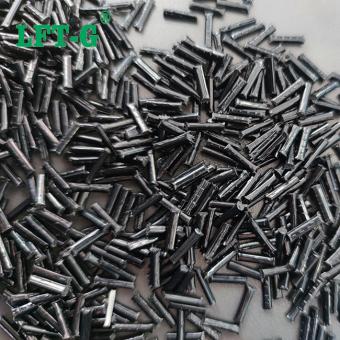
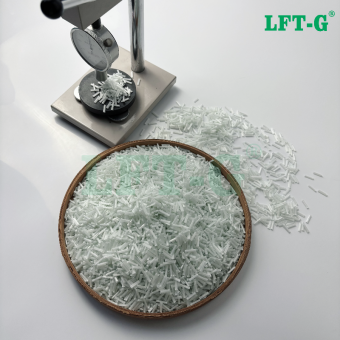
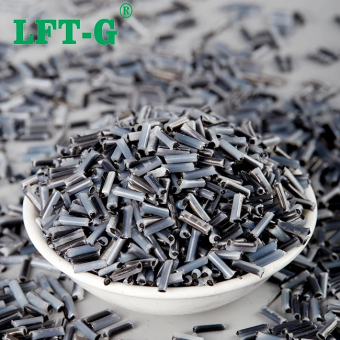
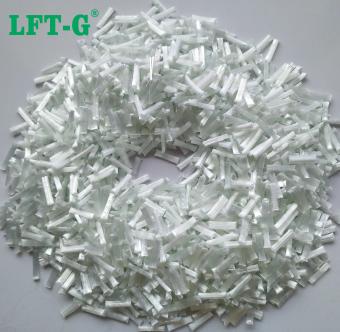
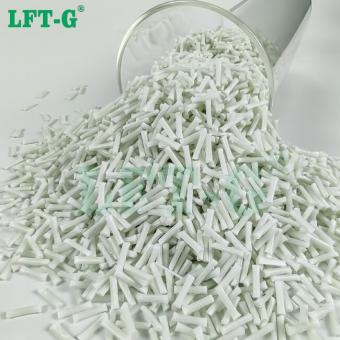
LFT-G PP polypropylene long carbon fiber reinforced material high performance blackLong Carbon Fiber In recent years, due to the growing demand for lightweight in various industries around the world (automotive, aerospace, military, building and civil engineering, etc.), and the increasingly strict requirements for the use of environmentally friendly and sustainable materials, the use of fiber reinforced thermoplastic composites in various industries has been increasing. Especially for carbon fiber reinforced composites, there is still a high recycling value after the products are discarded after completing their life cycle, and through effective recycling technology and methods, the cost of carbon fiber reinforced composites can be significantly reduced. The recovery method of fiber reinforced thermoplastic composites is closely related to the shape and forming method of fiber reinforced in resin. Take carbon fiber reinforced thermoplastic composites as an example. The reinforced forms of carbon fiber mainly include short fiber reinforced, long fiber reinforced and continuous fiber reinforced, and the main preparation method is melt forming. For thermoplastic resins with high melting point, such as polyetherimide (PEI) and polyetherether ketone (PEEK), solvent forming can be adopted. Due to the linear molecular structure of thermoplastic resin, it is easy to transform from solid state to liquid state at high temperature. Therefore, thermoplastic composite materials can be recycled by remelting and reshaping method, which is more recyclable than thermosetting resin matrix composite materials. PP-LCF datasheet Application Our materails all can be recycled At present, more and more companies are developing recycling methods for fiber reinforced thermoplastic composites. For example, the 2014 Chevrolet Corvette uses composite materials containing recycled carbon fiber in 21 body panel components, including doors, boot LIDS, side coops and fenders. Ford Motor Company has used recycled long carbon fiber and polypropylene (LCF/PP) composites to replace the original ASA engineering plastic as the rigid part of the A-pillar bracket in its 2018 Explorer sport utility SUV. About LFT-G Xiamen LFT composite plastic Co., Ltd. is a brand-name company that focuses on LFR&LFRT. Long Glass Fiber Series (LGF) & Long Carbon Fiber Series (LCF). The company's thermoplastic LFT can be used for LFT-G injection molding and extrusion, and can also be used for LFT-D molding. It can be produced according to customer requirements: 5~25mm length. The company's long-fiber continuous infiltration reinforced thermoplastics have passed ISO9001&16949 system certification, and the products have obtained lots of national trademarks and patents. In particular, the carbon fiber LFT series produced by our company has broken the technical blockade of foreign countries. For domestic: automotive, military parts, firearms, aerospace, new energy, medical equipment, electric wind energy, sports equipment and other fields require high-performance thermoplastic special engineering plastics. And other new technology innovation industries provide product and technical support.
- PP resin lcf
- PP raw material of lcf
- 30% of lcf pp
- long carbon fiber filling plastic
- polypropylene composite plastic
- injection grade lcf
Tags :
-
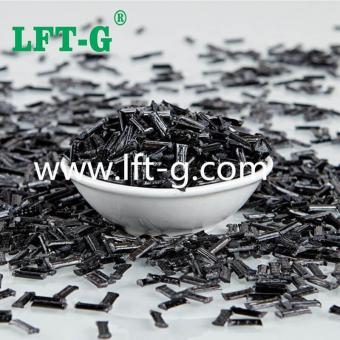
LFT-G PLA polylactic acid long carbon fiber reinforced material black color 24h online replyPLA-LCF Polylactic acid or PLA is a bio-based polymer made using lactic acid from the sugar fermentation process. It was originally intended as a more environmentally friendly alternative to crude oil-based polymers and is technically biodegradable (albeit under industrial compost conditions). In addition to being the most widely used polymer in the desktop 3D printing space, PLA also has a variety of applications in packaging, disposable cups and more. Although it is very cost effective, easy to process and easy to 3D print, pure PLA has poor thermal and mechanical stability and is therefore not suitable for any high performance applications. One way to improve material properties is to use additives such as carbon fiber reinforced materials, as carbon fiber composites can provide an excellent mix of mechanical properties and heat resistance. Long carbon fiber reinforced PLA is an outstanding material that is strong, lightweight, has excellent layer bonding and low warpage. It has excellent layer adhesion and low warpage. Long carbon fiber PLA is stronger than other 3D-printed materials. Long carbon fiber filaments are not as strong as other 3D materials, but tougher. The increased rigidity of carbon fiber means increased structural support but reduced overall flexibility. It is slightly more brittle than regular PLA. When printed, the material is a dark glossy color that shimmers slightly under direct light. characteristic The fracture strain is moderate (8-10%), so the silk is not brittle, but strong toughness Very high melt strength and viscosity Good dimensional accuracy and stability Easy to handle on many platforms High attractive matte black surface Excellent impact resistance and lightness Application of long carbon fiber filliing PLA material Long carbon fiber filling PLA is an ideal material for frames, braces, shells, propellers, tools, instruments, etc. Virtually no bending will occur. Drone makers and RC enthusiasts especially like it. Ideal for applications requiring maximum stiffness and strength. Technology Package International trademarks and patents Related products PP-LCF PA6-LCFview more
-
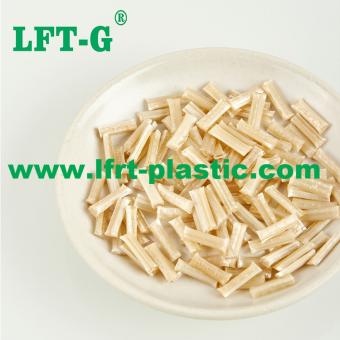
PPS raw material filled long glass fiber lgf 40% high toughness car parts and other filedWhat is PPS? PPS has a symmetrical rigid backbone and is part of a crystalline polymer consisting of repeated parapplacement of benzene rings and sulfur atoms. PPS are special engineering plastics with high performance, high melting point up to 280℃, which can replace metal. They are located at the top of the polymer property pyramid, as shown in Figure 1. Therefore, based on the excellent performance of PPS resin, make it meet the requirements of harsh engineering plastic projects for materials. Why filling long glass fiber? Long glass fiber reinforced plastic is on the basis of the original pure plastic, adding glass fiber and other additives, so as to improve the scope of use of materials. Advantages: 1. After glass fiber reinforcement, glass fiber is a high temperature resistant material, therefore, the heat resistance temperature of reinforced plastics is much higher than before without glass fiber, especially nylon plastics; 2. After glass fiber reinforcement, due to the addition of glass fiber, limited the mutual movement between polymer chains of plastics, therefore, the shrinkage rate of reinforced plastics decreases a lot, rigidity is greatly improved; 3. After glass fiber reinforcement, the reinforced plastic will not stress crack, at the same time, the anti-impact performance of plastic is improved a lot; 4. After glass fiber reinforcement, glass fiber is a high strength material, which also greatly improves the strength of plastic, such as: tensile strength, compression strength, bending strength, improve a lot; 5. glass fiber reinforced after, due to the addition of glass fiber and other additives, the combustion performance of reinforced plastics decreased a lot, most of the material can not ignite, is a kind of flame retardant material. Datasheets for your reference Performance advantages include the following aspects: excellent heat resistance, good mechanical properties, corrosion resistance, self-flame retardant up to UL94 V-0 level. Because PPS has the advantages of the above properties, and compared with other high performance thermoplastic engineering plastics and has the characteristics of easy processing, low cost, so it becomes an excellent resin matrix for manufacturing composite materials. Details Color Original or as required Length Above 5~24mm MOQ 25kg Package 25kg a bag Port of Loading Xiamen Port Delivery time 7~15 days after shipment
- Polyphenylene sulfide composite
- long glass fiber compound pps
- LFT-G brand plastic
- LGF PPS reinforced material
- Injection grade PPS
- pellets of plastic pps
Tags :
-
lft-g brand ABS raw material fill long glass fiber high quality own-factory made original gradeABS-LGF Long glass fiber reinforced ABS can improve the thermal deformation temperature and mechanical properties of ABS, and reduce the shrinkage rate and linear expansion coefficient of ABS. It is used to manufacture products with high dimensional precision. Fiber reinforced ABS general glass fiber content is 20% to 60%. The addition of 20% to 30% glass fiber is the most common. Generally speaking, the higher the long glass fiber content, the better the tensile strength, bending strength, elastic modulus and rigidity of the material, and the thermal deformation temperature also has a significant increase. However, if the long glass fiber is added too much, it will make the tensile strength, bending strength, elastic modulus, rigidity and other properties of the material decline. Datasheet of ABS-LGF30 Tested by our own lab, for your reference only. Appearance From the appearance of ABS plastic raw materials, it is mainly a kind of opaque ivory grain, non-toxic, tasteless, low water absorption characteristics can make its products into a variety of colors, and has more than 90% high gloss. ABS combines well with other materials and is easy for surface printing, coating and plating treatment. Application Xiamen LFT composite plastic Co.,ltd Our company is a brand-name company that focuses on LFT&LFRT. Long Glass Fiber Series (LGF) & Long Carbon Fiber Series (LCF). The company's thermoplastic LFT can be used for LFT-G injection molding and extrusion, and can also be used for LFT-D molding. It can be produced according to customer requirements: 5~25mm in length. The company's long-fiber continuous infiltration reinforced thermoplastics have passed ISO9001&16949 system certification, and the products have obtained lots of national trademarks and patents.
- Acrylonitrile Butadiene Styrene
- lgf composite abs
- industrial use abs fiber
- ABS filling lgf
- abs compound long glass fiber
- fiberglass ABS
Tags :
-
HDPE LFT-G filling Long Glass Fiber 20%-60% natural grade high performance sample availableHDPE introduce High density polyethylene (HDPE) is a white powder or granular product. Non-toxic, tasteless, crystallinity is 80% ~ 90%, softening point is 125 ~ 135℃, the use of temperature can reach 100℃; The hardness, tensile strength and creep property are better than low density polyethylene. Good wear resistance, electrical insulation, toughness and cold resistance; Good chemical stability, at room temperature, insoluble in any organic solvent, acid, alkali and all kinds of salt corrosion resistance; Thin film to water vapor and air permeability is small, low water absorption; Poor aging resistance, environmental stress cracking resistance is not as good as low density polyethylene, especially thermal oxidation will reduce its performance, so the resin must be added in antioxidants and ultraviolet absorbent to improve this deficiency. High density polyethylene film under the condition of stress thermal deformation temperature is low, should pay attention to the application. Long Glass Fiber filling High density polyethylene (HDPE)/ glass fiber (LGF) composites were prepared by twin-screw extrusion mechanism, and the mechanical properties and non-isothermal crystallization behavior of HDPE/LGF composites were studied. The results show that the impact strength of the composite can be improved by MAH-g-POE, and the interface bond between the glass fiber and HDPE is good. The Avrami index (n) of the composite does not change with the cooling rate. The effects of HDPE on the flow properties of PP and its mechanical properties, and the effects of the flow properties of PP/HDPE blends on the mechanical properties of LGF/PP/HDPE composites were studied. The results show that HDPE can not only improve the impact performance of PP, but also improve the liquidity of PP. The mechanical properties of LGF/PP/HDPE composites, such as tensile strength and bending strength, are mainly affected by the flow properties of the matrix, but have little effect on the mechanical properties of the matrix itself. Datasheet Tested by own lab, for your reference only. Application cases Package and Warehouse Self-owned factory Exhibitions and customers Frequently asked questions 1. Under what circumstances can long fiber replace short fiber? What are the common alternative materials? A: Traditional staple fiber materials can be replaced with long glass fiber and long carbon fiber LFT materials in the case of customers whose mechanical properties cannot be met or where higher metal substitutes are desired. For example, PP long glass fiber is often replacing nylon reinforced glass fiber, and nylon long glass fiber is replacing PPS series. 2. How to choose the fiber content of the product? Is the larger product suitable for higher content material? A: This is not absolute. The content of glass fiber is not more is better. The suitable content is just to meet the requirements of each products. 3. If want to increase the anti-aging properties of the product, is it possible to add anti-UV agent to the material? A: You can choose some materials which are better resistant to aging, and then add some antioxidants and UV absorbers to the materials, to improve the aging resistance of the products.
- HDPE filling lgf
- High Density Polyethylene raw material
- Long glass fiber filling plastic
- Granular plastic HDPE
- Reinforced materials HDPE
- long fiber material
Tags :
-
LFT TPU fill long glass fiber reinforced material plastic grains original color 12mmWhat is the TPU plastic? Thermoplastic polyurethane (TPU) elastomer is a linear polymer formed by the interaction of hard chain segment and soft chain segment. Tpus have physical properties such as tensile, wear and heat resistance, elasticity similar to rubber, and Tpus can be processed in the processing of thermoplastic materials, such as injection molding, extrusion, blow molding, calendering and honing. What is Long Glass Fiber(LGF)? Long glass fiber reinforced composites can solve your problems when other methods of reinforced plastics do not provide the performance you need or if you want to replace metal with plastic. Long glass fiber reinforced composites can cost-effactively reduce the cost of goods and effectively improve the mechanical properties of engineering polymers, and increase the durability by forming long fibers to form a long-fiber-reinforced internal skeleton network. Performance is preserved in a wide range of environments. Tpus have good impact resistance, but in some applications, high elastic modulus and very hard materials are required. Glass fiber reinforced modification is a common technical means to improve the elastic modulus of materials. Through modification, thermoplastic composites with high elastic modulus, good insulation, strong heat resistance, good elastic recovery performance, good corrosion resistance, impact resistance, low expansion coefficient and dimensional stability can be obtained. What is the performance of TPU-LGF50? The datasheet is tested by our own lab, for your reference only. Application of TPU-LGF20 Please feel free to contact us if you are unsure whether the material is suitable to use. Detailed information Product name Color Advantage After sales service Shipment Port MOQ Delivery time Packing details 20% Long Glass Fiber reinforced TPU Original color(can be customized) High toughness, high rigidity, low warpage, low water absorption, high dimensional stability, chemical resistance, good appearance 24h online Xiamen Port 25KG 7-15 days after payment 25kg/bag Other products are hot selling too PA6-LGF PA12-LGF
- Composite plastic
- raw material TPU reinforced
- New high performance thermoplastic resin
- LGF TPU
- TPU thermoplastic resin
- TPU filling long glass fiber
Tags :
-
Lft-g high strength high toughness instead medal PA12 LGF made by own factory 24h onlinePA12 Long Glass Fiber Long carbon chain nylon is nylon with an amide group in the main chain repeating unit of nylon molecule, and the length of methylene between the two amide groups is greater than 10. We call it long carbon chain nylon, including nylon 11, nylon 12, etc. PA12 is nylon 12, also known as polydodecactam, polylauractam, is a long carbon chain nylon. The basic material for its polymerization is butadiene, a semi-crystalline - crystalline thermoplastic material. Nylon 12 is the most widely used long carbon chain nylon, in addition to most of the general properties of nylon, low water absorption, and has high dimensional stability, high temperature resistance, corrosion resistance, good toughness, easy processing and other advantages. Compared with PA11, another long carbon chain nylon material, the price of butadiene, the raw material of PA12, is only one third of the price of castor oil, the raw material of PA11. It can replace PA11 and be applied in most scenes, and has a wide range of applications in automobile fuel pipe, air brake hose, submarine cable, 3D printing and many other fields. In long chain nylon, compared with other nylon materials, PA12 has great advantages, such as the lowest water absorption rate, the lowest density, low melting point, impact resistance, friction resistance, low temperature resistance, fuel resistance, good dimensional stability, good anti-noise effect. PA12 has the properties of PA6, PA66 and polyolefin (PE, PP) at the same time, achieving the combination of lightweight and physical and chemical properties, and has advantages in performance. The following table shows the performance data: Performance of PA12 There are a large number of non-polar methylene groups in nylon 12, which makes nylon 12 molecular chain more compliant. The amide group in nylon 12 is polar, and the cohesion energy is very large, it can form hydrogen bonds between the molecules, so that the molecular arrangement is regular. Therefore, nylon 12 has high crystallinity and high strength. Nylon 12 has low water absorption, good low temperature resistance, good air tightness, excellent alkali and oil resistance, medium resistance to alcohol, inorganic dilute acid and aromatic hydrocarbons, good mechanical and electrical properties, and is a self-flameout material. We can offer you: 1. LFT&LFRT material technical parameters and leading edge design; 2. Mold front design and recommendations; 3. Provide technical support such as injection molding and extrusion molding. System Certification Quality Management System ISO9001/1949 Certification National Laboratory Accreditation Certificate Modified Plastics Innovation Enterprise Honorary Certificate Heavy metal REACH & ROHS testing Frequently asked questions 1. Does long glass fiber and long carbon fiber injection have special requirements for injection molding machines and molds? A: There are certainly requirements. Especially from the product design structure, as well as the injection molding machine screw nozzle and mold structure injection molding process must consider the requirements of long fiber. 2. The product is easy to brittle, so changing to use long fiber reinforced thermoplastic materials can solve this problem? A: The overrall mechanical properties must be improved. The characteristics of long glass fiber and long carbon fiber are the advantages in machanical properties. It has 1-3 times higher (toughness) than short fiber, and the tensile strength (strength and rigidity) is increased by 0.5-1 times. 3. What are the main features and advantages of long glass fiber reinforced thermoplastics? A: Compared with traditional short fiber materials, the main features of LFT-G thermoplastic long glass fiber and long carbon fiber are mechanical properties, high impact and tensile modulus, which are more suitable for some large products or structural load-bearing parts. It can do injection molding, extrusion of sheets, profile pipes, etc. and it is Simple processing. Other questions, please contact our 24h online service.
- polyamide12
- PA12 resin
- Nylon12 reinforced plastic
- instead medal pa12 materials
- plastic grains
Tags :
-
LFT Polyamide6 long glass fiber reinforced plasticPA66 Long Glass Fiber Reinforced (PA66-LGF) Nylon (PA) offers a combination of excellent properties, including high mechanical strength, chemical resistance, oil resistance, wear resistance, self-lubrication, and good processability. As a result, nylon has become one of the most widely used engineering thermoplastics in many industrial applications. However, the performance requirements of nylon vary depending on the application, operating conditions, and service environment. For example, components such as electric drill housings, motor housings, pump impellers, bearings, diesel engine components, and air-conditioning fan blades may require high strength, rigidity, and dimensional stability. Since unmodified nylon can exhibit reduced toughness at low temperatures, impact modification may be required for certain applications. For long-term outdoor use, weather-resistant modification may also be necessary. The most commonly used reinforcing materials for nylon include glass fiber, carbon fiber, and various other fibrous materials. Among them, glass fiber reinforcement is one of the most widely adopted solutions. Adding glass fiber can significantly improve the stiffness, strength, hardness, dimensional stability, and heat resistance of nylon. Depending on the required mechanical performance and application, glass fiber content can typically range from approximately 20% to 50%. Grades with around 30% glass fiber are commonly used for a balance of strength, stiffness, processability, and cost, while higher fiber contents can be selected when greater mechanical performance is required. Production Technology of Glass Fiber Reinforced Nylon Long glass fiber reinforced nylon can be manufactured using a specialized compounding process designed to maintain a relatively long fiber length within the polymer matrix. During the production process, nylon resin and other formulation components are prepared and fed into the compounding system, while continuous glass fiber is introduced through a dedicated fiber feeding system. The glass fiber is impregnated and combined with the molten nylon resin under controlled processing conditions. Proper control of screw configuration, temperature, feeding rate, and shear is important for achieving good fiber distribution while minimizing unnecessary fiber breakage. Factors Affecting the Properties of Glass Fiber Reinforced Nylon 1. Glass Fiber and Nylon Interfacial Bonding The interfacial bonding between glass fiber and nylon resin is one of the most important factors affecting the performance of glass fiber reinforced nylon. If the adhesion between the fiber and polymer matrix is insufficient, the reinforcing efficiency can be significantly reduced. Therefore, appropriate glass fiber surface treatment and sizing technology are important. Glass fiber manufacturers can provide different surface treatments and sizing systems designed for specific polymer matrices, allowing compounders to select a suitable fiber type for the target nylon formulation. 2. Glass Fiber Length The length of glass fiber retained in the nylon matrix is another important factor affecting mechanical performance. In general, long glass fiber reinforced nylon can provide advantages over conventional short glass fiber materials in terms of tensile strength, flexural strength, stiffness, dimensional stability, and impact performance. 3. Glass Fiber Dispersion Uniform glass fiber dispersion is also critical to achieving consistent material performance. It is influenced by the screw configuration, screw speed, residence time, processing temperature, and formulation. Excessive shear can cause unnecessary fiber breakage, reducing the effective fiber length and potentially affecting the mechanical properties of the final product. Therefore, processing conditions should be optimized according to the glass fiber content and formulation requirements. 4. Other Processing Factors In addition to fiber length and dispersion, factors such as processing temperature, glass fiber diameter, fiber type, resin grade, additives, and moisture control can also influence the final performance of glass fiber reinforced nylon. Glass Fiber Reinforced Nylon and Melt Flowability Compared with unfilled nylon, glass fiber reinforced nylon generally exhibits higher melt viscosity and can therefore present greater processing challenges during injection molding. Potential issues include higher injection pressure requirements, incomplete filling, increased mold temperature requirements, and reduced surface quality. For demanding injection molding applications, processing performance can be improved through formulation optimization, including the appropriate selection of processing aids, lubricants, stabilizers, and other additives. Injection molding parameters should also be adjusted according to the specific material grade and part design. High-Temperature Heat and Oxidative Aging Resistance In applications such as bearings, engine components, and...
- pa66 nylon plastic
- Polyamide66 long glass fiber
- pa66 fill gf
- raw material plastic pa66
- composite materials pa66
- thermoplastic resin
Tags :
-
LFT-G brand PA6 Polyamide6 nylon6 filling long glass fiber40 orginal color for automotive partsWhat is PA6 plastic? polyamide (PA), usually called Nylon, is a hetero-chain polymer containing amide group (-NHCo -) in the main chain. It can be divided into aliphatic group and aromatic group. It is the earliest developed and the most used thermoplastic engineering material. Polyamide main chain contains many repeated amide group, used as a plastic called nylon, used as a synthetic fiber called nylon. A variety of different polyamides can be prepared according to the number of carbon atoms contained in binary amines and dibasic acids or amino acids. At present, there are dozens of polyamides, among which polyamide-6, polyamide-66 and polyamide-610 are the most widely used. Polyamide-6 is an aliphatic polyamide, with light weight, strong strength, wear resistance, weak acid and alkali resistance and some organic solvents, easy molding and processing and other excellent properties, widely used in fiber, engineering plastics and thin films and other fields, but PA6 molecular chain segment contains strong polarity amide groups, easy to form hydrogen bonds with water molecules, The product has the disadvantages of large water absorption, poor dimensional stability, low impact strength in dry state and low temperature, strong acid and alkali resistance. Advantages of nylon 6: High mechanical strength, good toughness, high tensile and compressive strength. Outstanding fatigue resistance, the parts after repeated bending can still maintain the original mechanical strength. High softening point, heat resistant. Smooth surface, small friction coefficient, wear-resistant. Corrosion resistance, very resistant to alkali and most salts, also resistant to weak acids, oil, gasoline, aromatic compounds and general solvents, aromatic compounds are inert, but not resistant to strong acids and oxidants. It can resist the corrosion of gasoline, oil, fat, alcohol, alkaline and so on, and has good anti-aging ability. It is self-extinguishing, non-toxic, odorless, good weather resistance, inert to biological erosion, and has good antibacterial and mildew resistance. Has excellent electrical performance, good electrical insulation, nylon volume resistance is high, high breakdown voltage resistance, in dry environment, can work frequency insulation material, even in high humidity environment still has good electrical insulation. Light weight, easy dyeing, easy forming, because of low melting viscosity, can flow quickly. Disadvantages of Nylon 6: Easy to absorb water, water absorption, saturated water can reach more than 3%. Poor light resistance, in the long-term high temperature environment will oxidize with oxygen in the air, the color turns brown at the beginning, and the subsequent surface is broken and cracked. Injection molding technology requirements more strict, the existence of trace moisture will cause great damage to the quality of molding; The dimensional stability of the product is difficult to control because of thermal expansion. The existence of sharp Angle in the product will lead to stress concentration and reduce the mechanical strength; If the wall thickness is not uniform, it will lead to the distortion and deformation of the parts. High precision of equipment is required in post-processing. Will absorb water, alcohol and swelling, not resistant to strong acid and oxidant, can not be used as acid-resistant materials. Why filling Long Glass Fiber? PA6 has excellent properties such as light weight, strong strength, abrasion resistance, weak acid and alkali resistance and some organic solvents, and easy molding and processing. It is widely used in the fields of fibers, engineering plastics and films. However, the molecular chain segment of PA6 contains highly polar amide groups, which are easy to form hydrogen bonds with water molecules. The product has the disadvantages of large water absorption, poor dimensional stability, low impact strength in dry state and low temperature, strong acid and alkali resistance. With the development of science and technology and the improvement of life quality, the defects in some properties of traditional PA6 materials have limited its development in some fields. In order to improve the performance of PA6 and expand its application field, PA6 should be modified. Filling enhancement modification is a common method for physical modification of PA6. It refers to the modification of PA6 by adding fillers such as glass fiber and carbon fiber into the matrix to significantly improve the mechanical properties, flame retardant properties, thermal conductivity and dimensional stability of the material. What is application of PA6-LGF? Modified section of 30% long glass fiber reinforced PA6 is the ideal material for processing power tool shell, power tool parts, engineering machinery parts and automobile parts. Its mechanical properties, dimensional stability, heat resistance and aging resistance have been significantly improved. The fatigue resistance strength is 2.5 times that of unenha...
- Polyamide 6 composite
- lgf thermoplastic resin
- High impact PA6
- injection molding plastic
- pa6 filling long glass fiber
- Reinforced plastic
Tags :
-
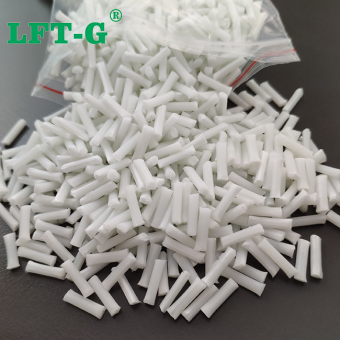
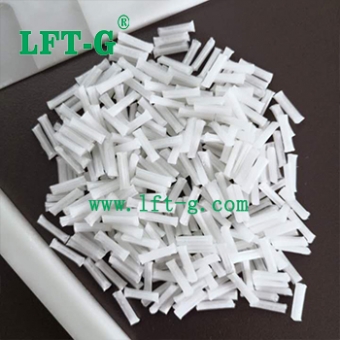
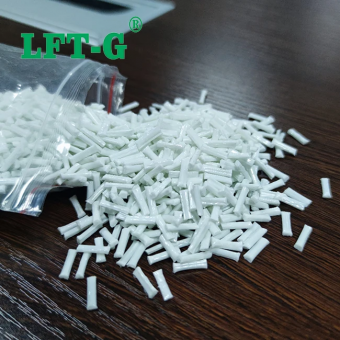
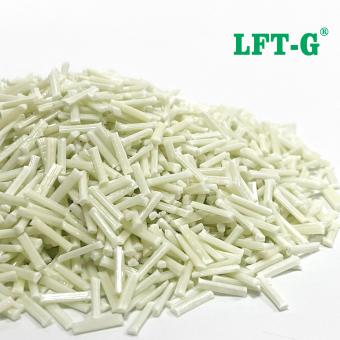
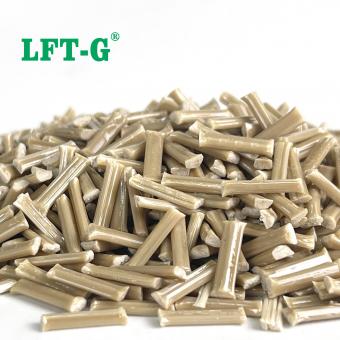
Transparent and light PP Long Glass Fiber composite material thermoplastic resin sample freePolypropylene (PP), as one of the five general plastics, is widely used in all walks of life
- white plastic material
- long glass fiber
- PP composite
- Polypropylene fibre
- glass fiber filling plastic
Tags :
-
High quality MXD6 composite long glass fiber nylon original color automotive partsMXD6 Nylon - MXD6 is a kind of crystalline polyamide resin, which is synthesized by the condensation of m-benzoylamine and adipic acid. The advantages of nylon MXD6 1. in a wide range of temperature, maintain high strength, high rigidity 2. High thermal deformation temperature and small thermal expansion coefficient 3. Low water absorption rate, small size change after water absorption, less mechanical strength reduction 4. forming shrinkage rate is very small, suitable for precision forming processing 5. excellent coating, especially suitable for high temperature surface coating 6. oxygen, carbon dioxide and other gases also have excellent barrier Application of MXD6 in plastic modification industry MXD6 can be combined with fiberglass, carbon fiber, mineral, and/or advanced fillers for use in fiberglass reinforced materials containing 50-60% and for exceptional strength and stiffness. Even when filled with high glass content, its smooth, resin-rich surface produces a fibre-free high gloss surface, ideal for painting, metal-plating, or creating naturally reflective shells. 1. suitable for high liquidity of thin wall It is a very fluid resin that can easily fill thin walls as thin as 0.5 mm thick even when the glass fiber content is as high as 60%. 2. Excellent surface finish A resin-rich perfect surface has a highly polished appearance, even with a high glass fiber content. 3. High strength and stiffness The tensile and flexural strength of MXD6 is similar to that of many cast metals and alloys with the addition of 50-60% glass fiber reinforced material. 4. good dimensional stability At ambient temperatures, the linear expansion coefficient (CLTE) of MXD6 glass fiber composites is similar to that of many cast metals and alloys. Strong reproducibility due to low shrinkage and the ability to maintain tight tolerances (length tolerances as low as ± 0.05% if properly formed). Datasheet Tested by our own lab, for reference only. Frequently asked questions 1. How to choose the fiber content of the product? Is the larger product suitable for higher fiber content material? A. This is not absolute. The content of glass fiber is not more is better. The suitable content is just to meet the requirements of each products. 2. Can products with appearance requirements be made of long-fiber materials? A. The main feature of LFT-G thermoplastic long glass fiber and long carbon fiber is to show the mechanical properties. If the customer has bright or other requirements for the appearance of the products, it needs to be evaluated in combination with specific products. 3. Are there any special process requirements of long carbon fiber injection molding products? A. We must consider the requirements of long fiber for the injection molding machine screw nozzle, mold structure and injection molding process. Long fiber is a relatively high cost materiaql, and need to evaluate the cost performance problem in the selection process.
- Crystalline nylon resin
- Composite materials
- Higher performance plastic
- Made in China products
- Customized plastic particle
- Thermoplastic resin
Tags :
-
PBT filling long glass fiber LGF injection grade composite high quality natural colourPBT-LGF Polybutanediol terephthalate (PBT) has excellent comprehensive properties, such as high crystallinity, rapid prototyping, weather resistance, low friction coefficient, high thermal deformation temperature, good electrical properties, excellent mechanical properties, fatigue resistance, can be ultrasonic welding. However, its notched impact strength is low, forming shrinkage rate is large, hydrolysis resistance is poor, easy to be eroded by halogenated hydrocarbons, after glass fiber reinforcement, because of the product longitudinal and horizontal shrinkage is inconsistent easy to warping products. With its excellent comprehensive performance, PBT is widely used in electronic and electrical appliances, automobile industry, machinery, instruments and household appliances and other fields. Common problem & Solvement Glass fiber reinforced PBT material warps easily Reasons: Warping is the result of uneven shrinkage of the material. The warping of the product can be caused by the orientation and crystallization of the components in the material, the improper technological conditions used in the injection molding, the wrong shape and position of the gate in the mold design, and the uneven thickness of the wall in the product design. The warping of PBT/GF composites is mainly due to the fact that the orientation of the glass fiber in the flow direction restricts the shrinkage of the resin, and the induced crystallization of PBT around the glass fiber strengthens this effect, making the longitudinal (flow direction) shrinkage of the product less than the transverse (perpendicular to the flow direction). This uneven shrinkage leads to the warping of PBT/GF composites. Solution: 1. Add minerals and use the shape symmetry of mineral fillers to reduce the anisotropy caused by the glass fiber orientation; 2. Add amorphous materials to reduce the crystallinity of PBT and reduce the uneven shrinkage caused by crystallization, such AS ASA or AS, but they have poor compatibility with PBT, so appropriate compatibilizers need to be added; 3. Adjust injection molding process, such as increasing mold temperature and increasing injection cycle appropriately. Glass fiber reinforced PBT surface floating fiber problem Reasons: The causes of floating fiber are more complex, in short, there are mainly the following aspects 1. The compatibility of PBT and glass fiber is very poor, resulting in the two can not effectively bond together; 2. The viscosity of PBT and glass fiber is very different, resulting in a tendency of separation between the two in the flow process. When the separation effect is greater than the adhesive force, the separation will occur, and the glass fiber will float to the outer layer and leak out; 3. The existence of shear force will not only lead to local viscosity differences, but also destroy the interface layer melt viscosity on the glass fiber surface, the smaller the interface layer is damaged, the smaller the bonding force on the glass fiber. When the viscosity is low to a certain degree, the glass fiber will get rid of the PBT resin matrix and gradually accumulate to the surface and expose. 4. Influence of mold temperature. Due to the low temperature of the mold surface, the glass fiber with light weight and fast condensation is frozen instantaneously. If it is not fully surrounded by melt in time, it will be exposed and form "floating fiber". Solution: 1) Add compatibilizers, dispersants and lubricants to improve the floating fiber problem. For example, the use of special surface treatment of glass fiber, or adding compatibilizers (such as: SOG, a well-flowing PBT modified compatibilizer) through the "bridge" effect, increase the adhesion of PBT and glass fiber. 2) Optimize the molding process to improve the floating fiber problem. Higher injection molding temperature and mold temperature, larger injection molding pressure and back pressure, faster injection molding speed, lower screw speed, can improve the floating fiber problem to a certain extent. The glass fiber reinforced PBT injection molding process is easy to produce more mold scale Reasons: The formation of mold scale is caused by the high content of small molecules or the poor thermal stability of materials. Compared with other materials, PBT is easy to generate mold scale due to its oligomer and small molecule residue rate usually in the range of 1%-3%. And after the introduction of glass fiber, more obvious. This will lead to the continuous processing process, the need to clean the mold regularly, resulting in low production efficiency. Solution: 1) Reduce the amount of small molecule additives (such as lubricant, coupling agent, etc.), try to choose polymer additives; 2) Improve the thermal stability of PBT and reduce the small molecular products produced by thermal degradation during processing; PBT Application Widely used in machinery, electronic and electrical, automotive industry and household appliances and other fields. Rel...
- Polybutylene terephthalate
- Semi-crystalline thermoplastic polyester
- PBT resin
- Electronic parts material
- Industry use plastic
- Instead medal
Tags :