e-mail
 English
 français
 Deutsch
 русский
 italiano
 español
 português
 العربية
 日本語
日本語 한국의
한국의 中文
中文


-
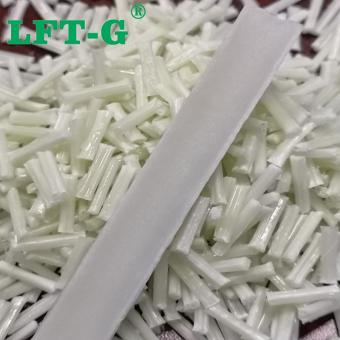
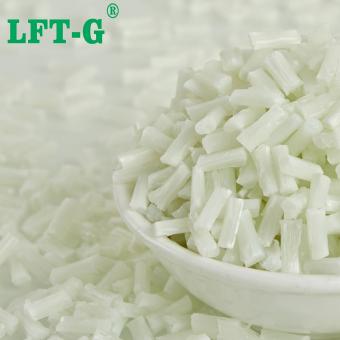
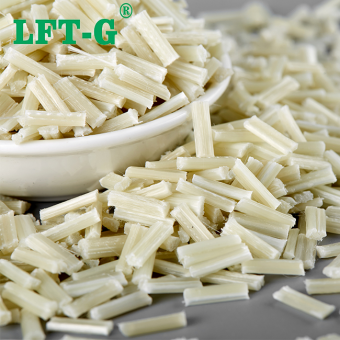
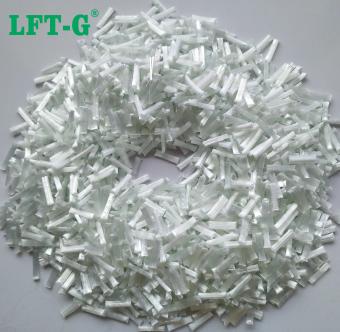
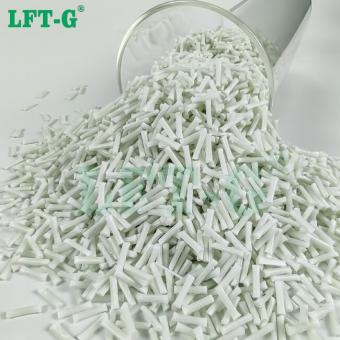
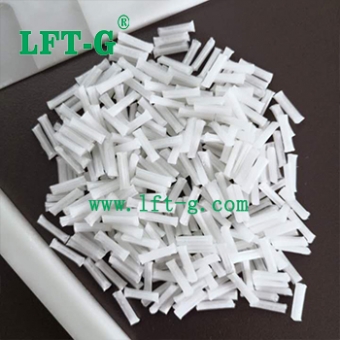
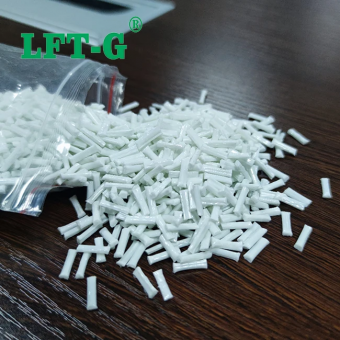
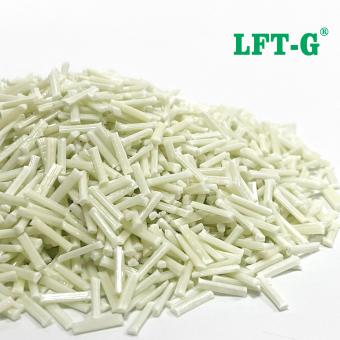
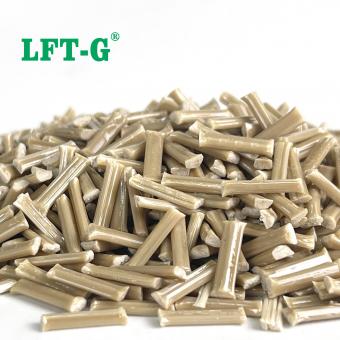
Xiamen LFT-G High toughness MXD6 composite filling long glass fiber original colorNylon - MXD6 is a kind of crystalline polyamide resin, which is synthesized by the condensation of m-benzoylamine and adipic acid.
- Crystalline nylon resin mxd6 gf good price
- Composite materials with long glass fiber mxd6
- Higher performance plastic mxd6
- Made in China products compounds mxd6
- Customized plastic fiber glass add high sstrength mxd6
- Thermoplastic resin thermoplastic resin
Tags :
-
Xiamen LFT-G ABS Acrylonitrile Butadiene Styrene long glass fiber reinforced for industrial useABS Plastic | Acrylonitrile Butadiene Styrene Engineering Thermoplastic ABS (Acrylonitrile Butadiene Styrene) is a widely used engineering thermoplastic known for its excellent impact resistance, mechanical strength, and processing versatility. ABS plastic is an amorphous polymer commonly used in automotive, electrical, consumer, and industrial applications. What Is ABS Plastic? ABS plastic is a thermoplastic polymer produced by polymerizing acrylonitrile, butadiene, and styrene. Each component contributes specific performance advantages: Acrylonitrile – chemical resistance and thermal stability Butadiene – toughness and impact resistance Styrene – rigidity, surface quality, and processability Due to this balanced structure, ABS engineering plastic offers high impact resistance, good dimensional stability, and easy processing, making it one of the most versatile thermoplastics on the market. ABS is non-toxic in solid form, provides good electrical insulation, and is widely accepted as a safe and reliable material for mass production. Main Advantages of ABS Plastic As a general-purpose engineering thermoplastic, ABS plastic offers the following key advantages: Excellent impact resistance and toughness Good mechanical strength with low weight Easy injection molding, extrusion, and machining Good surface finish and paintability Low electrical and thermal conductivity Cost-effective and widely available ABS can withstand repeated heating and cooling cycles, making it suitable for recyclable applications and long-term industrial use. ABS Plastic vs PLA: Material Comparison ABS and PLA are both popular thermoplastics, but they serve very different application requirements. ABS is a tougher and more durable engineering plastic, while PLA is primarily used for prototyping and hobbyist 3D printing. ABS vs PLA: Mechanical Strength ABS offers higher impact resistance and toughness than PLA PLA is stiffer but more brittle ABS vs PLA: Heat Resistance ABS softening temperature: ~105°C PLA softening temperature: ~60°C Due to its superior heat resistance, ABS is better suited for functional parts exposed to elevated temperatures. ABS vs PLA: Dimensional Stability & Accuracy PLA is easier to print and produces dimensionally stable parts during 3D printing. ABS, however, tends to warp during printing but performs better in real-world mechanical applications once molded. ABS vs PLA: Surface Finish Both materials show visible layer lines in FDM printing. ABS can be vapor-smoothed using solvents such as acetone, resulting in a smooth and glossy surface, while PLA typically requires sanding or coating. ABS vs PLA: Environmental Impact PLA is biodegradable under industrial composting conditions ABS is not biodegradable but is recyclable PLA degradation requires controlled industrial conditions and can take decades in natural environments. ABS offers long service life and durability for industrial products. ABS vs PLA: Cost Comparison Both ABS and PLA are low-cost thermoplastics. ABS may be slightly more expensive, but the difference is generally minimal and application-dependent. Typical Applications of ABS Plastic Thanks to its balance of toughness, processability, and cost efficiency, ABS engineering plastic is widely used in: Automotive interior and exterior components Electrical and electronic housings Consumer products and appliances Industrial enclosures and structural parts Injection molded and extruded components
- ABS can be recycled plastic made in China
- thermoplastic resin raw materials
- abs for whole sell good price fiberglass
Tags :
-
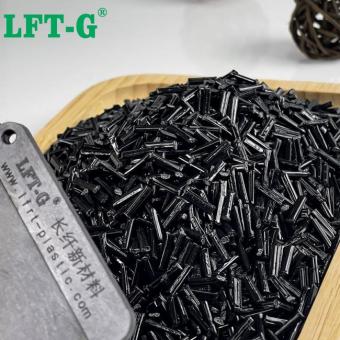
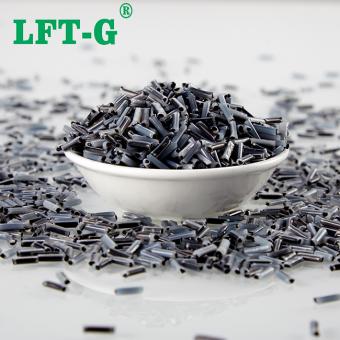
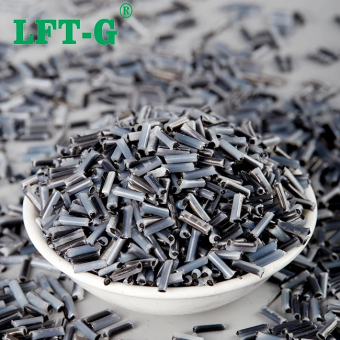
LFT-G Polyamide 12 long carbon fiber reinforced compounds nylon for car partsLong Carbon Fiber Carbon fiber exhibits outstanding properties, including extremely high axial strength and modulus, low density, and excellent specific performance. It shows no creep, outstanding fatigue resistance, excellent corrosion resistance, and maintains stability at very high temperatures in non-oxidizing environments. Carbon fiber also features good electrical and thermal conductivity, effective electromagnetic shielding, a low coefficient of thermal expansion, and strong anisotropy. Compared with traditional glass fiber, carbon fiber offers more than three times the Young’s modulus and approximately twice the modulus of aramid (Kevlar) fiber. It is insoluble and does not swell in organic solvents, acids, or alkalis, making it highly suitable for corrosive and demanding environments. One effective way to reduce the cost of carbon fiber applications is to combine it with engineering plastics such as nylon, creating high-performance composite materials with optimized cost-performance balance. As a result, carbon fiber reinforced nylon has become an important material system in modern composite engineering. Nylon itself is a high-performance engineering plastic, but it suffers from moisture absorption, limited dimensional stability, and mechanical properties far below those of metals. To overcome these limitations, fiber reinforcement has been applied since the 1970s. Carbon fiber reinforced nylon significantly improves strength, stiffness, thermal stability, creep resistance, wear resistance, and dimensional accuracy. Compared with glass fiber reinforced nylon, carbon fiber reinforced nylon offers superior damping behavior and overall mechanical performance. Therefore, carbon fiber reinforced nylon (CF/PA) composites have developed rapidly in recent years. In particular, for additive manufacturing, SLS (Selective Laser Sintering) technology is considered one of the most suitable methods for processing carbon fiber reinforced nylon materials. TDS for Reference Applications Our Company Xiamen LFT Composite Plastic Co., Ltd. is a professional manufacturer specializing in Long Fiber Reinforced Thermoplastics (LFT & LFRT), including Long Glass Fiber (LGF) and Long Carbon Fiber (LCF) series. Our LFT materials are suitable for LFT-G injection molding, extrusion processes, and LFT-D compression molding. Fiber length can be customized from 5 to 25 mm according to customer requirements. Our continuous fiber impregnation technology has passed ISO 9001 and IATF 16949 certification, and our products are protected by multiple trademarks and patents.
- long fibre reinforced thermoplastics
- carbon fiber reinforced plastics granules
- long carbon fiber reinforced pa12
- long fiber composite pa6 granules
- pa6 lcf polymers carbon fiber CFRP good price polymer
Tags :
-
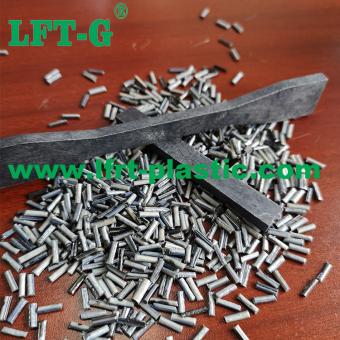
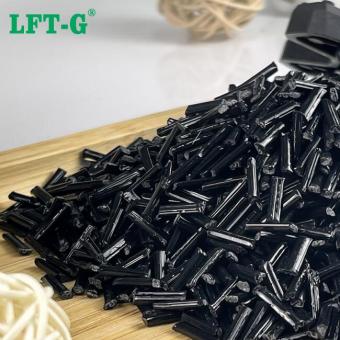
LFT Polyether ether ketone Manufacturer Carbon Fiber filled Compounds Special engieering plastic
- PPS thermoplastic resinforced material
- fiber filling polymer instead of metal steel
- Sample free natural plastic new CFRP
- engineering plastic structural parts
- modified resin good price low MOQ
- Car parts application UAV DJI carbon materials
Tags :
-
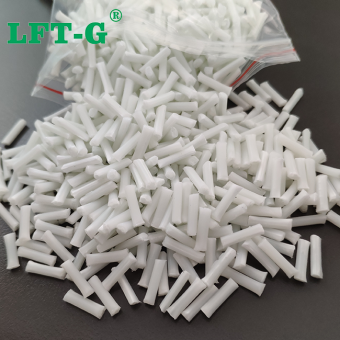
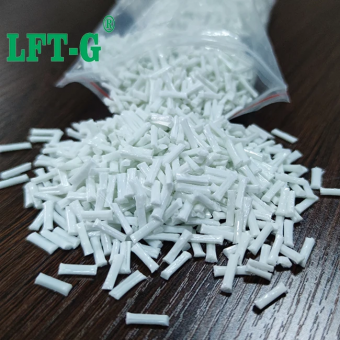
High strength PA12 nylon12 composite lgf virgin white color for automotiveProduct number: PA12-NA-LGF Fiber specification: 20%-60% Product feature: High strength, High toughness and durability Product application: Suitable for automotive, sports parts, solar energy, photovoltaic industry and other industries.
- Nylon12 filling long glass fiber reinforced plastic
- Durability high mechanical properties
- Photovoltaic industry compounds
- Injection grade thermoplastic resin
- 24h service customized plastic instead metal
- Supplier price good price pa6 composites
Tags :
-
High strength PA12 nylon12 composite lgf virgin white color for automotiveProduct number: PA12-NA-LGF Fiber specification: 20%-60% Product feature: High strength, High toughness and durability Product application: Suitable for automotive, sports parts, solar energy, photovoltaic industry and other industries.view more
-
LFT Polyamide12 Long Carbon Fiber composites lightweight high toughnessPA12 & PA12-LCF Information body { font-family: Arial, sans-serif; line-height: 1.6; color: #333; margin: 20px; } h2 { font-size: 24px; color: #339933; background-color: #f0f0f0; padding: 10px; } h3 { font-size: 20px; margin-top: 20px; } p { margin: 10px 0; } ul { margin: 10px 0 10px 20px; } a { color: #0073e6; text-decoration: none; } a:hover { text-decoration: underline; } img { max-width: 100%; height: auto; display: block; margin: 10px 0; } .product-links a { background-color: #CCCCCC; padding: 5px 10px; margin-right: 10px; display: inline-block; text-decoration: none; color: #000; } .faq strong { display: block; margin-top: 10px; } PA12 Information Long carbon chain nylon is a nylon with amide groups in the main chain repeating unit, where the methylene group between two amide groups is more than 10. Examples include nylon 11, nylon 12, etc. PA12, also known as poly(dodecalactam) or poly(laurolactam), is a semi-crystalline thermoplastic material. It has low water absorption, high dimensional stability, heat resistance, corrosion resistance, toughness, and easy processing. Compared with PA11, PA12's raw material is only one-third the cost of PA11, making it widely used in automotive fuel hoses, air brake hoses, submarine cables, and 3D printing. PA12 offers advantages over other nylons, including low water absorption, low density, low melting point, impact and friction resistance, low-temperature resistance, fuel resistance, good dimensional stability, and noise reduction. It combines the properties of PA6, PA66, and polyolefins (PE, PP) for lightweight yet strong materials. PA12-LCF Adding carbon fiber to PA12 is like adding steel reinforcement to concrete. The fiber bears most of the external forces, improving overall structural strength. Carbon fiber has high axial strength and modulus, low density, high specific performance, no creep, excellent fatigue resistance, corrosion resistance, and superior thermal and electrical properties. Compared with glass fiber, carbon fiber has over 3 times the Young's modulus, and about twice that of Kevlar fiber. Carbon fiber reinforced nylon materials (CF/PA) have developed rapidly due to high strength, rigidity, thermal stability, dimensional accuracy, wear resistance, and excellent damping properties compared to glass fiber reinforced nylon. Datasheet for Reference PA12 has low water absorption, good low-temperature resistance, excellent air tightness, alkali and grease resistance, medium resistance to alcohols and dilute inorganic acids, and good mechanical and electrical properties. It is also self-extinguishing. Application Suitable for automotive, sports parts, solar energy, high-end toys, and other industries. Other Products You May Wonder PP-LCF PA6-LCF PA66-LCF Frequently Asked Questions 1. How does thermoplastic carbon fiber composite material achieve low cost and environmental protection? Thermoplastic carbon fiber composites are used to make parts for high-end machinery. They have excellent machinability, vacuum forming, stamping mold plasticity, and bending processability. 2. Are thermoplastic carbon fiber composites only suitable for injection molding? Injection molding offers high automation, protects material from contamination, and ensures product quality and precision. It is suitable for complex-shaped and mass production. Reinforcement is done with short or powdered carbon fibers; continuous fiber cannot be used in this process. Compression molding is simpler and cheaper for equipment and molds. It can be used for both thermosetting and thermoplastic resins, reduces raw material loss, and is suitable for mass production with lower cost. Xiamen LFT Composite Plastic Co., Ltd. We Will Provide You: LFT & LFRT material technical parameters and leading-edge design Mold front design and recommendations Technical support for injection molding and extrusion molding
- Nylon composite pellets Polymer granules
- Nylon polymer LCF manufacturer
- Modified materials Nylon PA12
- extrusion level Nylon modified
- pa lcf30 producer mess production good price
- carbone fiber reinforced pa12 pellets
Tags :
-
LFT-G Polyamide 12 long carbon fiber reinforced compounds nylon for car partsLong carbon fiber Carbon fiber has many excellent properties, high axial strength and modulus, low density, high specific performance, no creep, super high temperature resistance in non-oxidizing environment, good fatigue resistance, specific heat and electrical conductivity between non-metal and metal, small coefficient of thermal expansion and anisotropy, good corrosion resistance, good X-ray transmission. Good electrical and thermal conductivity, good electromagnetic shielding, etc. Compared with traditional glass fiber, carbon fiber has more than 3 times of Young's modulus; it is about 2 times of Young's modulus compared with Kevlar fiber, which is insoluble and swollen in organic solvents, acids and alkalis, and has outstanding corrosion resistance. But is there a way to reduce the price of carbon fiber? That is to mix it with relatively cheap nylon material to form a composite material with good performance and meet the requirements. In that case, there is no doubt that carbon fiber nylon will definitely have a place in the composite material. Nylon itself is an engineering plastic with excellent performance, but moisture absorption, poor dimensional stability of products. Strength and hardness are also far from metal. In order to overcome these shortcomings, as early as before the 70s. People have used carbon fiber or other varieties of fibers for reinforcement to improve its performance. Carbon fiber reinforced nylon materials have developed rapidly in recent years, because nylon and carbon fiber are excellent performance in the field of engineering plastics materials, its compound material synthesis reflects the superiority of the two, such as strength and rigidity than unreinforced nylon is much higher, high temperature creep is small, thermal stability has improved significantly, good dimensional accuracy, wear resistance. Excellent damping, compared with glass fiber reinforced has better performance. Therefore, carbon fiber reinforced nylon (CF / PA) composites have developed rapidly in recent years. And for 3D printing using SLS technology is the most suitable technical means to achieve carbon fiber reinforced nylon. TDS for reference Application Our company Xiamen LFT composite plastic Co., Ltd is a brand-name company that focuses on LFT&LFRT. Long Glass Fiber Series (LGF) & Long Carbon Fiber Series (LCF). The company's thermoplastic LFT can be used for LFT-G injection molding and extrusion, and can also be used for LFT-D molding. It can be produced according to customer requirements: 5~25mm in length. The company's continuous infiltration reinforced thermoplastics have passed ISO9001&16949 system certification, and the products have obtained lots of national trademarks and patents.
- carbon reinforced resin
Tags :
-
LFT-G Polybutylene terephthalate Long Glass Fiber Reinforced CompoundsThey are frequently used to replace metal for applications in which light weighting, improved impact strength, elastic modulus, and material strength are required.
- PBT modified plastic gf long glass fiber
- PBT thermoplastic engineering polymer
- GFRP PBT high toughness and rigidity sample available
- LFT PBT glass fiber reinforcement polymer good price
- PBT higher performance light weight instead metal
- low warpage PA6 for car parts
Tags :
-
High strength PA12 nylon12 composite lgf virgin white color for automotiveProduct number: PA12-NA-LGF Fiber specification: 20%-60% Product feature: High strength, High toughness and durability Product application: Suitable for automotive, sports parts, solar energy, photovoltaic industry and other industries.view more
-
Xiamen LFT PPA Polyphthalamide filled Long Glass Fiber reinforced plastic resinPPA (Polyphthalamide) is polyphthalamide.PPA is a kind of thermoplastic functional nylon with both semi-crystalline structure and non-crystalline structure. It is prepared by polycondensation of phthalic acid and phthalenediamine. It has excellent thermal, electrical, physical and chemical resistance and other comprehensive properties.
- 2023 New product made in China good price
- PPA resin long glass fiber GFRP high performance
- Thermoplatics material
- Sample available instead metal and steel
- Supplier price best thermoplastic resin
- general grade low warpage
Tags :